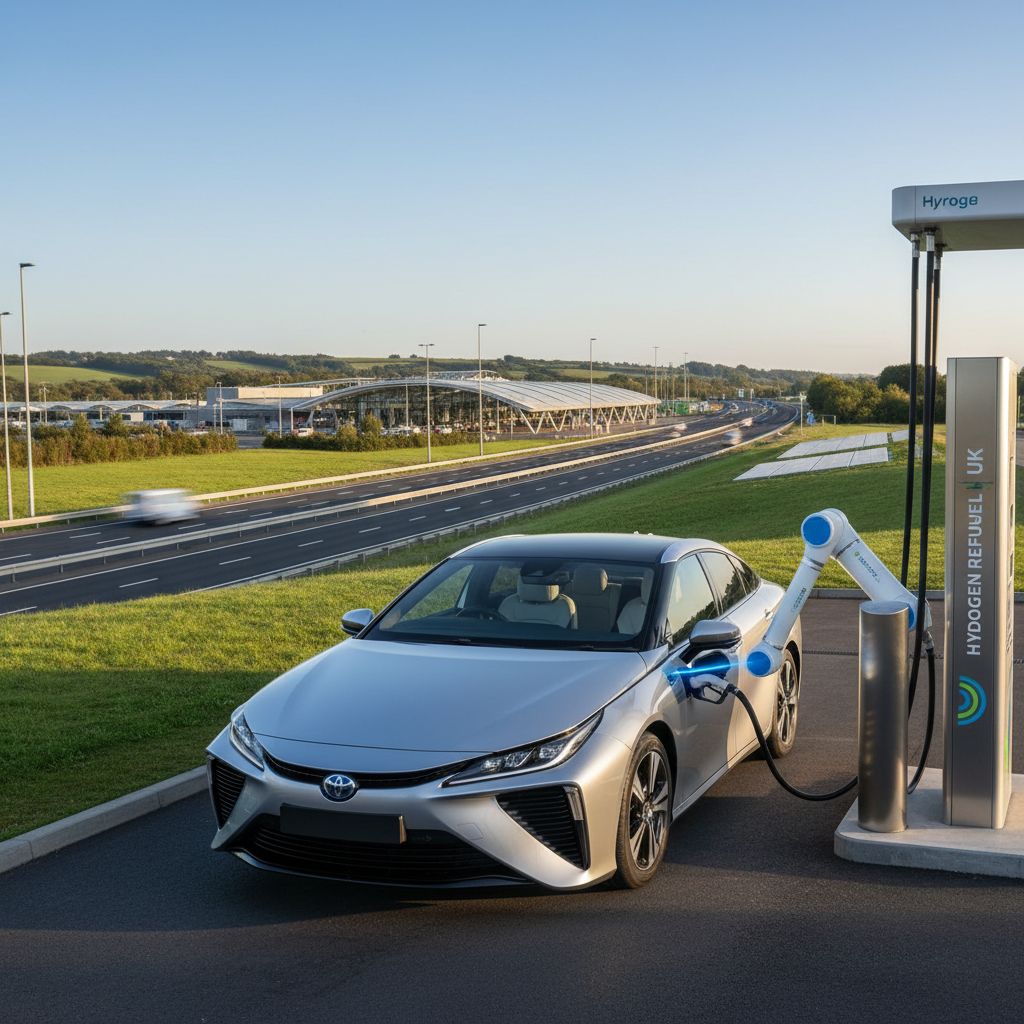
As we progress through 2026, the UK automotive landscape is witnessing a fascinating shift. While Battery Electric Vehicles (BEVs) have dominated the headlines for the past decade, a quieter revolution is occurring under the hood of the used car market. Hydrogen Fuel Cell Electric Vehicles (FCEVs) are no longer just experimental prototypes or fleet-only oddities. With the national infrastructure finally showing signs of maturity and second-hand prices becoming competitive, many savvy UK buyers are asking: is it time to consider a used hydrogen car?
The 2026 Landscape: Hydrogen vs. Battery Electric
By April 2026, the distinction between BEVs and FCEVs has become clearer for the British consumer. While BEVs are the default for urban commuting, hydrogen is carving out a niche for long-distance drivers and those unable to charge at home. Unlike EVs, which require 20–40 minutes at a rapid charger, a hydrogen car like the Toyota Mirai or Hyundai Nexo can be refuelled in under five minutes, providing a range of approximately 400 miles.
However, the "chicken and egg" problem of infrastructure has been the primary hurdle. In 2026, the UK has finally surpassed 100 high-capacity hydrogen refilling stations, strategically placed along the M1, M6, and M25 corridors, largely driven by the growth in HGV hydrogen infrastructure.
The Used Market: Toyota Mirai and Hyundai Nexo Prices
For the first time, we are seeing a consistent flow of second-hand FCEVs hitting the market as early lease deals and government pilot schemes expire. This has created an intriguing opportunity for buyers at CarsLink.ai to find high-tech machinery at a fraction of its original RRP.
| Model | Original RRP (Approx) | 2026 Used Price (3yr/30k miles) | Insurance Group | Real-World Range |
|---|---|---|---|---|
| Toyota Mirai (Gen 2) | £64,000 | £22,000 - £26,000 | 44 | 380 - 400 miles |
| Hyundai Nexo | £69,000 | £24,000 - £29,000 | 42 | 370 - 390 miles |
| BMW iX5 Hydrogen | £85,000 (Ltd Release) | £45,000+ | 50 | 310 miles |
The Toyota Mirai used price is particularly eye-catching in 2026. Given the complexity of the fuel cell stack, depreciation was initially steep, but values have stabilised as reliability data has proven these units can easily exceed 150,000 miles without significant degradation—a key advantage over some older lithium-ion batteries.
Understanding the UK Fuel Cell Market
The UK fuel cell market in 2026 is bifurcated. On one hand, passenger cars are a boutique segment. On the other, the heavy-duty sector is booming. The UK government’s commitment to decarbonising haulage has led to a massive rollout of HGV hydrogen infrastructure, which has a direct positive "halo effect" for car drivers.
When a new hydrogen hub opens for trucks in Birmingham or South Wales, passenger car pumps are almost always included in the planning. This "backbone" infrastructure is what finally makes used FCEV ownership viable for those living near major logistics hubs.
The Benefits of Going Hydrogen in 2026:
- Zero Emissions: Like BEVs, FCEVs emit only water vapour, making them 100% exempt from ULEZ, CAZ (Clean Air Zones), and the London Congestion Charge.
- Weight Advantages: FCEVs are significantly lighter than long-range BEVs, leading to better tyre wear and handling characteristics.
- Stable Winter Range: Unlike batteries, which can lose 20-30% of their efficiency in a British winter, hydrogen fuel cells are relatively unaffected by the cold.
The Challenges: Why Isn't Everyone Buying One?
Despite the lure of a £22,000 Toyota Mirai, there are significant hurdles to consider:
- Fuel Cost: In 2026, green hydrogen still costs roughly £12–£16 per kg. To fill a 5.6kg Mirai tank costs around £70–£90. While comparable to petrol, it is significantly more expensive than charging an EV at home on an off-peak tariff.
- Maintenance Specialists: You cannot take a Hyundai Nexo to a standard local garage. You are limited to manufacturer-approved service centres (primarily Toyota and Hyundai) that have the specialist equipment to handle high-pressure hydrogen tanks.
- The V5C and MOT: Hydrogen cars undergo a standard MOT, but the pressure vessels (tanks) require a visual inspection certificate every few years, which is a detail many used buyers overlook.
Is it Right for You? A Checklist for 2026 Buyers
Before searching CarsLink.ai for your first hydrogen vehicle, consider the following:
- Location: Do you live within 15 miles of a publicly accessible hydrogen station? If you live in the Scottish Highlands or rural Norfolk, the infrastructure simply isn't there yet.
- Mileage: If you drive 20,000+ motorway miles a year, the convenience of 5-minute refuelling may outweigh the higher fuel costs compared to an EV.
- Taxation: For business users, FCEVs still enjoy a 2% Benefit-in-Kind (BiK) rate in 2026, making them an excellent used buy for company directors.
Advice for Dealers and Traders
For the UK motor trade, stock-piling used FCEVs is still a high-risk, high-reward strategy. The buyer profile is very specific: tech-early-adopters, environmentally conscious long-distance commuters, and businesses with sustainability mandates. When listing these vehicles, transparency regarding the remaining warranty on the fuel cell stack is the number one factor in closing a sale.
The Verdict
The hydrogen cars UK 2026 market has moved from "impossible" to "niche but viable." While the UK has not abandoned the battery-first approach, the maturity of the used market proves that fuel cells have a permanent place in our transport mix. If you have a local refilling station and value time over raw fuel cost, a used Toyota Mirai is arguably the most sophisticated, smoothest-driving bargain on the market today.
Ready to see what's available? Use the advanced filters on CarsLink.ai to compare the latest hydrogen, hybrid, and electric listings near you. Our AI-driven insights help you track price trends and find the best value across the UK’s evolving green car market.