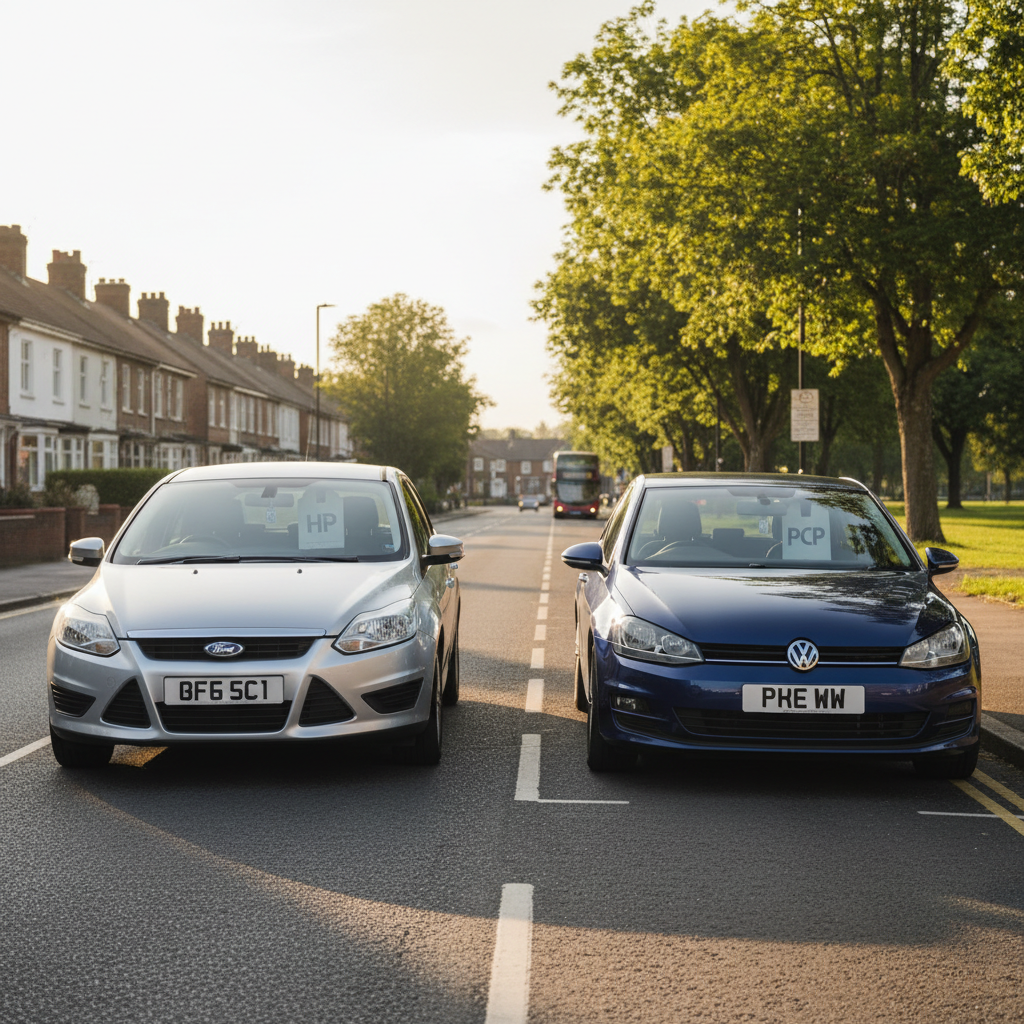
Choosing Your Next Car and How to Pay For It
Finding the perfect used car in 2026 is an exciting prospect. You have a universe of makes and models to explore, and with a search engine like Carslink.ai, you can browse thousands of vehicles from dealers across the UK with 0% commission. But once you have found your ideal motor, the next big question arises: how will you pay for it?
For most buyers, this means exploring car finance. The two most common options you will encounter are Hire Purchase (HP) and Personal Contract Purchase (PCP). While they both involve monthly payments, they work in fundamentally different ways and are suited to different types of buyers.
This guide will break down the mechanics of HP and PCP, compare them side-by-side, and help you decide which path is the best fit for your budget and lifestyle.
What is Hire Purchase (HP)?
Hire Purchase is the traditional, straightforward route to car ownership. The name says it all: you ‘hire’ the car from the finance company through monthly payments until you have paid enough to ‘purchase’ it.
How HP works:
- Deposit: You typically pay an initial deposit, often around 10% of the car’s price.
- Monthly Payments: The remaining balance, plus interest, is divided into fixed monthly payments over a set term, usually between two and five years.
- Ownership: Once you make the final payment, the car is yours. There are no extra fees or large payments to make at the end. The finance agreement is settled, and you become the legal owner.
During the agreement, the loan is secured against the car, meaning the finance company is the legal owner. However, you are the registered keeper responsible for insurance, tax, servicing, and MOTs. You can check a car's MOT history for free on the GOV.UK website before you even view it.
Pros of HP
- Simplicity: It's an easy-to-understand agreement. Pay your deposit and monthly instalments, and the car is yours.
- Guaranteed Ownership: You are on a clear path to owning the car outright. This is ideal if you plan to keep your vehicle for many years.
- No Mileage Limits: Because you are buying the car, there are no restrictions on how many miles you can drive each year.
- Fixed Costs: Your monthly payments are fixed, making it easy to budget.
Cons of HP
- Higher Monthly Payments: You are paying off the car's entire value, so monthly payments are almost always higher than with a PCP deal for the same vehicle.
- Less Flexibility: If your circumstances change or you fancy a new car after a couple of years, you have to pay off the remaining finance balance before you can sell or part-exchange it.
What is Personal Contract Purchase (PCP)?
Personal Contract Purchase has become incredibly popular because it offers lower monthly payments and greater flexibility. With PCP, you are not paying off the full value of the car. Instead, your payments cover the car’s depreciation over the term of the agreement.
How PCP works:
- Deposit: Similar to HP, you start with a deposit.
- Monthly Payments: The finance company calculates the car’s Guaranteed Minimum Future Value (GMFV). This is their estimate of what the car will be worth at the end of your contract. Your monthly payments cover the difference between the car's initial price and its GMFV, plus interest.
- The End of the Contract: At the end of the term (typically 2-4 years), you have three options. This final decision point is what defines PCP.
Your Three PCP Options:
- Pay: You can choose to own the car by paying the final GMFV, also known as the ‘balloon payment’.
- Part-Exchange: If the car's actual market value is higher than the GMFV, you have created equity. You can use this equity as a deposit for your next car, often rolling straight into a new PCP deal.
- Return: You can simply hand the car back to the finance company and walk away with nothing more to pay, provided you have stuck to the mileage limit and the car is in good condition (allowing for fair wear and tear).
Pros of PCP
- Lower Monthly Payments: This is the main attraction. It makes more expensive, newer used cars (like a ULEZ-compliant model for city driving) more accessible.
- Flexibility: The three end-of-contract options give you the freedom to decide what to do based on your circumstances at the time.
- Change Cars Regularly: PCP is perfect for drivers who enjoy driving a newer car and want to change it every few years without the hassle of private selling.
Cons of PCP
- Ownership is Not Automatic: You will not own the car unless you pay the significant balloon payment at the end.
- Mileage Restrictions: PCP contracts come with a strict annual mileage limit. Exceeding it results in penalty charges, typically 5p to 15p for every extra mile.
- Condition is Key: You are responsible for keeping the car in good condition. Any damage beyond fair wear and tear will result in repair charges when you hand it back.
- More Complex: The GMFV, equity, and various options can make PCP feel more complicated than a simple HP agreement.
HP vs PCP: A Quick Comparison
| Feature | Hire Purchase (HP) | Personal Contract Purchase (PCP) |
|---|---|---|
| Monthly Payments | Higher | Lower |
| Ownership | You own the car after the final payment | You only own it if you pay the optional balloon payment |
| End of Contract | You own the car | Choose to Pay, Part-Exchange, or Return the car |
| Mileage Limits | None | Yes, with penalties for exceeding them |
| Car Condition | Your choice how you maintain it | Must be returned in good condition to avoid charges |
| Overall Cost to Own | Generally lower | Generally higher due to interest on the balloon payment |
A Worked Example: A £15,000 Used Car
Let’s imagine you have found a three-year-old family hatchback for £15,000 on Carslink.ai. You have a £2,000 deposit and want a 36-month (3-year) finance deal at a representative 9.9% APR.
HP Agreement:
- Amount to borrow: £13,000
- Monthly Payment: Approx. £415
- At the end of 36 months, you have paid a total of £16,940 (£2,000 deposit + £14,940 in payments). The car is yours.
PCP Agreement:
- The finance company estimates the GMFV (balloon payment) will be £7,000 in three years.
- Amount to finance (depreciation): £8,000 plus interest.
- Monthly Payment: Approx. £295
- At the end of 36 months, you have three choices:
- Return it: You have spent a total of £12,620 (£2,000 deposit + £10,620 in payments) to use the car for three years.
- Buy it: You pay the £7,000 balloon payment. Your total spend to own the car is now £19,620.
- Part-exchange it: If the car is worth £8,000, you have £1,000 of equity (£8,000 value minus £7,000 GMFV) to use as a deposit on your next car.
As you can see, HP is cheaper if your goal is ownership. PCP is cheaper if your goal is simply to use the car for a fixed period.
Final Things to Consider
- Your Credit Score: A strong credit history will help you secure a lower Annual Percentage Rate (APR), reducing the total interest you pay on both HP and PCP deals.
- V5C Logbook: Whichever finance you choose, you will be the registered keeper and the V5C document will be in your name. However, the finance provider remains the legal owner until the agreement is fully settled. Always check the V5C details match the seller's information.
- Running Costs: Remember that you are responsible for insurance, fuel, servicing, and MOTs. For PCP, keeping up with the manufacturer's service schedule is often a contract requirement to maintain the GMFV.
- ULEZ & Clean Air Zones: With emission zones expanding, a car's compliance is crucial. The lower monthly cost of PCP can make a newer, compliant used car more affordable than it would be on HP.
The Final Verdict: Which is for You?
The best finance option depends entirely on you. Ask yourself these questions:
- Do I want to own the car long-term? If yes, HP is likely the better, more cost-effective choice.
- Are low monthly payments my top priority? If yes, PCP is the clear winner.
- Do I like changing my car every few years? If yes, the flexibility of PCP is designed for you.
- Do I drive a lot of miles or am I hard on my cars? If yes, the lack of mileage and condition restrictions makes HP a safer bet.
Once you have an idea of your preferred finance type and monthly budget, you can start your search. On Carslink.ai, you can browse thousands of used cars from reputable dealers for free. Most dealers listed on our site offer finance and can provide you with personalised HP and PCP quotes to help you make the final decision.
Disclaimer: This article is intended as a general guide. The figures used are for illustrative purposes only. All finance is subject to status and individual circumstances. Please speak directly with the vehicle dealer to get precise quotes and confirm all terms, conditions, and vehicle details before entering into any financial agreement.
Frequently asked questions
What is the main difference between HP and PCP car finance?
HP (Hire Purchase) is a straightforward loan where you pay for the car in full over a set term. Once the final payment is made, you own it. PCP (Personal Contract Purchase) offers lower monthly payments because you are only paying for the car's depreciation. To own a PCP car at the end, you must pay a large 'balloon' payment.
Can I pay off my car finance early in the UK?
Yes, you can settle your HP or PCP agreement early by requesting a 'settlement figure' from the lender. Under UK law, you have the right to pay off the balance, though some lenders may charge a small interest penalty. Once paid, the finance marker is removed from the DVLA records for that vehicle.
Do I own the car immediately with HP or PCP finance?
No, under both HP and PCP, the finance company remains the legal owner until all payments are settled. For PCP, this includes the final balloon payment. You are the 'registered keeper' on the V5C logbook, but you cannot sell the car without the lender's permission.
Are there mileage limits on used car finance?
PCP agreements include a pre-agreed annual mileage limit. If you exceed this, you will be charged a 'pence-per-mile' fee at the end of the term if you return the car. HP agreements do not have mileage limits, which may be better if you commute long distances or live in a ULEZ zone and drive frequently.
What happens at the end of a PCP agreement if I don't want to buy the car?
If you cannot afford the final balloon payment on a PCP, you have two main options: return the car to the dealer with nothing more to pay (subject to condition/mileage) or trade it in (using any equity as a deposit for your next car). You can also look to refinance the balloon payment into a new HP loan.
Who is responsible for the MOT and maintenance on a financed car?
Yes, you are responsible for all running costs, including the annual MOT, road tax, and insurance. The car must be kept in good repair according to the manufacturer's standards, especially on PCP, as 'excessive wear and tear' can result in charges if you return the vehicle.
Information current as of 2026. Always verify the latest specification, price and availability with the dealer before purchasing. Carslink is a free search engine and does not handle the sale.