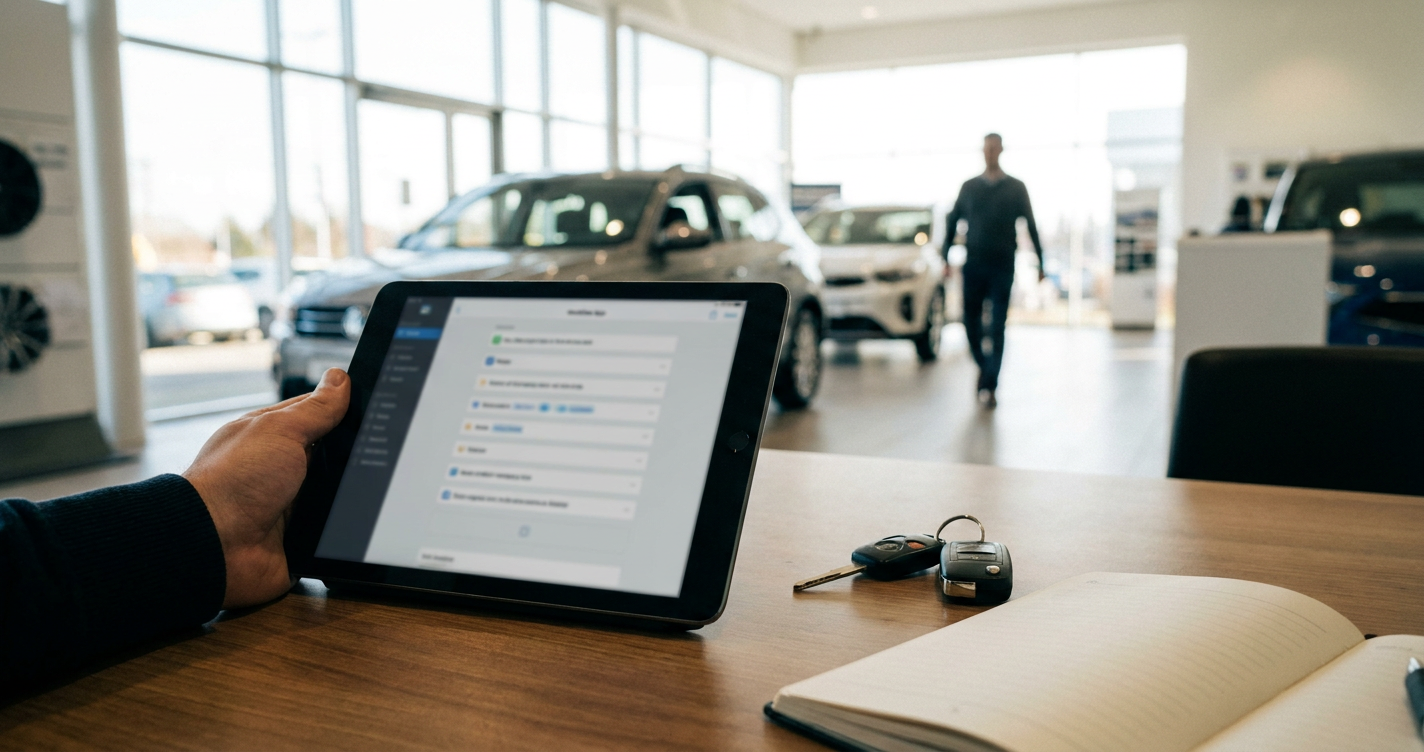
Why Enquiry Handling Determines Your Conversion Rate
Efficient enquiry handling directly impacts your conversion rate because buyers contact multiple dealers simultaneously and purchase from whoever responds first with the information they need. Research across UK dealerships shows that responding within five minutes increases conversion likelihood by 400% compared to responding after an hour. The difference between a systematic workflow and ad-hoc enquiry management is the difference between capturing motivated buyers and watching them purchase elsewhere.
Your enquiry workflow encompasses every touchpoint from initial contact through to showroom visit or sale completion. This includes phone calls, email enquiries, web chat messages, social media direct messages, and enquiries routed from listing platforms. Each channel requires specific handling procedures, but the underlying principles remain consistent: speed, accuracy, and personalisation.
The cost of poor enquiry management extends beyond lost sales. Slow or inconsistent responses damage your reputation, reduce repeat enquiries, and waste the advertising spend that generated the lead in the first place. When you pay for visibility, whether through traditional classifieds or direct dealer connections, every enquiry represents a return on that investment.
Setting Up Your Enquiry Triage System
An effective triage system categorises incoming enquiries by urgency, source, and vehicle type, ensuring each query reaches the right team member within minutes rather than hours. Start by designating specific team members to monitor each enquiry channel during business hours. Phone enquiries require immediate pickup, email and web form submissions need responses within 15 minutes, and social media messages should receive acknowledgement within 30 minutes.
Create a simple priority matrix. Hot leads include enquiries about specific vehicles in stock, requests for test drives, and finance pre-approval questions. Warm leads cover general stock enquiries, part-exchange valuations, and specification questions. Cold leads include newsletter sign-ups, generic information requests, and catalogue downloads. Hot leads demand immediate personal response, warm leads need same-day handling, and cold leads can enter automated nurture sequences.
Use a shared inbox or CRM system that prevents duplicate responses and tracks which team member is handling each enquiry. Google Workspace, Microsoft 365, and dedicated automotive CRM platforms all offer shared mailbox functionality. Tag each enquiry with source, vehicle type, and status so any team member can see at a glance what action is required.
The First Response Template That Converts
Your first response must acknowledge the specific vehicle or requirement the buyer mentioned, confirm current availability, and provide one new piece of valuable information they did not request. Generic "thank you for your enquiry" messages achieve nothing. Instead, reference the exact vehicle by registration or stock number, confirm it is still available, and include either the service history status, recent maintenance work, or next available test drive slot.
Structure your template with five elements: personal greeting using their name, specific vehicle confirmation, availability status, one value-add detail, and clear next step. For example: "Good morning Sarah, thank you for your enquiry about the 2021 Volkswagen Golf 1.5 TSI (registration YM71 ABC). This vehicle is currently in stock at our Nottingham site and has a full Volkswagen service history with the last service completed at 32,000 miles in January 2025. I have test drive availability tomorrow at 2pm or Friday at 10am. Which suits you better?"
Avoid asking buyers to call you back or visit without appointment. Take control of the next step by offering specific options that require only a yes/no decision. This reduces friction and moves the conversation forward. Include your direct mobile number and email signature with your photo to personalise the interaction.
Managing Multi-Channel Enquiries Without Duplication
Buyers frequently contact dealers through multiple channels simultaneously, sending an email, filling a web form, and calling within the same hour. Without proper systems, this results in three different team members providing conflicting information or, worse, no response at all because each assumes a colleague is handling it. Implement a central logging system where every enquiry is recorded immediately with timestamp, source, and assigned team member.
When you receive an enquiry, check your CRM or shared system first to see if the same buyer has already made contact. If they have, consolidate the conversation into a single thread and inform the buyer you are coordinating their enquiry across channels. This demonstrates professionalism rather than disorganisation.
For dealers using stock feed integrations, enquiries may arrive from your own website, manufacturer portal, and third-party platforms. Integrate your stock feed with a central enquiry management system so all leads flow into one place regardless of origin. This prevents the common scenario where website enquiries receive fast responses but platform enquiries sit unread for hours.
GDPR-Compliant Enquiry Recording and Storage
Every buyer enquiry contains personal data that must be processed lawfully under UK GDPR. Your lawful basis for processing enquiry data is typically legitimate interest (you have a genuine business reason to respond to someone asking about your vehicles) or contract (when the enquiry relates to a potential sale). Document your lawful basis and ensure your privacy policy explains how you handle enquiry data.
Store enquiry records securely with access restricted to team members who need them for sales purposes. Email systems, CRM platforms, and paper records all require appropriate security measures. Delete or anonymise enquiry data after a reasonable retention period, typically 12-24 months for unconverted leads. Buyers who request erasure under GDPR Article 17 must have their data removed unless you have compelling legitimate grounds to retain it.
When buyers ask about GDPR compliance, provide clear information about how long you retain their data, who has access, and how they can request erasure. This transparency builds trust and differentiates professional dealers from those who treat data protection as an afterthought. Never share buyer contact details with third parties without explicit consent, and never add enquirers to marketing lists without opt-in permission.
Response Time Targets by Enquiry Type
Different enquiry types demand different response speeds. Phone calls require immediate pickup during business hours, with voicemail messages returned within two hours. Email enquiries about specific vehicles need responses within 15 minutes during business hours and within two hours outside normal hours. General stock enquiries can wait up to four hours, but same-day response remains the target.
Test drive requests are hot leads that deserve immediate priority. Respond within five minutes confirming availability and offering specific time slots. Finance enquiries need same-day response with clear next steps, whether that is completing a full application or discussing deposit requirements. Part-exchange valuations should receive an initial response within 30 minutes, even if the full valuation requires the buyer to send additional photos or attend for inspection.
Social media enquiries often come from mobile users who expect instant response. Acknowledge receipt within 30 minutes and provide substantive information within two hours. For platforms like Facebook Messenger and Instagram Direct, enable automated away messages outside business hours that set expectations for response timing.
Converting Enquiries to Appointments
The primary goal of enquiry handling is not to answer every question remotely but to secure a showroom visit or test drive appointment. After providing initial information, guide the conversation toward a specific appointment time. Use assumptive language: "When would you like to see this vehicle?" rather than "Would you like to arrange a viewing?"
Offer specific time slots rather than open-ended availability. "I have 2pm today or 10am tomorrow available" converts better than "When suits you?" because it requires a simple choice rather than a complex decision. If the buyer cannot commit immediately, suggest a follow-up call at a specific time: "I will call you at 4pm this afternoon to confirm your preferred slot."
For buyers who want to continue the conversation remotely, provide information in stages rather than overwhelming them with everything at once. Answer their immediate question, then ask one qualifying question that moves the conversation forward: "This Golf has the full leather interior you mentioned. Are you looking to finance or purchase outright?" Each exchange should build rapport and gather information that helps you prepare for the eventual appointment.
Handling Difficult or Unclear Enquiries
Some enquiries lack essential information, contain unrealistic requirements, or come from buyers who are not genuinely in-market. Rather than dismissing these outright, use them as opportunities to qualify and educate. When an enquiry is vague ("Do you have any good cars?"), respond with a helpful framework: "I would be happy to help you find the right vehicle. What is your budget, and what will you primarily use the car for?"
For buyers with unrealistic expectations (£5,000 budget for a three-year-old BMW 5 Series with under 20,000 miles), provide education rather than rejection. Explain current market pricing, show what is available within their budget, and offer alternatives that meet their underlying needs rather than their stated specifications. This positions you as a trusted advisor rather than just another salesperson.
When enquiries contain insufficient contact information or come from obvious spam sources, do not waste time on detailed responses. A brief acknowledgement is sufficient: "Thank you for your enquiry. Please provide your phone number and preferred contact time so I can discuss your requirements in detail." Genuine buyers will respond; time-wasters will not.
Using Technology to Streamline Repetitive Tasks
Automation handles repetitive tasks without sacrificing personalisation. Use email templates with merge fields for buyer name, vehicle details, and specific features. Create template libraries for common scenarios: initial acknowledgement, finance information, part-exchange process, test drive confirmation, and post-visit follow-up. Customise each template before sending to ensure it addresses the buyer's specific question.
CRM systems can automate follow-up sequences for buyers who do not respond to initial contact. A typical sequence includes: immediate acknowledgement, same-day follow-up if no response, next-day follow-up with additional information, and weekly check-ins for up to four weeks. Each message should provide new value (price reduction, similar vehicle arrival, finance offer) rather than simply asking "are you still interested?"
Chatbots and AI assistants handle initial qualification outside business hours, capturing buyer requirements and scheduling callbacks during office hours. These tools work best for answering factual questions (opening hours, stock availability, finance options) while routing complex enquiries to human team members. Ensure your chatbot clearly identifies itself as automated and offers the option to speak with a person.
Measuring and Improving Your Enquiry Performance
Track four key metrics: average response time, enquiry-to-appointment conversion rate, appointment-to-sale conversion rate, and enquiry source performance. Calculate average response time by recording the timestamp of each enquiry and your first substantive response. Aim for under 15 minutes during business hours and under two hours outside normal hours.
Enquiry-to-appointment conversion should exceed 40% for enquiries about specific vehicles in stock. Lower conversion rates indicate problems with response quality, vehicle availability, or pricing. Track conversion by source to identify which channels deliver the highest-quality leads. Enquiries from your own website typically convert better than those from third-party platforms because buyers have already researched your business.
Review a sample of enquiry conversations monthly to identify improvement opportunities. Look for common questions that could be answered proactively in your listings, objections that need better handling scripts, and team members who consistently achieve higher conversion rates. Share best practices across your team and update templates based on what works.
Building Long-Term Relationships Beyond the Sale
Efficient enquiry handling does not end when the sale completes. Maintain contact with buyers who did not purchase, sending periodic updates about new stock that matches their requirements. A buyer who enquired three months ago but did not proceed may now be ready to purchase, and your follow-up keeps you top-of-mind.
For buyers who did purchase, enquiry handling transitions to after-sales service. Send a follow-up message one week after collection asking if they have any questions, then monthly check-ins for the first six months. This builds loyalty and generates referrals. When buyers know they can contact you with questions after purchase, they are more likely to recommend you to friends and family.
Document buyer preferences and requirements in your CRM so future interactions feel personal rather than generic. When a previous buyer contacts you two years later looking for their next vehicle, referencing their previous purchase and asking how they found it demonstrates you value the relationship beyond the transaction.
Frequently Asked Questions
How quickly should I respond to weekend enquiries?
Weekend enquiries require response within two hours during Saturday trading hours and by Monday morning for Sunday enquiries. Buyers who enquire at weekends are typically more motivated than those who enquire mid-week, so fast response is critical. Enable email notifications on your mobile device and designate a weekend duty manager who monitors enquiries every two hours. If you cannot provide full information immediately, send an acknowledgement promising detailed response within a specific timeframe.
What should I do when the enquired vehicle has just sold?
Respond immediately confirming the vehicle has sold, apologise for the timing, and offer three alternatives: similar vehicles currently in stock, notification when comparable stock arrives, or details of incoming stock that matches their requirements. Never leave the conversation hanging with just "sorry, it is sold." This is an opportunity to demonstrate your stock depth and customer service. Approximately 30% of buyers who enquire about sold vehicles will purchase an alternative if you provide good options quickly.
Should I include pricing in my first response?
Always include pricing in your first response if the buyer has asked about a specific vehicle, because withholding it creates suspicion and friction. If the buyer has made a general enquiry without mentioning price, provide a price range for vehicles that match their requirements and ask about their budget. Transparency about pricing builds trust and qualifies buyers early in the conversation. Buyers who are genuinely interested will engage with pricing information; those who disappear after seeing the price were unlikely to convert regardless.
How do I handle enquiries from buyers located far from my dealership?
Acknowledge the distance and offer solutions: detailed video walk-around, additional photos, extended test drive, or delivery to their location. Ask whether they are willing to travel or prefer remote purchase with delivery. Many buyers will travel significant distances for the right vehicle at the right price, particularly for specialist or rare models. Be transparent about delivery costs and timescales if you offer that service. Remote buyers often convert well because they have already committed to the effort of searching beyond their local area.
What information should I gather in the first enquiry conversation?
Capture buyer name, preferred contact method, specific vehicle interest or requirements, purchase timeframe, and whether they have a vehicle to part-exchange. Avoid interrogating buyers with lengthy questionnaires in the first interaction. Gather essential information to provide relevant response, then collect additional details (finance requirements, specific features, usage patterns) in subsequent conversations. The goal of the first interaction is to establish rapport and secure the next step, not to complete a full needs analysis.