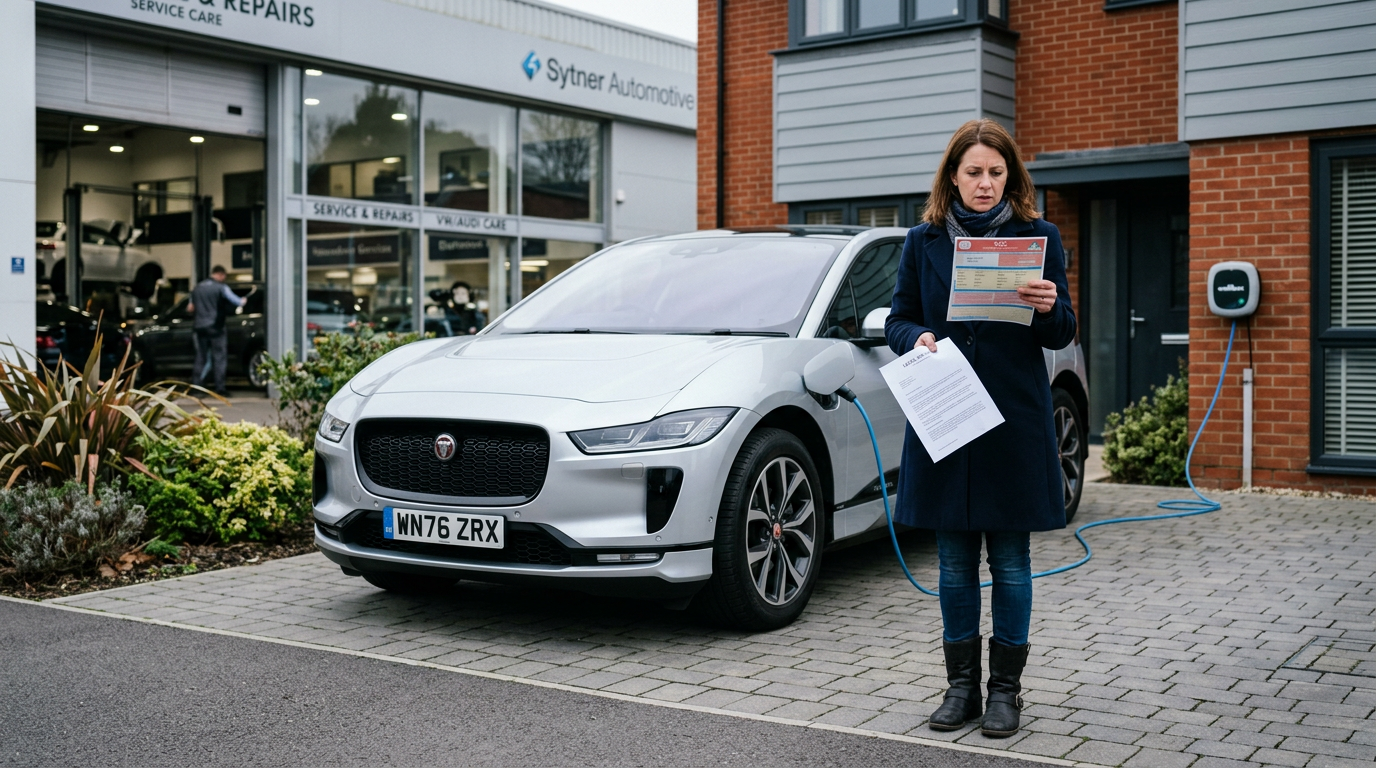
It persists as one of the most stressful scenarios for any used car buyer: discovering that the "dream deal" you bought privately still has outstanding finance. As we navigate the automotive landscape of 2026, where digital records are more accessible than ever, many buyers still find themselves asking, "Can I keep the car if there's unpaid debt?"
The answer lies in a complex, 60-year-old piece of legislation known as the Hire Purchase Act 1964. While modern systems like CarsLink.ai help thousands of buyers avoid this trap, understanding "Good Title" claims is essential for anyone currently facing a repossession threat from a finance house.
What is 'Good Title' in 2026?
In standard UK contract law, you cannot sell something you do not own. Because a car on Hire Purchase (HP) or a Personal Contract Purchase (PCP) is legally owned by the finance company until the final payment is made, a seller technically has no right to sell it.
However, the Hire Purchase Act 1964 (Part III) provides a unique protection for "innocent private purchasers." If you can prove you acted in good faith, you may be granted Good Title, meaning the legal ownership of the vehicle passes to you, and the finance company’s claim shifts from the car to the original debtor.
The Criteria for a Successful 'Good Title' Claim
In 2026, the burden of proof is high. To successfully claim Good Title against a finance company, you must satisfy three historical pillars:
- Private Purchaser Status: You must not be a motor trader. If you buy through a dealership (even a small one), different laws apply (primarily the Consumer Rights Act 2015).
- Good Faith: You must have had no reason to suspect the car had outstanding finance.
- Notice: You must not have been aware of the finance at the time of the sale.
The Role of the Hire Purchase Act 1964 Today
Despite being six decades old, the Hire Purchase Act 1964 remains the primary shield for private buyers. However, the definition of "Good Faith" has evolved with technology.
In the 1990s, "Good Faith" meant asking the seller if the car was clear. In 2026, finance companies argue that any "prudent" buyer should have performed a digital provenance check. If you bought a £30,000 electric SUV for £15,000 without running a HPI or similar check, a court is unlikely to grant you Good Title, as the price alone should have raised a "red flag."
Comparative: Private Sale vs. Trade Sale Protections
| Feature | Private Sale (Hire Purchase Act) | Trade Sale (Consumer Rights Act) |
|---|---|---|
| Legal Protection | Section 27, Hire Purchase Act 1964 | Consumer Rights Act 2015 |
| Recourse | Can keep the car (if criteria met) | Right to a full refund from the dealer |
| Burden of Proof | On the buyer to prove "Good Faith" | On the dealer to provide "Clear Title" |
| Discovery Post-Sale | Risk of repossession by lender | Legal obligation for dealer to resolve |
Dealing with Undeclared Finance UK: Step-by-Step
If you receive a letter from a finance company (or a knock at the door from a recovery agent) stating they intend to repossess your vehicle due to unpaid car debt, do not panic, but act immediately.
1. Do Not Hand Over the Keys Immediately
Unless they have a court order, you are not legally required to hand over the car on the spot if it is parked on private land (like your driveway). State that you are claiming "Good Title" under the Hire Purchase Act 1964 and require time to provide evidence.
2. Gather Your Paperwork
To prove Good Faith, you will need:
- The original advertisement (take a screenshot if it’s still online).
- The V5C logbook (though this is not proof of ownership, it shows you followed DVLA procedures).
- Receipts or bank transfer records showing you paid a "fair market price."
- Any correspondence with the seller where they claimed the car was clear of debt.
3. Contact the Finance Company’s Legal Department
Send a formal letter (or email) asserting your right to the vehicle. Explain that you are a private purchaser who acted in good faith without notice of the lien. If you used a platform like CarsLink.ai to verify the vehicle's history, include your digital certificate as evidence of your due diligence.
The 2026 Digital Landscape: Is HPI Sufficient?
By 2026, the integration of blockchain and real-time DVLA data has made it harder for scammers to hide undeclared finance in the UK. However, "synchronisation gaps" still occur where a new finance agreement hasn't yet hit the central databases.
Lenders are increasingly aggressive. They argue that because vehicle history checks are now inexpensive and accessible via smartphones in seconds, failing to perform one constitutes "negligence" rather than "good faith."
Pro Tip: Always perform a check on the day of purchase, as close to the money transfer as possible. A check performed a week earlier may not show a "logbook loan" or a last-minute PCP agreement.
Can I Get My Money Back from the Seller?
If the finance company successfully proves you didn't act in good faith and they repossess the car, your only recourse is to sue the seller for a breach of contract (specifically, a breach of the implied term that they had the right to sell the goods).
In 2026, the reality is that sellers who disappear with finance money are often "men of straw"—individuals with no assets to sue. This is why securing Good Title is often the only way to avoid a total financial loss.
Checklist: How to Ensure You Get 'Good Title'
- Verify the Seller: Match the V5C name to the seller’s photo ID.
- Pay via Bank Transfer: Avoid large cash sums; transfers create a traceable "fair value" record for the courts.
- Keep the Advert: If the seller claimed "No Finance" in the listing, that is your strongest evidence.
- Use Professional Platforms: When browsing, use trusted marketplaces like CarsLink.ai that provide integrated history checks and buyer protection advice.
Summary
In 2026, you can keep a car with unpaid finance, but only if you are the victim of a fraudulent sale and can prove you did your homework. The Hire Purchase Act 1964 remains a powerful tool, but it is not a "get out of jail free" card for those who ignore obvious warning signs.
The best defence is a proactive offence. Before you sign that V5C or transfer your hard-earned digital currency, ensure you have a professional history check in hand.
*Protect your investment and find your next vehicle with confidence at CarsLink.ai, the UK's most trusted AI-driven automotive marketplace.*optic