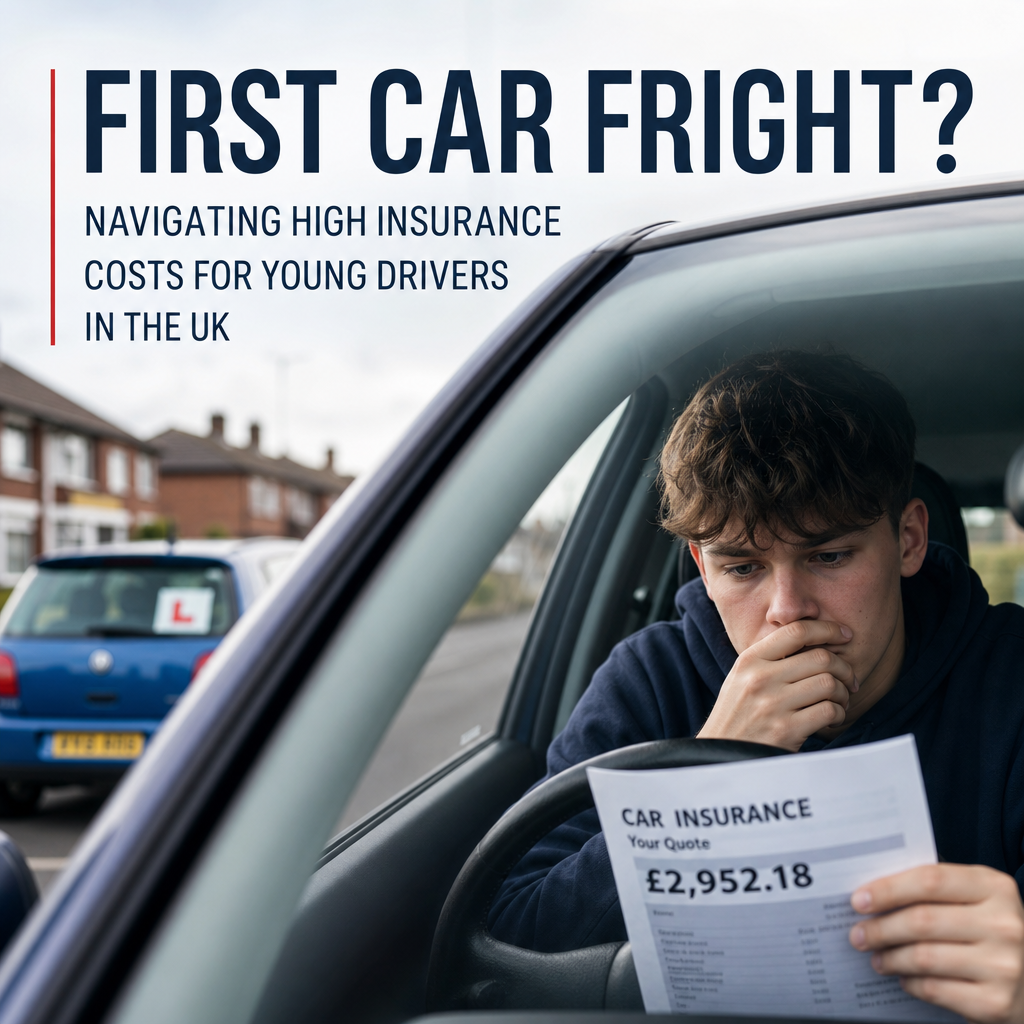
First Car Fright? Navigating High Insurance Costs for Young Drivers in the UK
The exhilarating thought of buying your first car – the freedom, the independence, the endless possibilities – is a rite of passage for many young people across the UK. But for countless aspiring motorists, that excitement is quickly tempered by the sobering reality of insurance quotes. For new and young drivers, the cost of car insurance can often eclipse the price of the car itself, creating a significant barrier to getting on the road.
At CarsLink.ai, we understand this frustration. It's a daunting prospect, but it doesn't have to be an insurmountable one. This guide is designed to arm young drivers and their families with the knowledge and practical strategies needed to navigate the complex world of car insurance, making that first step into motoring more affordable and less frightening.
Understanding Why Premiums Are Sky-High for Young Drivers
Before we dive into solutions, it's crucial to understand why insurers classify young and new drivers as high-risk, leading to those eye-watering premiums.
Firstly, age and experience are paramount factors. Statistically, drivers under the age of 25, particularly those within their first couple of years of driving, are significantly more likely to be involved in an accident. This isn't just about speed; it's about a lack of road experience, hazard perception skills still developing, and a natural youthful inclination towards risk-taking. Insurers base their models on vast amounts of data, and unfortunately, this demographic consistently falls into a higher risk category. Unlike seasoned drivers, new licence holders also lack a No Claims Discount (NCD), which gradually builds over years of incident-free driving and offers substantial premium reductions.
Secondly, the vehicle type plays a huge role. While a small, seemingly modest car might appear cheap to buy and run, if it's popular with young drivers or has characteristics that make it statistically more prone to theft or accident involvement (e.g., even a small engine with surprisingly good acceleration), its insurance group will be higher. Performance, engine size, vehicle security features, the cost of parts, and the likelihood of being stolen are all factored into a car's insurance group rating, which ranges from 1 (cheapest to insure) to 50 (most expensive).
Finally, factors like your postcode (reflecting local crime rates and traffic density) and where you typically park your car (e.g., locked garage vs. on-street) also contribute to the overall risk assessment. When all these elements combine, young drivers often face a perfect storm of high-risk indicators.
Smart Car Choices: Identifying Low Insurance Group Vehicles
One of the most impactful decisions you can make to reduce insurance costs is selecting the right car. Focusing on vehicles in lower insurance groups (ideally 1-5, but up to 10 can be manageable) can make a significant difference. These cars typically have smaller engines, less power, are cheaper to repair, and are often fitted with good standard security features.
Here are some examples of popular used cars in the UK that frequently fall into lower insurance groups, making them excellent choices for new drivers:
- Volkswagen Up! / Skoda Citigo / SEAT Mii: These three city cars are mechanically identical triplets, often found in insurance groups 1 or 2. They're compact, incredibly fuel-efficient, surprisingly spacious for their size, and dependable. Perfect for urban driving and first-time owners.
- Toyota Aygo / Citroën C1 / Peugeot 107/108: Another trio of popular city cars, known for their reliability and low running costs. Many variants sit comfortably in insurance groups 1-3. They're light, nimble, and easy to manoeuvre.
- Hyundai i10 / Kia Picanto: Both Korean manufacturers offer excellent small hatchbacks with great reliability records, good build quality, and often generous equipment levels. Their entry-level engines typically place them in very low insurance groups. Look out for used models with any remaining manufacturer warranty for added peace of mind.
- Ford Fiesta / Vauxhall Corsa (specific trims/engines): While popular, the Fiesta and Corsa ranges are vast. It's crucial to check specific engine sizes and trim levels. For example, a 1.25-litre Ford Fiesta from earlier generations or a 1.0-litre non-turbo EcoBoost model will be significantly cheaper to insure than a higher-spec ST-Line or a more powerful engine. Similarly, entry-level Corsa models with smaller engines will be in lower groups. Always check the exact car's insurance group using its registration number before committing to a purchase.
Remember, the goal isn't just to find a cheap car to buy, but a cheap car to insure. Always get a specific insurance quotation for any vehicle you are seriously considering, using its registration number, before you put down a deposit.
Embracing Telematics: The "Black Box" Solution
For many young drivers, telematics insurance, often referred to as "black box" insurance, can be the key to unlocking affordable premiums. This type of policy involves installing a small device (the "black box") in your car, or sometimes using a smartphone app, to monitor your driving behaviour.
How it Works: The black box records data on various aspects of your driving, including:
- Speed: How often and by how much you exceed speed limits.
- Acceleration and Braking: Smoothness vs. harsh, sudden movements.
- Cornering: How you take bends.
- Time of Day: Driving during peak accident times (e.g., late at night or early morning) can negatively impact your score.
- Mileage: Some policies have caps, and exceeding them can incur charges or higher premiums.
Pros of Telematics:
- Significant Cost Savings: For responsible drivers, telematics can reduce premiums by hundreds, sometimes thousands, of pounds. For many young drivers, it's the only truly affordable option.
- Encourages Safer Driving: Knowing your driving is being monitored can lead to better habits, making you a safer driver overall.
- Builds a Driving Profile: Over time, a good telematics record can serve as proof of your safe driving, potentially leading to even lower premiums in subsequent years.
- Potential Accident Support: In the event of an accident, some black boxes can detect a collision and alert emergency services, as well as provide data that can be useful for claims.
Cons of Telematics:
- Privacy Concerns: Some drivers are uncomfortable with the idea of being constantly monitored.
- Restrictions: Policies often come with curfews (e.g., no driving between 11 pm and 5 am) or mileage limits. Breaching these can result in penalties or increased costs.
- Punitive Measures: If your driving is consistently poor, your premium could increase, or your policy might even be cancelled.
- Installation: While usually free, it involves a visit from an installer.
Telematics is an excellent option for conscientious young drivers willing to adapt their driving habits. It's a way to prove you're a lower risk than the statistics suggest, and in return, you get much more palatable insurance costs.
Practical Strategies for Cutting Your Premium
Beyond choosing the right car and considering telematics, several practical steps can further chip away at those insurance costs:
Add an Experienced Driver as a Named Driver: Including an older, experienced driver with a clean record (e.g., a parent or guardian) on your policy can often lower your premium. Insurers see the risk as being shared or mitigated by the presence of a more seasoned driver. Crucially, the named driver must not be the main driver. "Fronting" – illegally stating that an experienced driver is the main driver when they are not – is insurance fraud, carries severe penalties, and will lead to your policy being cancelled, making it near impossible to get future insurance. The main driver must genuinely be the person who uses the car most often.
Take an Advanced Driving Course: Courses like Pass Plus (taken after your driving test) or those offered by organisations like IAM RoadSmart demonstrate a commitment to safe driving and can sometimes earn you a discount with certain insurers. While there's an upfront cost, the potential savings on insurance over a few years, plus the valuable skills gained, can make it a worthwhile investment.
Increase Your Voluntary Excess: Your insurance excess is the amount you agree to pay towards a claim before the insurer pays the rest. This typically comprises a compulsory excess (set by the insurer) and a voluntary excess (chosen by you). By increasing your voluntary excess, you are agreeing to take on more of the financial risk in the event of a claim, which can result in a lower premium. However, only choose an amount you can realistically afford to pay out of pocket should you need to make a claim.
Boost Car Security: Parking your car in a locked garage overnight, or on a secure driveway, is viewed more favourably by insurers than parking on the street. Installing approved security devices like an immobiliser, alarm, or tracking device (if not already fitted) can also lead to discounts. Always declare these features accurately when getting a quote.
Accurate Mileage Declaration: Be honest about your estimated annual mileage. Driving fewer miles generally means lower risk. Don't underestimate drastically, as this could invalidate your policy, but don't overestimate if you only plan to use the car for short commutes.
Shop Around Diligently: Use comparison websites, but don't stop there. Get quotes directly from insurers, as some don't list on comparison sites. Always compare like-for-like policies to ensure you're getting the coverage you need. Renewing with your current insurer without checking the market is almost always more expensive.
Conclusion
Getting on the road as a young driver in the UK certainly comes with its financial hurdles, particularly concerning car insurance. However, by understanding the factors at play and proactively implementing these strategies, you can significantly mitigate those costs.
From making an informed decision about your first car, embracing the cost-saving potential of telematics, to applying smart practical tips like adding an experienced named driver or completing an advanced driving course, there are many avenues to explore. Be diligent, be patient, and remember that safe driving habits today will lead to more affordable motoring in the years to come. Your journey to independence is within reach – just make smart choices along the way!