As we navigate 2026, the electric vehicle (EV) landscape in the UK has matured significantly. With the ZEV mandate firmly in place and the second-hand market burgeoning, the phrase on every buyer's and owner's lips isn't 'range' anymore—it’s battery longevity.
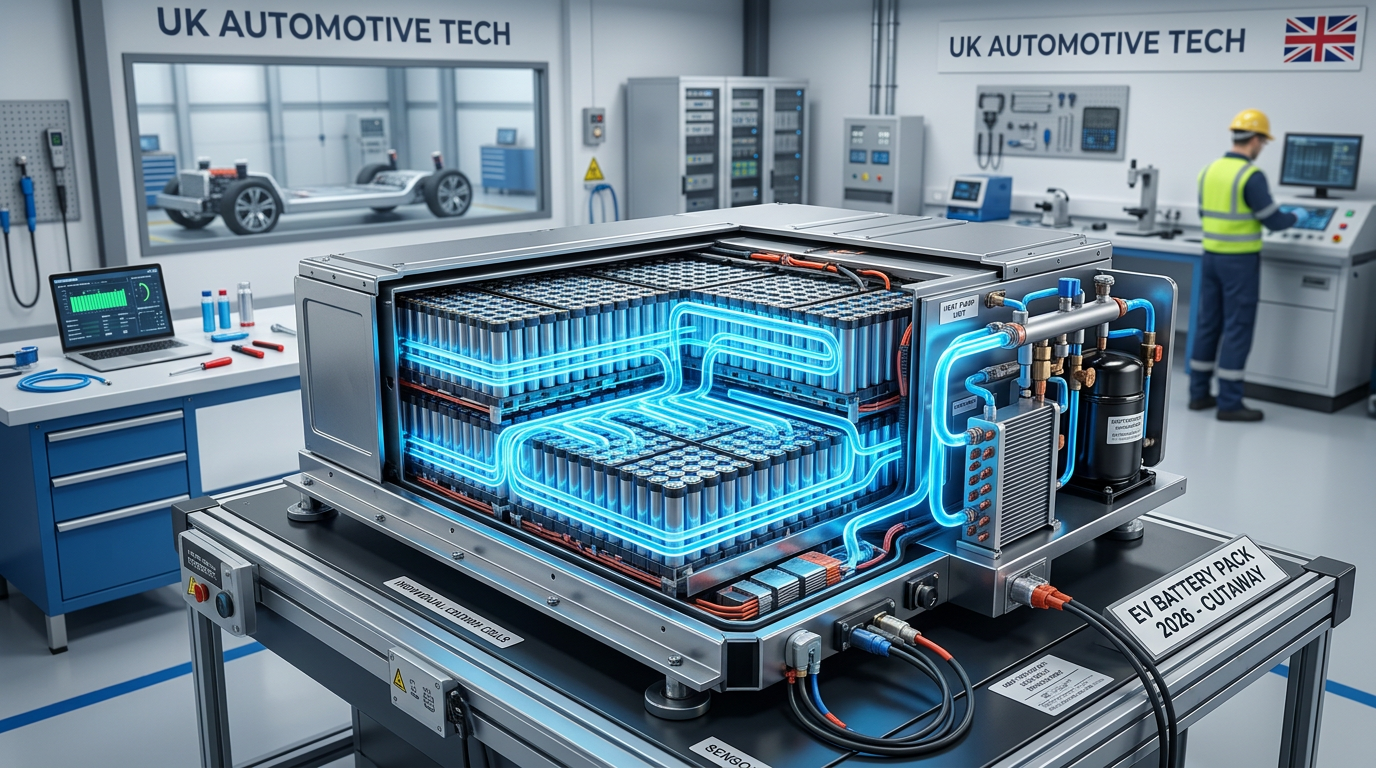
At the heart of this shift lies EV thermal management. While early electric cars relied on simple air cooling, the 2026 generation of vehicles uses sophisticated systems to ensure that batteries remain within a 'Goldilocks' temperature zone. Understanding these systems is no longer just for engineers; it’s vital for protecting your car's residual value and ensuring long-term reliability.
Why Temperature is the Enemy of EV Battery Health in 2026
Lithium-ion and the emerging Solid-State batteries found in 2026 models are chemically sensitive. Extreme temperatures—both high and low—trigger physical changes that lead to battery degradation.
- Excessive Heat: Causes the buildup of a Solid Electrolyte Interphase (SEI) layer on the anode, which permanently blocks the flow of ions.
- Extreme Cold: Increases internal resistance, meaning the battery has to work harder to deliver power, leading to reduced range and slower charging speeds.
By managing these temperatures through active cooling and heating, modern EVs can now realistically expect a lifespan of 15 to 20 years, far outlasting the traditional internal combustion engine.
Advanced Cooling Technologies: What’s Under the Bonnet?
In 2026, we have moved beyond basic liquid cooling. Manufacturers are now utilizing several high-tech methods to keep EV thermals in check:
1. Immersion Cooling
Common in high-performance EVs and now trickling down to premium SUVs, immersion cooling involves bathing the battery cells directly in a non-conductive, dielectric fluid. This is significantly more efficient than 'cold plate' cooling, as it removes heat from the entire surface of the cell.
2. Heat Pump Integration
The heat pump is the unsung hero of the 2026 EV. By scavenging waste heat from the motors and the battery pack to warm the cabin (and vice versa), the car operates as a closed thermal loop. This preserves range during UK winters and prevents the battery from 'cold-soaking' when parked.
3. Smart Pre-conditioning
Modern navigation systems now automatically communicate with the thermal management system. If you set a route to a high-speed IONITY or Gridserve charger, the car will pre-heat or cool the battery to the optimal temperature (usually around 25-30°C) before you arrive, ensuring 10-80% charge times remain under 20 minutes without damaging the cells.
EV Battery Health: Comparing 2020 vs 2026 Standards
The progress made in the last six years is staggering. Here is how thermal management has improved the ownership experience:
| Feature | 2020 Standard EV | 2026 Advanced EV |
|---|---|---|
| Typical Cooling | Passive or Simple Liquid | Active Liquid / Immersion |
| Degradation Rate | 1.5% - 2.5% per year | 0.5% - 1.0% per year |
| Rapid Charging | Throttled after one session | Consistent "Flat" Charging Curve |
| UK Winter Range Loss | 20% - 30% | 5% - 10% (with Heat Pump) |
| Average Battery Life | 100,000 - 150,000 miles | 250,000+ miles |
The Impact on Electric Car Servicing in the UK
As vehicles become more complex, electric car servicing in the UK has shifted focus. While you no longer need oil changes, the thermal management system requires its own maintenance schedule.
- Coolant Flushes: Just like an ICE radiator, the dielectric fluids or glycol-based coolants in an EV can degrade or become contaminated. Most manufacturers now recommend a 'Thermal Circuit Check' every 4 to 5 years.
- Pump Performance: The electric pumps that circulate coolant are critical. A failure here can lead to immediate battery derating (limp mode).
- V5C and Health Certificates: In 2026, when selling a car, providing a 'State of Health' (SOH) certificate alongside your V5C is standard practice. These certificates are generated by diagnostic tools that analyze how well the thermal system has protected the cells over the car's life.
When browsing for your next vehicle on CarsLink.ai, you will notice that many listings now include these SOH percentages, providing transparency that was previously unavailable to used car buyers.
Maximising Longevity: Tips for the 2026 Driver
While the car does most of the heavy lifting, your habits still play a role in battery degradation in 2026.
- Avoid 'Deep Cycles': Even with the best cooling, keeping the battery between 20% and 80% reduces chemical stress.
- Time Your Charging: Use a smart home charger to ensure the car finishes charging just before you depart. This keeps the battery naturally warm from the charging process, reducing the energy needed for pre-conditioning.
- Mind the ULEZ and Low-Speed Driving: Frequent 'stop-start' in urban UK environments like London or Manchester can cause heat spikes. Ensure your car’s firmware is updated, as manufacturers often release 'thermal maps' to improve cooling efficiency in traffic.
The Financial Benefit: Road Tax and Residuals
With the 2025 changes to VED (Road Tax) for electric vehicles now fully bedded in, the total cost of ownership (TCO) is a major focus. A well-maintained thermal system doesn't just save the battery; it saves money.
Cars with proven thermal efficiency command a premium on the used market. At CarsLink.ai, we’ve seen that EVs with active immersion cooling or integrated heat pumps retain up to 12% more value over three years compared to early models with legacy cooling systems.
Conclusion
In 2026, the 'engine' of your car is essentially a large, highly controlled chemical reactor. The thermal management system is the guardian of that reactor. By choosing a vehicle with advanced cooling and staying on top of specialized EV servicing, you aren't just protecting a battery—you're securing a high-value asset.
Whether you are looking to buy a new long-range cruiser or a reliable used city car, understanding EV thermals is the key to making a smart investment.
Looking for an EV with a certified battery health check? Visit CarsLink.ai today to browse the UK's most trusted marketplace for modern electric vehicles.