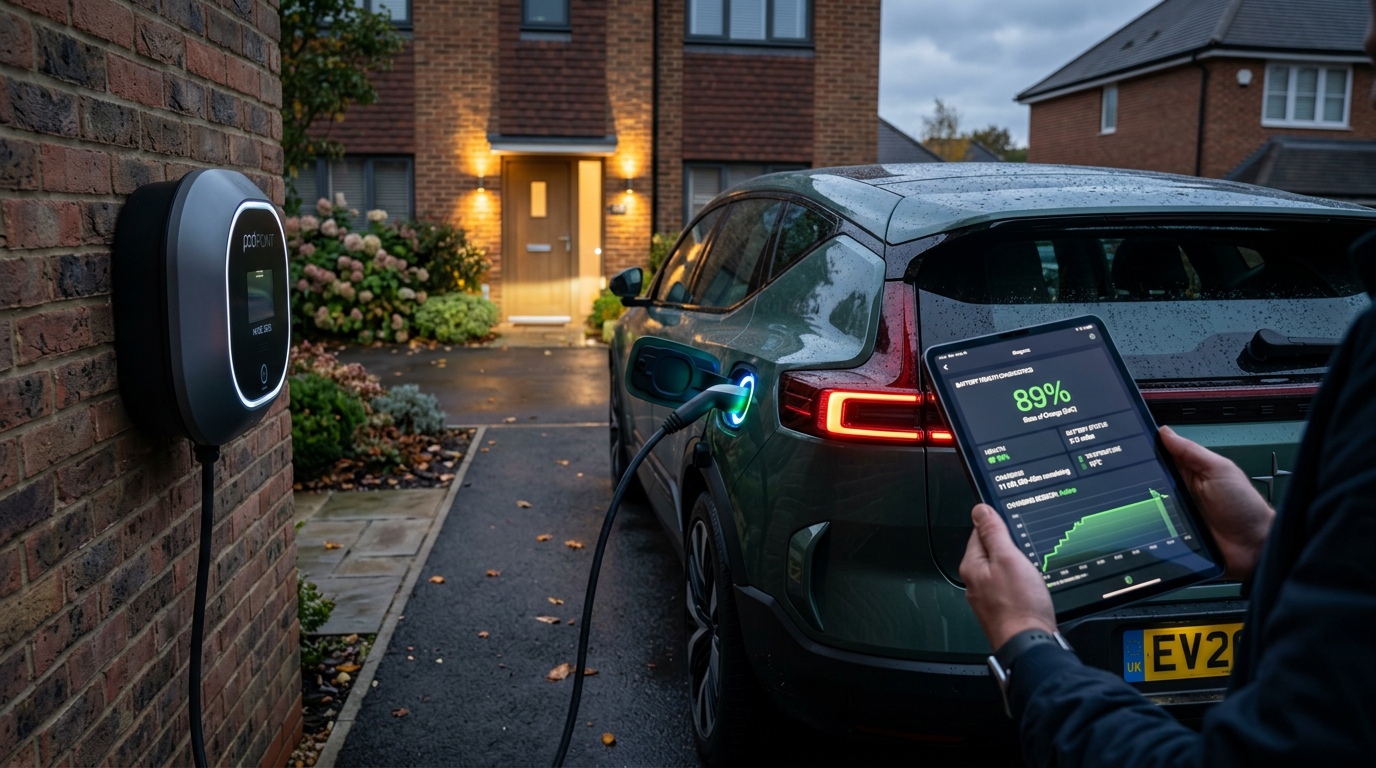
As we move through 2026, the UK’s transition to electric mobility has reached a tipping point. With the 2030 deadline for the end of new petrol and diesel sales looming, millions of British drivers are now navigating the world of electric car servicing UK wide.
While EVs are famously mechanically simpler than their internal combustion engine (ICE) predecessors—boasting roughly 20 moving parts compared to over 2,000 in a petrol engine—the "heart" of the vehicle, the high-voltage battery, requires a specific approach to maintenance. If you want to protect your residual value and ensure your vehicle remains ULEZ-compliant and efficient for years to come, this 2026 guide to EV battery care is essential reading.
The Reality of EV Maintenance in 2026
Contrary to early myths, electric cars are not "maintenance-free." However, according to data from CarsLink.ai, EV owners are currently seeing average servicing costs roughly 30-40% lower than those of equivalent diesel or petrol models.
While you no longer need to worry about oil changes, spark plugs, timing belts, or exhaust systems, your MOT still remains a legal requirement once the car reaches three years of age. During an EV service, technicians focus on high-voltage cables, cooling systems, suspension, and, most importantly, the Battery Management System (BMS).
Five Golden Rules for EV Battery Care in 2026
The lithium-ion and Lithium Iron Phosphate (LFP) batteries found in modern EVs are designed to last the lifetime of the car (typically 150,000 to 200,000 miles). However, your charging habits directly impact "degradation"—the slow loss of maximum capacity over time.
1. The 20-80% Rule
Unless you are heading out on a long motorway journey across the UK, try to keep your battery charge level between 20% and 80%. Consistently charging to 100% or letting the battery drop to 0% creates chemical stress. Most modern EVs allow you to set a "charge limit" via their infotainment screen or mobile app to automate this.
2. Manage Your Rapid Charging
In 2026, the UK's ultra-rapid charging infrastructure has expanded significantly. While 150kW and 350kW chargers are convenient, they generate significant heat. Frequent use of DC rapid charging can accelerate battery degradation. Use slower AC home wallbox charging for your daily needs and save the rapid chargers for long-distance trips.
3. Mind the Thermal Management
Lithium-ion batteries are like humans: they are happiest between 15°C and 25°C. In the British winter, use the "Pre-conditioning" feature while the car is still plugged in. This uses mains electricity to warm the battery, ensuring it operates at peak efficiency from the moment you leave your driveway, protecting the cells from "cold stress."
4. Smooth Driving for Longevity
Aggressive acceleration and heavy braking don't just deplete your range; they cause rapid spikes in battery temperature. Utilising regenerative braking not only preserves your brake pads (which can last over 100,000 miles in an EV) but also feeds energy back into the battery in a controlled, steady manner.
5. Update Your Software
In 2026, many battery improvements are delivered "Over-the-Air" (OTA). Manufacturers often release updates that refine how the BMS manages cell balancing and charging speeds. Always ensure your vehicle’s software is up to date to benefit from the latest efficiency algorithms.
Comparing Maintenance: EV vs Petrol/Diesel (2026 Data)
| Feature | Petrol/Diesel (ICE) | Electric Vehicle (EV) |
|---|---|---|
| Oil & Filter Change | Every 12 months / 10k miles | Never |
| Brake Wear | High (Heavy friction) | Very Low (Regenerative braking) |
| Coolant Systems | Standard | Critical (Battery thermal loop) |
| Road Tax (VED) | Varies by emissions | Now applicable (since 2025) |
| Transmission | Gearbox fluid / Clutch | Simple reduction gear |
| MOT Cost | Standard | Standard (Excluding emissions test) |
The Legal and Paperwork Side: DVLA and V5C
When maintaining your EV, don’t neglect the administrative side. Ensure your V5C logbook correctly identifies the fuel type as "Electricity." As of 2025, EVs are no longer exempt from Vehicle Excise Duty (Road Tax), so ensure your annual renewal is processed to avoid fines.
Furthermore, when the time comes to sell, a "Battery Health Certificate" has become the must-have document for 2026. This independent report shows the remaining capacity (State of Health - SOH) of your battery. Having a health score of 95% or higher significantly boosts the resale value on platforms like CarsLink.ai.
Looking after the "Other" Battery
Every EV still carries a traditional 12V lead-acid battery. This powers the lights, wipers, and infotainment system, and it is also responsible for "waking up" the high-voltage system. A flat 12V battery is the leading cause of EV breakdowns in the UK. During your annual maintenance for electric cars, ensure the technician checks the health of this smaller battery.
Summary: Protecting Your Investment
Long-term EV maintenance in 2026 is less about grease and wrenches and more about thermal management and charging discipline. By following the 20-80% rule and keeping up with professional "EV-trained" technicians for your annual inspections, you can expect your battery to maintain high performance well into the next decade.
Are you looking to upgrade to a newer model with the latest solid-state or LFP battery technology? At CarsLink.ai, we provide the latest insights and a seamless platform to find your next electric vehicle.
Explore the latest EV deals and expert advice at CarsLink.ai today.