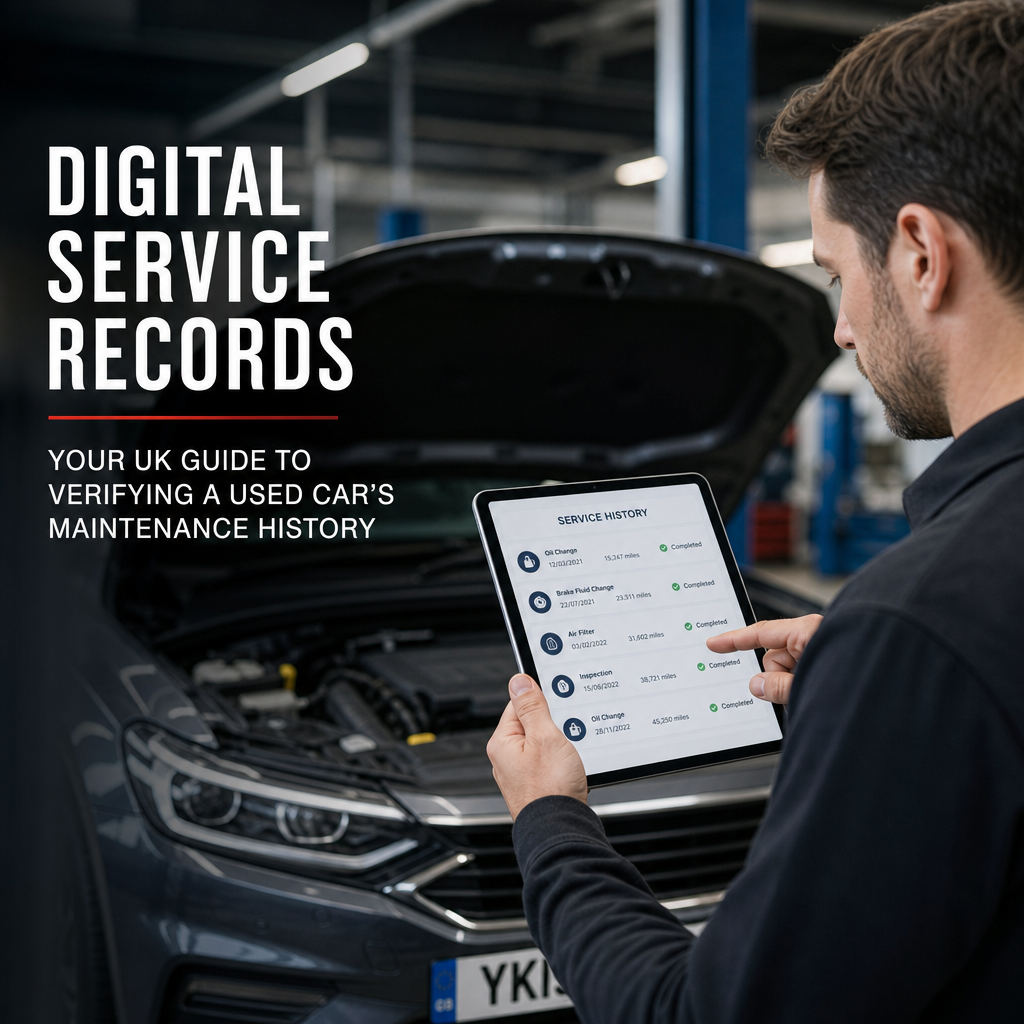
Digital Service Records: Your UK Guide to Verifying a Used Car's Maintenance History
Buying a used car is an exciting prospect, but it also comes with a crucial due diligence checklist. Top of that list for many savvy UK buyers is verifying the vehicle's service history. Traditionally, this meant leafing through a stamped service book – a tangible record of a car's life. However, for modern vehicles, those paper books are increasingly a relic of the past. Enter Digital Service Records (DSRs), the electronic evolution of maintenance tracking that, while offering many advantages, also requires a new approach from used car buyers.
At CarsLink.ai, we understand that transparency and confidence are paramount when making such a significant purchase. This guide will walk you through what DSRs are, how to access and verify them in the UK, potential pitfalls to watch out for, and why a comprehensive service history – digital or otherwise – remains utterly non-negotiable for any discerning buyer.
What Exactly Are Digital Service Records?
Digital Service Records (DSRs) are essentially electronic databases where a vehicle’s entire maintenance history is stored. Instead of stamps and signatures in a physical book, details of services, inspections, and repairs – including dates, mileage, work performed, and parts used – are logged directly onto a manufacturer’s central computer system.
This shift has been driven by several factors. For manufacturers, DSRs offer enhanced efficiency, allowing them to track warranty claims more easily, manage recall campaigns, and gain deeper insights into vehicle longevity and common faults. They also offer a layer of security; unlike a paper book, which can be lost, damaged, or even fraudulently doctored, a DSR is much harder to tamper with. Environmentally, it reduces paper waste, aligning with broader sustainability goals.
Many major manufacturers operating in the UK, such as BMW, Mercedes-Benz, Audi, Volkswagen, Ford, and Land Rover, have fully embraced DSRs for their newer models. While the exact implementation varies by brand, the core principle remains the same: a centralised, digital repository of your car's life story. This means that a technician at a main dealer in Edinburgh should, in theory, be able to access the service history of a car originally sold and serviced in Exeter, provided it's the same manufacturer.
How to Access and Verify DSRs in the UK
Accessing and verifying a DSR for a used car in the UK requires a proactive approach, and often, the cooperation of the current owner. Here’s how you should go about it:
Through a Main Dealership: This is often the most straightforward and reliable method. If the car has been primarily serviced by authorised main dealers, any dealership for that specific brand should be able to access the vehicle's DSR using its Vehicle Identification Number (VIN). As a prospective buyer, you usually can't simply ring up a dealer and demand the records due to data protection regulations (GDPR). The best approach is to either:
- Ask the seller to obtain a printout or email copy of the full DSR directly from a main dealer.
- Arrange to visit a main dealership with the seller. This way, the seller can authorise the dealer to show you the records on their system.
- If you're buying from a main dealer themselves, they must provide you with the full, verifiable DSR.
Manufacturer Owner Portals/Apps: Some manufacturers offer online portals or smartphone apps (e.g., MyAudi, Mercedes me, FordPass) where registered owners can view their car's digital service history. If the seller has an account linked to the vehicle, they might be able to show you the history this way. Again, you would need the seller's cooperation, as you'd need their login details or for them to show you on their device.
Independent Garages: This is where it gets a little more nuanced. If a vehicle has been serviced by an independent garage, they might have updated the manufacturer's central DSR system, especially if they are an authorised service centre for that brand or use specific manufacturer-approved diagnostic tools with DSR integration. However, not all independent garages have this capability or routinely do so. In such cases, the independent garage will have their own digital record (invoices, job sheets, internal service logs). You'll need to request copies of these specific records from the seller, who should be able to provide them or tell you which garage serviced the car so you can attempt to verify (with the seller's permission).
Crucial Point: Always insist on seeing a printout or digital copy of the full DSR, not just a summary. Ensure the VIN on the record matches the VIN on the vehicle.
Navigating Potential Pitfalls with DSRs
While DSRs offer many advantages, they aren't without their complexities, and a discerning buyer needs to be aware of potential pitfalls:
Incomplete Records: This is perhaps the biggest red flag. A DSR should ideally show a continuous history of services carried out at the manufacturer's recommended intervals. Gaps in the record – particularly missed annual services or mileage discrepancies – can indicate a lack of proper maintenance. This could lead to premature wear, underlying mechanical issues, or even invalidate any remaining manufacturer warranty. Always cross-reference the DSR with the vehicle's mileage to ensure consistency.
Non-Main Dealer Servicing and its Impact: UK law dictates that servicing a car at an independent garage does not void its warranty, provided the garage uses OEM-equivalent parts and adheres strictly to the manufacturer's service schedule. However, as mentioned, not all independent garages have the facility to update the manufacturer's central DSR.
- The Challenge: If a car has been serviced outside the main dealer network, its manufacturer DSR might appear incomplete or sparse, even if the car has been meticulously maintained.
- The Solution: In these cases, it's vital to request physical or digital copies of all invoices and job sheets from the independent garages that performed the work. These documents should clearly detail the date, mileage, work performed, and parts used. You'll need to manually cross-reference these with the manufacturer's service schedule to ensure compliance. Don't be put off by independent servicing, but do insist on robust proof.
Data Access Challenges (GDPR): Due to strict data protection regulations (GDPR) in the UK, main dealerships cannot simply hand over a previous owner's entire service history to a prospective buyer who only provides a VIN. The records often contain personal data of the previous keepers. This is why involving the current seller is crucial. If a seller is unwilling or unable to facilitate access to the DSR, it should be a significant cause for concern. Limited service history information might be available through third-party vehicle check services (like HPI checks), but these rarely provide the granular detail of a full DSR.
Why a Verifiable Service History is Non-Negotiable
Whether digital or physical, a comprehensive and verifiable service history is more than just a nice-to-have; it's absolutely crucial for several reasons:
- Buyer Confidence and Peace of Mind: Knowing that a vehicle has been properly maintained according to the manufacturer's schedule provides immense peace of mind. It suggests the car has been looked after, reducing the likelihood of unexpected mechanical failures.
- Resale Value: A full, transparent service history is a massive selling point. Buyers are consistently willing to pay a premium for cars with documented maintenance, as it demonstrates care and reduces future risk. It can significantly boost your car's resale value when it's your turn to sell.
- Safety and Reliability: Regular servicing isn't just about changing oil; it involves vital checks on brakes, tyres, steering, suspension, and other critical components. A well-serviced car is inherently safer and more reliable, minimising the risk of breakdowns or, worse, accidents.
- Warranty Preservation: For newer used cars still under manufacturer warranty, adhering to the service schedule is often a strict condition. A lapse in servicing could invalidate any remaining warranty, leaving you exposed to potentially expensive repair costs.
- Predicting Future Costs: A car with a consistent history of maintenance suggests it’s been cared for. Conversely, a patchy history could indicate neglect, potentially leading to higher future repair bills as neglected components start to fail.
Conclusion
Digital Service Records are the future of vehicle maintenance tracking in the UK, offering security, efficiency, and environmental benefits. However, for used car buyers, they introduce a new layer of verification. Don't be deterred by the absence of a traditional stamp book; instead, equip yourself with the knowledge to request, understand, and scrutinise the digital alternative.
Always insist on seeing robust proof of a vehicle's maintenance history, whether it’s a printout from a main dealer's DSR system or detailed invoices from independent garages. A complete and verifiable service history is a cornerstone of a smart used car purchase, safeguarding your investment, ensuring your safety, and preserving your peace of mind. At CarsLink.ai, we empower you to make informed decisions – and verifying the service history is one of the most important.