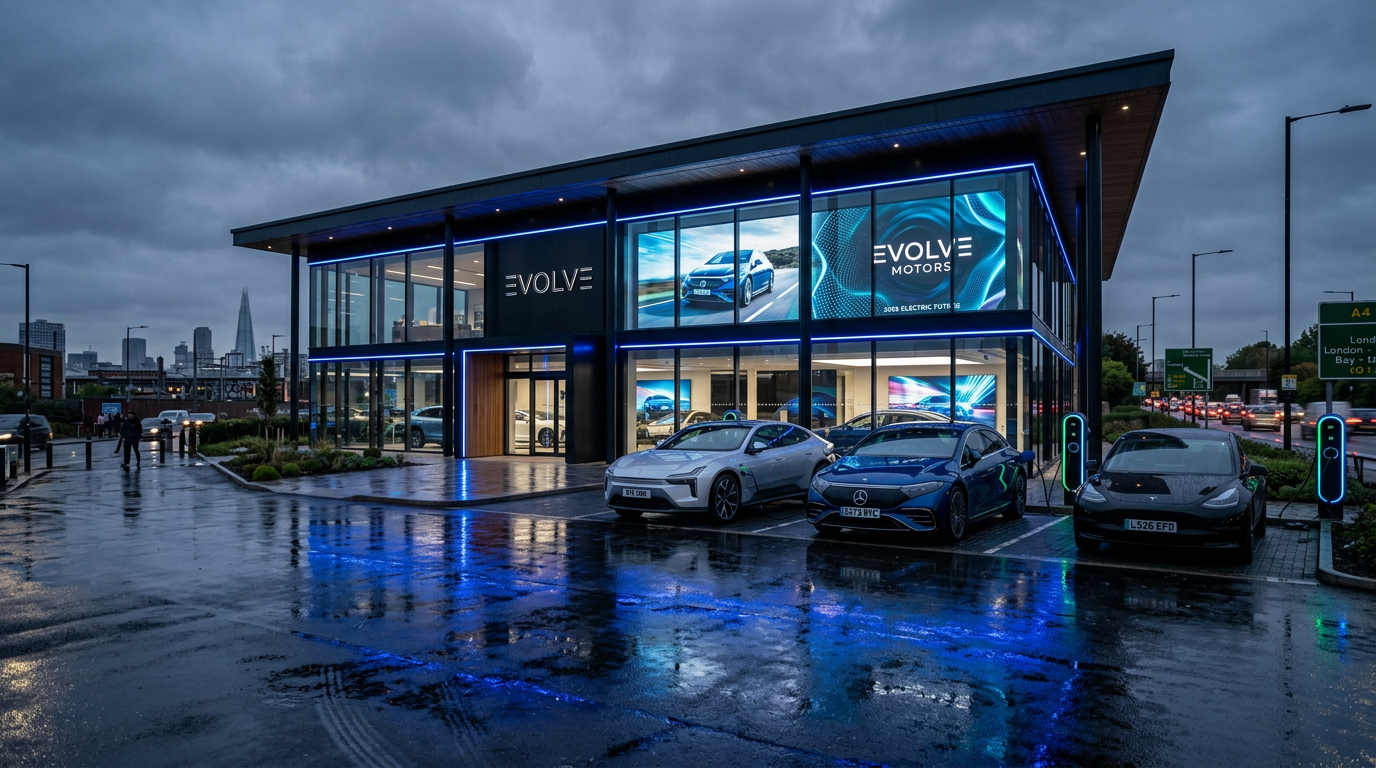
As we move further into 2026, the traditional image of the car dealership—a vast asphalt jungle of gleaming metal under flapping bunting—is rapidly becoming a relic of the past. For decades, the ‘Saturday morning at the forecourt’ was a staple of British car buying. Today, that ritual has been replaced by late-night smartphone scrolling and VR walkthroughs.
The UK automotive retail landscape is undergoing its most profound transformation since the invention of the internal combustion engine. With car supermarket closures 2026 becoming a regular fixture in industry headlines, we must ask: Are we witnessing the death of the forecourt, or simply its evolution?
The Great Reshaping: Why Large Sites are Shrinking
The overheads of maintaining a physical presence on the scale of the traditional 'car supermarket' have become unsustainable. In 2026, property prices in key regional hubs like Manchester, Birmingham, and the M4 corridor remain high, while consumer footfall has dropped by nearly 45% compared to 2019 levels.
Several factors are driving this shift:
- The Agency Model Transition: Major manufacturers like Mercedes-Benz, BMW, and the Stellantis group have fully transitioned to the agency model in the UK. This means the dealer no longer owns the stock; they act as a handover point for a fixed fee.
- Inventory Efficiency: Dealers no longer need 500 cars on-site. AI-driven analytics, such as those integrated into CarsLink.ai, allow retailers to hold leaner, higher-velocity stock that matches local demand precisely.
- Digital Trust: In 2026, the 'Blind Buy'—purchasing a car without a physical viewing—is mainstream. Enhanced 3D 360-degree imagery and AI-verified inspection reports have mitigated the risk that once drove people to forecourts.
The Agency Model: Winners and Losers
The shift to the agency model UK dealers have faced since 2024 has reached its peak in 2026. For the consumer, it brings price transparency—the price you see in Leeds is the same as in London. For the dealer, it removes the pressure of high-interest floor-plan financing but squeezes margins on the metal itself.
| Metric | Traditional Model (Pre-2023) | Agency Model (2026 Standard) |
|---|---|---|
| Pricing Strategy | Haggling/Variable | Fixed/Transparent |
| Stock Ownership | Dealer-owned (high risk) | Manufacturer-owned (low risk) |
| Sales Focus | Volume and Margin | Customer Experience and Aftersales |
| Consumer Journey | Showroom-centric | Digital-first |
Direct-to-Consumer (DTC) Sales
The rise of direct-to-consumer car sales has been bolstered by the "EV-first" brands. Companies like Tesla, Polestar, and the influx of Chinese marques such as BYD and Nio have bypassed the traditional dealer network entirely. They utilise high-street 'Experience Centres' or 'Galleries' in shopping malls like Bluewater or the Trafford Centre, focusing on brand immersion rather than immediate closing.
For the UK used car market, this means a shift toward centralized refurbishment hubs. Large-scale retailers now operate ‘dark sites’—industrial-scale preparation centres that deliver cars directly to the customer’s driveway, bypassing the need for an expensive retail frontage.
The ULEZ Effect and the Digital Filter
With the expansion of Zero Emission Zones (ZEZ) and the continued influence of London’s ULEZ, buyers are using digital tools to filter cars with surgical precision. A buyer in 2026 doesn't want to wander a lot only to find a car that doesn't meet their local emissions standards.
Using CarsLink.ai, buyers now filter by specific UK-centric data points:
- V5C Status: Full digital history verification.
- Battery Health (SoH): Critical for the 60% of the used market that is now electrified.
- Real-world Range: Based on UK weather patterns rather than optimistic WLTP figures.
- ULEZ/ZEZ Compliance: Automated checking against local council databases.
Is the Forecourt Actually Dead?
While the traditional forecourt is struggling, a new hybrid model is emerging. We are seeing the rise of 'Boutique Retail'. These are smaller, tech-heavy sites where the focus is on vehicle handover and community engagement.
Dealers are pivoting to become "Mobility Hubs." Instead of just selling a car, they offer subscription services, high-speed charging parks, and high-margin aftersales for complex electric drivetrains. The 2026 dealer is more of a consultant and service provider than a salesperson.
Challenges for Traders and Dealers
For the independent trader, 2026 is a year of consolidation. The "death of the forecourt" means small businesses must have a digital footprint twice as large as their physical one.
- Finance Integration: Providing instant PCP and HP quotes digitally is no longer optional.
- Logistics: The ability to offer "Click & Collect" or nationwide delivery is the new baseline for survival.
- AI Search: As AI-driven search replaces traditional keyword-based platforms, dealers must ensure their data is structured correctly to appear in LLM-driven queries on platforms like CarsLink.ai.
Conclusion: The New Road Ahead
The physical forecourt isn't disappearing, but its purpose has fundamentally changed. It is no longer the destination for car buying; it is the finish line. The journey now starts on a sofa, moves through an AI-powered comparison tool, and ends with a digital signature.
For buyers, this is an era of unprecedented convenience and transparency. For dealers, it is an era of radical adaptation. Those who cling to the 20th-century 'car supermarket' model will likely see their gates close for the last time this year. Those who embrace the digital shift will find that while the forecourt may be smaller, the opportunities have never been larger.
Whether you're looking for a compliant EV for the city or a long-distance cruiser, start your search with the intelligence of CarsLink.ai—where the future of UK car retail is already live.
Are you a dealer looking to adapt to the 2026 market? Or a buyer searching for your next car? Visit CarsLink.ai today to experience the AI-driven difference in the UK used car market.