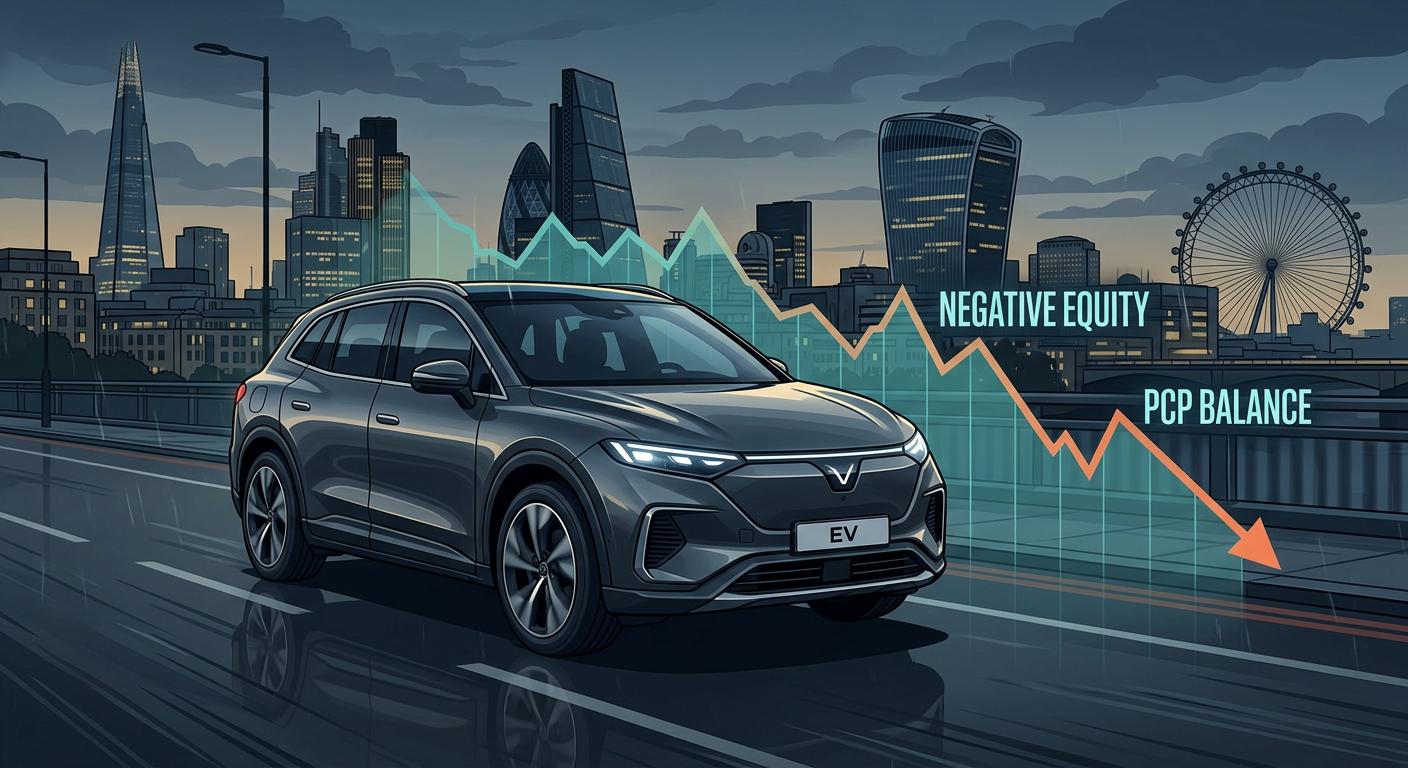
As we cross the midpoint of 2026, the UK automotive market is grappling with a landscape shift that few predicted a few years ago. We are seeing a unique "perfect storm" affecting thousands of motorists: the convergence of high initial purchase prices from the 2022-2023 era and a sudden stabilisation—or in some sectors, a sharp correction—of used car residuals.
If you are looking at your latest finance statement and realising your car is worth significantly less than the settlement figure, you are experiencing negative equity. This guide explores why this is happening in 2026 and, more importantly, how you can navigate out of it.
The 2026 Landscape: Why Negative Equity is Rising
Several factors have contributed to the rise of negative equity in 2026:
- The Post-Shortage Correction: Between 2022 and 2024, new car supply was constrained, driving used car prices to record highs. As supply chains fully normalised in 2025, the "premium" on used vehicles evaporated, leading to steeper depreciation curves than PCP (Personal Contract Purchase) providers initially forecasted.
- EV Price Volatility: With the 2030 ZEV mandate requirements looming, the second-hand market for older EVs has seen significant fluctuation. As newer battery technology debuts in 2026 models, older units are seeing faster value drops.
- Interest Rate Lag: Many 2026 drivers are still locked into high-interest agreements from the inflation peak of 2023-2024. A large portion of their monthly payment is servicing interest rather than reducing the capital balance, keeping the "gap" wide.
Understanding the "PCP Balloon Payment" Trap
In 2026, many drivers reaching the end of 3 or 4-year agreements are finding that their Guaranteed Minimum Future Value (GMFV)—often called the balloon payment—is higher than the actual market value of the car.
Traditionally, a PCP deal works because the car is worth more than the balloon payment at the end, providing "equity" to use as a deposit for the next car. In the current market, that equity has vanished for many.
Comparison: 2022 Forecast vs 2026 Reality
| Vehicle Type | 2022 Forecasted GMFV (48m) | 2026 Actual Market Value | Equity/Deficit |
|---|---|---|---|
| Family SUV (Petrol) | £18,500 | £16,200 | -£2,300 |
| Premium EV | £29,000 | £23,500 | -£5,500 |
| Compact Hatchback | £9,000 | £8,800 | -£200 |
Your Options When You’re "Underwater"
If you find yourself in negative equity, don't panic. You have several legal and financial avenues to explore.
1. The "Hand Back" (Handing the Keys to the Lender)
The beauty of a PCP agreement is the "P" (Purchase) is optional. If your car is worth £15,000 but your balloon payment is £18,000, you are effectively £3,000 in the red. However, you can simply return the car to the finance company at the end of the term.
- The Catch: You must ensure the car is within the agreed mileage and meets "Fair Wear and Tear" standards. You will also walk away with £0 deposit for your next vehicle.
2. Voluntary Termination (Section 99 of the CCA 1974)
Under the Consumer Credit Act 1974, you have a right to Voluntarily Terminate (VT) your agreement once you have paid 50% of the total amount payable (including the balloon and interest).
- When to use it: This is a lifeline if you are midway through a deal and can no longer afford the car, or if the negative equity is so severe that staying in the deal makes no sense.
- Note: Using CarsLink.ai to check your car’s current valuation precisely is essential before making this move.
3. Refinancing Car Loans
If you want to keep the car but can't afford the balloon payment—and the car is worth less than that payment—you might consider refinancing. 2026 has seen a more competitive lending market for used vehicle refinancing.
- By taking out a personal loan or a dedicated "balloon refinance" product, you can spread the remaining cost over another 3-5 years.
- Warning: Be careful not to "roll" negative equity into a new PCP deal. This creates a cycle of debt that becomes harder to break with each new vehicle.
How to Minimise the Impact
If you aren't at the end of your contract yet but fear negative equity is looming, take these proactive steps:
- Overpay if Possible: Some lenders allow overpayments. Reducing the capital balance now reduces the negative equity later.
- Maintain Your V5C and Service History: In 2026, the "gap" between a car with a full service history and one without has widened. Ensure your MOTs are timely and garage receipts are kept. To get the best valuation on CarsLink.ai, a documented history is your best weapon.
- Check Your Mileage: If you are significantly over your agreed mileage, your negative equity will be even worse due to "excess mileage charges." Try to adjust your driving habits or contact the lender to prune the agreement.
Dealing with ULEZ and Low-Emission Zones
In 2026, many UK cities have expanded their clean air zones. If you have negative equity on a non-compliant diesel vehicle, your situation is more urgent as the car's pool of potential buyers is shrinking rapidly. In these cases, a Voluntary Termination or a strategic trade-in (even if it means a small loss) might be better than waiting for the value to plummet further.
Summary: The Path Forward
Negative equity isn't a disaster if you plan ahead. The UK's consumer protections for car finance are among the strongest in the world. Whether you choose to hand the car back, refinance the balance, or use your Section 99 rights, the key is information.
Before visiting a dealer, use CarsLink.ai to get an accurate, real-time valuation of your vehicle. Knowing exactly where you stand prevents you from being "sold" a new deal that simply masks the problem for another four years.
Are you concerned about your car’s value? Visit CarsLink.ai today to get a free valuation and compare refinancing options tailored for the 2026 UK market. Let us help you navigate your way back to positive equity.