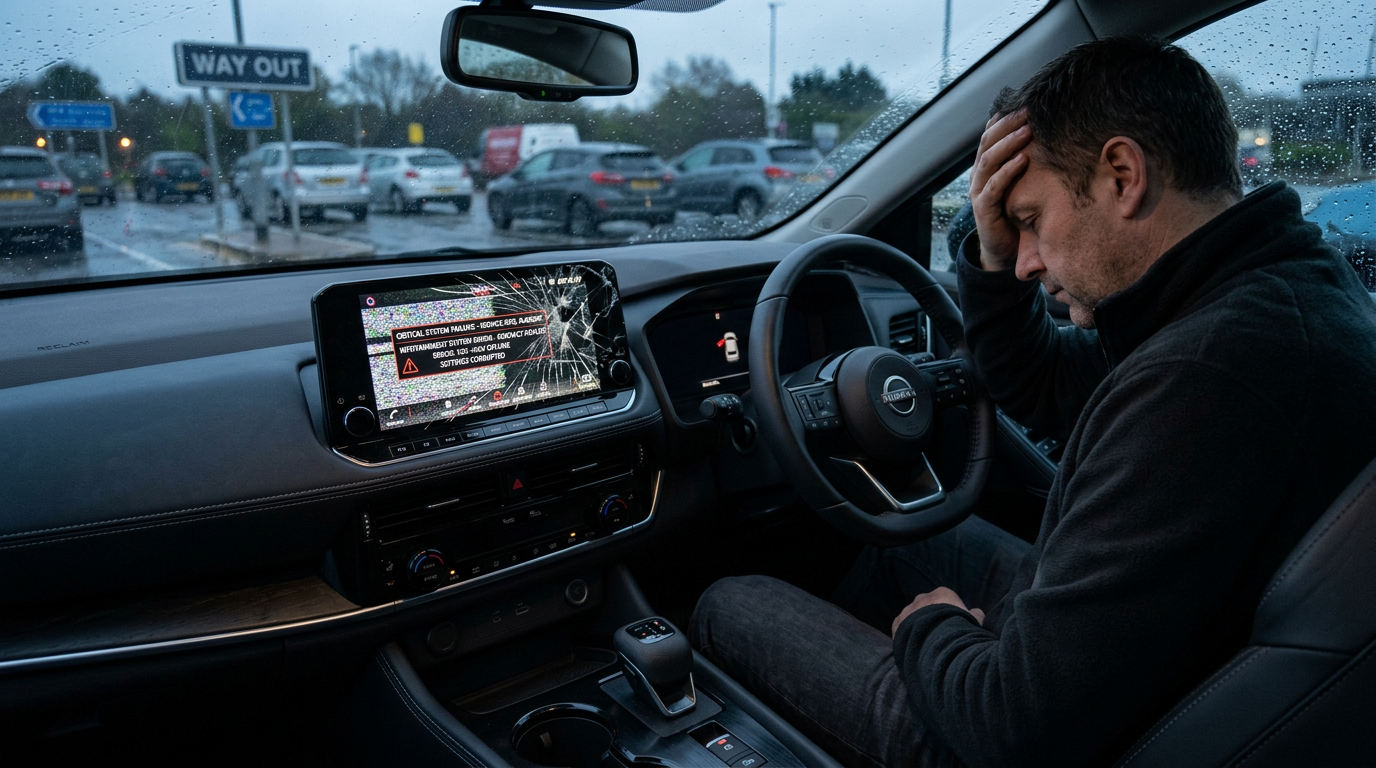
In 2026, the modern vehicle is no longer just a mechanical tool; it is a "smartphone on wheels." With the integration of 5G, over-the-air (OTA) updates, and central touchscreens controlling everything from climate to braking characteristics, a failing infotainment system is no longer a minor nuisance—it is a major vehicle defect.
If you have purchased a car in the UK and the screen has gone black, the GPS is perpetually lost, or the software is constantly crashing, you are protected by robust legislation. The cornerstone of your protection is the Consumer Rights Act 2015 (CRA 2015).
The Shift: Infotainment as a Core Component
In years past, a broken radio was a minor inconvenience. However, under the Road Traffic Act 1988, a vehicle must be in a roadworthy condition. In 2026, if your infotainment system controls your speedometer display, rearview camera, or ADAS (Advanced Driver Assistance Systems) settings, a digital failure can render the car illegal or unsafe to drive. Therefore, these systems are now viewed by the courts with the same gravity as an engine or gearbox.
Buyer Rights: Your Legal Shield
When you buy a car from a professional trader (new or used), the CRA 2015 implies certain terms into your contract. Specifically, the car must be:
- Of Satisfactory Quality: It should meet the standard a reasonable person would expect, taking into account the age, price, and description.
- Fit for Purpose: If you told the dealer you needed the car specifically for its built-in fleet management software or towing cameras, it must work.
- As Described: If the advert promised "Full Smartphone Integration" and the hardware fails to support it, the car is misdescribed.
The Statutory Timeframes
Your rights are tiered based on how long you have owned the vehicle:
- The Short-Term Right to Reject (0–30 Days): If a digital fault appears within the first 30 days, you can reject the car for a full refund. You do not have to give the dealer a chance to repair it first.
- The Right to Repair or Replacement (30 Days – 6 Months): If a fault develops after 30 days, you must give the dealer one opportunity to repair the system. Under the CRA 2015, there is a "reversed burden of proof"—it is assumed the fault was there at the time of delivery unless the dealer can prove otherwise.
- The Permanent Diminution or Final Right to Reject (After 1 Repair Attempt): If the repair fails, or the infotainment system fails again, you can choose to keep the car with a price reduction or reject it for a refund (though the dealer can deduct "fair use" for the miles you have driven).
Consumer Credit Act 1974 (Section 75 and Section 99)
If you financed your car via HP or PCP (regulated by the Financial Services and Markets Act 2000), you have additional "Tripartite" rights. Under Section 75 of the Consumer Credit Act 1974, the finance provider is jointly and severally liable with the dealer for any breach of contract. If the dealer ignores your complaints about a failing screen, you can hold the bank responsible.
Dealer and Trader Obligations
Dealers cannot simply say "software is sold as-is" or hide behind "manufacturer's warranty only" disclaimers. Their obligations are statutory and cannot be waived.
1. Transparency and the CPRs 2008
Under the Consumer Protection from Unfair Trading Regulations 2008 (CPRs), traders must not omit "material information." If a dealer knows that a specific model year has a known processor failure in its head unit and fails to disclose it, they are in breach of these regulations. This is considered a prohibited "misleading omission."
2. The "Digital Content" Distinction
The CRA 2015 includes specific chapters on Digital Content. In 2026, most infotainment systems are a hybrid of "Goods" (the screen) and "Digital Content" (the software/OS).
- If the software causes damage to the hardware (e.g., a buggy update "bricks" the unit), the trader is liable to repair that damage or compensate the consumer.
- Traders are responsible for ensuring that digital content is of satisfactory quality at the time of supply.
3. Resolving Faults Efficiently
A dealer must carry out repairs within a "reasonable time" and without "significant inconvenience" to the consumer. In 2026, if a car requires a replacement semiconductor/chip that is backlogged for six months, this likely constitutes "significant inconvenience," potentially triggering the consumer's right to a price reduction or rejection regardless of the dealer's willingness to fix it.
What to Do If Your Infotainment Fails
Step 1: Document the Fault
Take photos or videos of the system crashing or failing to boot. Keep logs of when the "Black Screen of Death" occurs. In the era of OTA updates, check if a recent software push caused the issue.
Step 2: Contact the Dealer (Not Just the Manufacturer)
Your contract is with the seller, not the manufacturer. While a manufacturer's warranty is a nice "extra," your statutory rights under the CRA 2015 are far more powerful. Send a formal letter or email stating you are exercising your rights under the Consumer Rights Act 2015.
Step 3: The "Final Opportunity"
If you are past the 30-day mark, allow one attempt at a repair. Ensure you get a receipt detailing what was done (e.g., "Software reflash" or "Mainboard replacement").
Step 4: Escalation
If the repair fails or the dealer refuses to assist:
- Finance Company: Contact your PCP/HP provider to start a formal dispute.
- Ombudsman: If the dealer is a member, used the Motor Ombudsman.
- Small Claims: For disputes involving sums up to £10,000 (£5,000 in Scotland), the Small Claims Track is the final path to recovery.
Key Takeaways
- Digital counts as a fault: A failing infotainment system is a breach of "satisfactory quality" under the CRA 2015.
- 30-Day Rule: You have a 30-day window to reject a car for a full refund for any significant digital fault.
- Shared Liability: If you have 2026-era car finance, the bank is just as responsible as the dealer for a faulty system under Section 75.
- One Chance: After 30 days, you must give the dealer one chance to fix it before you can demand a refund or price reduction.
Disclaimer
This article provides general information regarding UK consumer law as of May 2026. It does not constitute legal advice. Laws can change, and the application of the Consumer Rights Act 2015 depends on the specific facts of your case. For specific legal problems, consult a qualified solicitor or contact Citizens Advice.