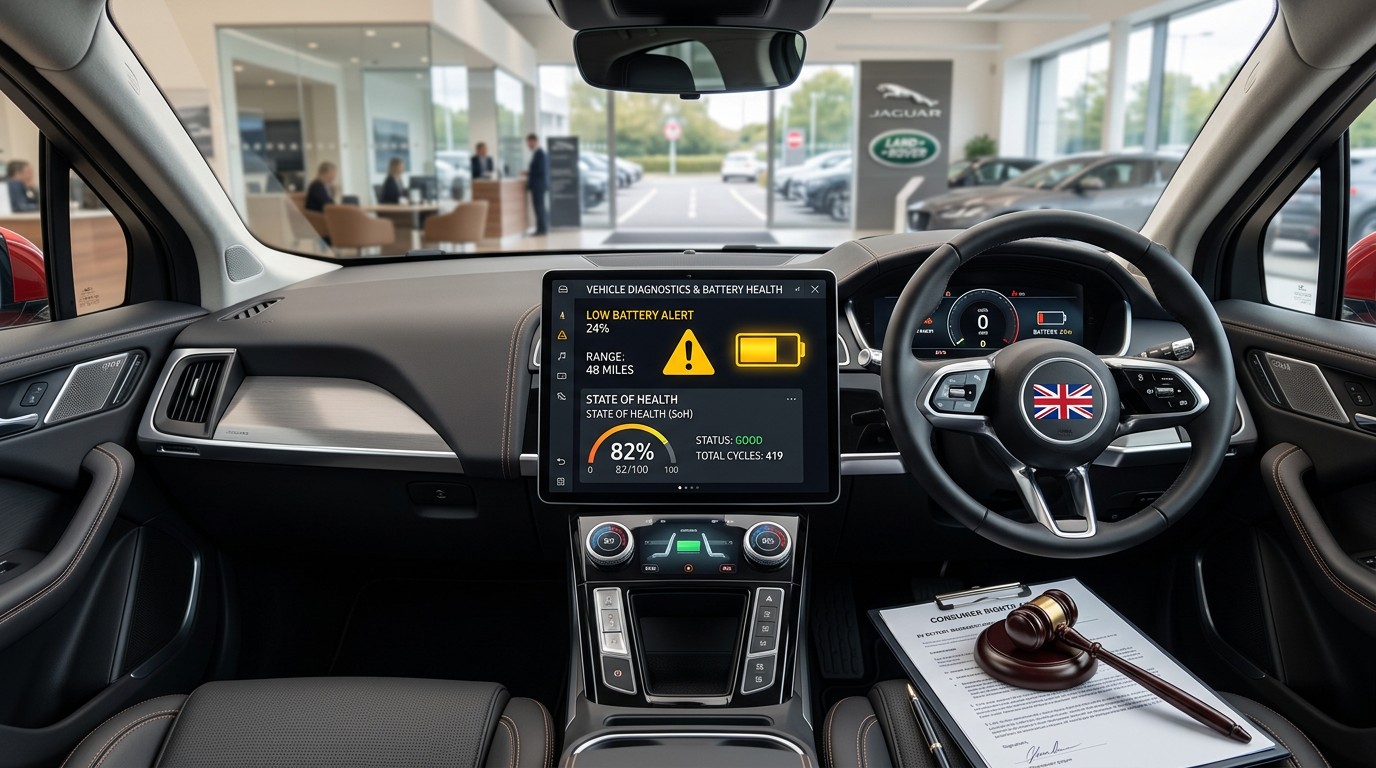
The UK automotive landscape has shifted dramatically. As we reach the midpoint of 2026, the used electric vehicle (EV) market is more active than ever. However, as these vehicles age, a specific technical concern has moved to the forefront of consumer law: Rapid Battery Degradation.
When you buy a used EV, you expect the range to decrease slightly over time. But what happens if a battery loses 30% of its capacity within three months of purchase? In 2026, the primary shield for UK motorists remains the Consumer Rights Act 2015 (CRA 2015). Navigating this legislation is essential for anyone facing a "bricked" battery or a range that no longer meets the description provided at the point of sale.
Your Rights as a Buyer: The CRA 2015 Framework
When purchasing a vehicle from a registered trader, the Consumer Rights Act 2015 implies certain statutory rights into your contract. These rights are non-negotiable; a dealer cannot "contract out" of them using small print.
1. The Right to Satisfactory Quality
Under Section 9 of the CRA 2015, the vehicle must be of "satisfactory quality." This is judged by what a "reasonable person" would expect, taking into account the price paid, the age of the car, and the mileage. In 2026, a five-year-old EV with 50,000 miles is expected to have some degradation, but a sudden, catastrophic failure of cells suggests the car was not of satisfactory quality at the time of delivery.
2. Fitness for a Particular Purpose
Section 10 states that if you specified a need—for example, "I need this EV to cover a 100-mile round-trip commute without charging"—and the dealer confirmed it could do so, the car must meet that requirement. If rapid degradation renders that commute impossible shortly after purchase, the vehicle may be "unfit for purpose."
3. Accuracy of Description
Section 11 requires the car to match the description. If a dealer advertised a "State of Health (SoH) of 92%" but a diagnostic check reveals it was actually 75% at the time of sale, you have a clear path to a claim.
4. The "Short-Term Right to Reject" (The 30-Day Window)
If a significant battery fault or excessive degradation is discovered within the first 30 days of ownership, you have the legal right to reject the car and demand a full refund. This is the strongest position a consumer can be in.
5. The Six-Month Rule and the Burden of Proof
If a fault emerges after 30 days but before six months, the law assumes the fault was present at the time of delivery. It is up to the dealer to prove otherwise (e.g., that you damaged the battery through improper charging protocols). If they cannot prove this, you are entitled to a repair or replacement. In the context of EVs, this often means a battery module replacement or a refurbished pack.
Dealer and Trader Obligations: Staying Within UK Law
Dealers in 2026 face stricter scrutiny regarding "hidden" EV defects. To remain compliant with the CRA 2015 and the Consumer Protection from Unfair Trading Regulations 2008 (CPRs), traders must adhere to specific standards.
Transparency and Disclosure
Under the CPRs 2008, dealers must not omit "material information." In 2026, a battery’s State of Health (SoH) is considered material information. Failing to disclose a significantly degraded battery—or using software to temporarily "mask" cell imbalances—could be considered a prohibited "misleading omission."
The Duty of Repair
If a buyer invokes their rights between 30 days and six months, the dealer is entitled to one attempt at repair or replacement. For an EV battery, this must be done:
- Within a reasonable time.
- Without significant inconvenience to the consumer.
- At no cost to the consumer (including labour and parts).
If the repair fails to resolve the degradation issue, or if the replacement battery is also faulty, the consumer then gains the "Final Right to Reject" or the right to a price reduction.
Financial Conduct and Section 75 Claims
Many EVs in 2026 are purchased via Hire Purchase (HP) or Personal Contract Purchase (PCP). Dealers must be aware that under the Consumer Credit Act 1974, the finance provider is "jointly and severally liable" for any breach of contract or misrepresentation. If a dealer refuses to cooperate regarding a faulty battery, the consumer can escalate the claim to the finance company under Section 75 (if the car cost between £100 and £30,000) or under the CRA directly for higher-value assets.
Dealing with Battery Warranty vs. Statutory Rights
By 2026, many early-generation EVs are falling out of their original 8-year/100,000-mile manufacturer warranties. It is a common misconception that if a car is "out of warranty," the buyer has no protection.
Your statutory rights under the CRA 2015 exist independently of a manufacturer’s warranty. Even if a battery is 9 years old, if a dealer sold it as "excellent condition" and it fails within weeks, the dealer is still liable for selling a product that did not meet the "satisfactory quality" or "as described" standards.
Key Takeaways for 2026 EV Buyers
- Audit the SoH: Always request an independent State of Health certificate before purchase.
- The 30-Day Limit: Act immediately if the range is significantly lower than advertised.
- Evidence is King: Keep screenshots of the original advert and any correspondence regarding the battery's expected performance.
- Finance Protection: If you paid even a £100 deposit via credit card or used a PCP plan, you have additional layers of protection under the Consumer Credit Act 1974.
Checklist: If your EV Battery Fails Rapidly
- Stop Driving: Continued use could be framed as "acceptance" of the fault.
- Diagnostic Check: Get a report from an independent specialist or a main dealer confirming the degradation level.
- Formal Notice: Write to the dealer citing the Consumer Rights Act 2015. State whether you are exercising your "Short-term Right to Reject" (under 30 days) or requesting a "Repair or Replacement" (under 6 months).
- Involve Finance: If the car is on finance, notify the provider immediately that the goods are not of satisfactory quality.
Disclaimer: This article is provided for general informational purposes only and does not constitute legal advice. Laws regarding consumer rights and automotive standards can change. If you are involved in a legal dispute, please consult with a qualified legal professional or contact Citizens Advice.