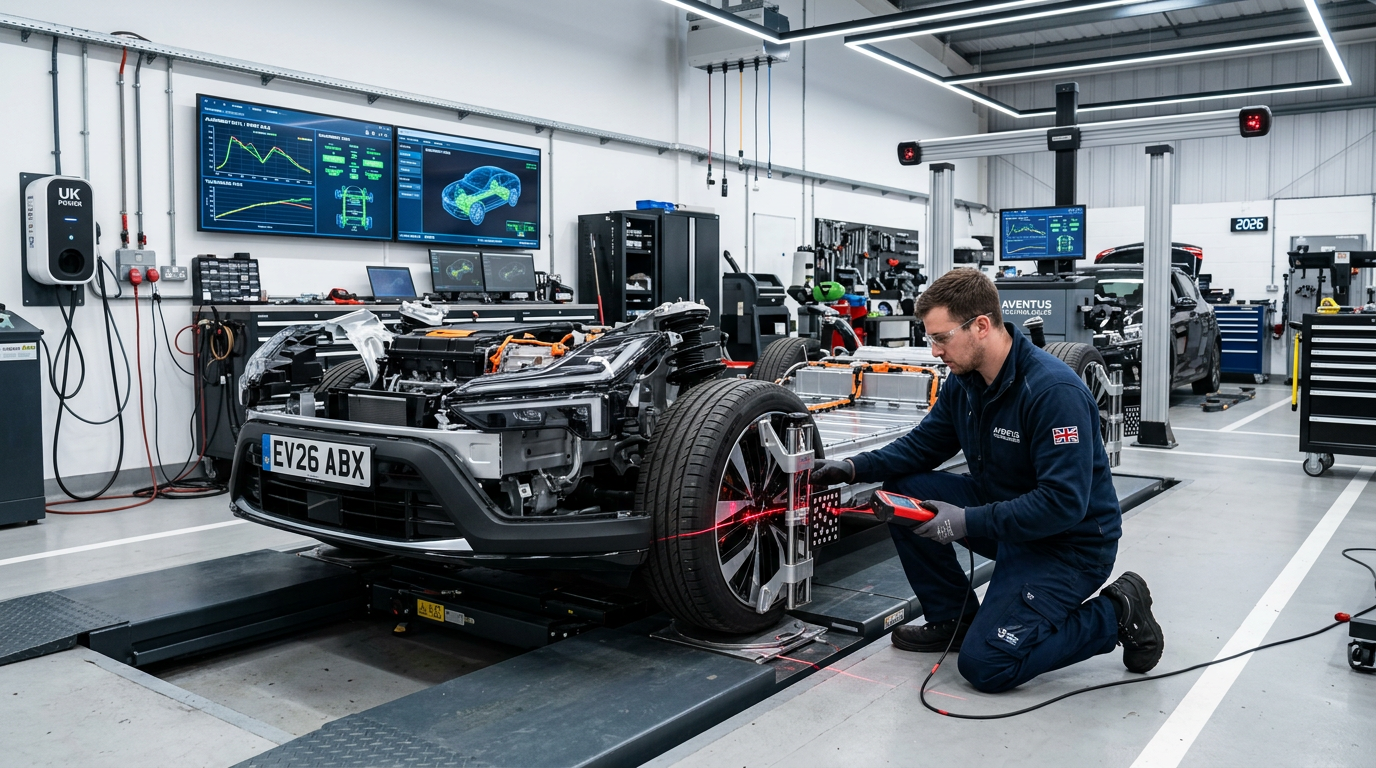
As we navigate the middle of 2026, the UK used car market continues to face a supply-and-demand squeeze. With new electric vehicle (EV) prices remaining high and the 2030 internal combustion engine ban drawing closer, many buyers are looking toward the salvage market for a high-spec bargain.
However, one classification remains more controversial than the rest: Category S. Unlike the minor cosmetic issues associated with Category N, a Cat S write-off involves structural damage. In 2026, with cars becoming more technologically complex, the question remains: is a structural repair ever truly safe, or are you buying a ticking time bomb?
Understanding Category S in 2026
Under the Association of British Insurers (ABI) salvage code, a Category S (Structural) vehicle is one where the damage exceeds the value of the car, and the damage affects the vehicle’s structural integrity. This includes the chassis, crumple zones, or A-pillars.
While the car is deemed a "total loss" by the insurer, it is mathematically, rather than physically, unrepairable. In 2026, however, the definition of "structural" has expanded. With the prevalence of Battery Electric Vehicles (BEVs), a Cat S rating might now involve the "skateboard" chassis or the protective casing surrounding a high-capacity lithium-ion battery.
The 2026 Repair Challenge: ADAS and Smart Steel
Five years ago, a straight frame and a steady weld might have sufficed. Today, structural repair is a high-tech discipline.
1. Advanced Driver Assistance Systems (ADAS)
Most cars on the road in 2026 feature Level 2 or Level 3 autonomous features. Structural damage often affects the mounting points for radar sensors, Lidar, and cameras. Even a millimetre of misalignment in a repaired chassis can cause an autonomous braking system to miscalculate distance, leading to phantom braking or failure to detect obstacles.
2. High-Strength Boron Steel
Modern vehicles use various grades of steel and aluminium. High-strength boron steel, common in 2026 models, cannot be "pulled" back into shape like older mild steel. If heated excessively during repair, it loses its molecular integrity. A Cat S repair that looks perfect on the outside may fail catastrophically in a secondary impact.
The MIAFTR Database and Transparency
Every Cat S vehicle is recorded on the Motor Insurance Anti-Fraud and Theft Register (MIAFTR). In 2026, transparency has improved significantly. When you use tools like CarsLink.ai to research a vehicle’s history, the MIAFTR status is a crucial red flag that informs your valuation.
Under current UK law, a seller must disclose if a vehicle is a write-off. However, with the rise of private sales via social media marketplaces, "clocking" and "hiding" Cat S status remains a problem. Always check the V5C logbook; for a Cat S car, the DVLA will have issued a new V5C containing the marker: "This vehicle has been salvaged because the cost of commercial repair was more than the value of the vehicle."
Is It Ever Truly Safe? The Checklist
A Cat S car can be safe, provided the repair was carried out to manufacturer standards rather than "back-street" budgets. If you are considering a Cat S bargain in 2026, you must verify the following:
| Feature | Requirement | Why it Matters |
|---|---|---|
| Repair Logs | Comprehensive invoices | Proves genuine OEM parts were used. |
| Chassis Alignment | Computerised geometry printout | Ensures the car drives straight and ADAS works. |
| Airbag Replacement | Verification of New Modules | "Dummy" resistors are a common (and lethal) scam. |
| Post-Repair MOT | Independent Inspection | A standard MOT doesn't check structural weld quality. |
The "Hidden" Costs: Insurance and Resale
Even if the car is physically safe, the financial "safety" is another matter. In 2026, many mainstream insurers still refuse to cover Category S vehicles, or they charge premiums up to 30% higher.
Furthermore, the resale value of a Cat S car is typically 25-40% lower than a "clean" equivalent. While you save money on the purchase, you will struggle to trade it in at a traditional dealership. Platforms like CarsLink.ai can help you determine the fair market value of a written-off vehicle, ensuring you don't overpay for a car with a compromised history.
The Role of the DVLA and MOT
Remember, an MOT is not a guarantee of a safe repair. The MOT test is a "point in time" inspection of basic roadworthiness. It does not involve removing body panels to inspect the quality of structural welds or the integrity of the crumple zones. For a Cat S car, we highly recommend a specialist structural integrity inspection from a provider like the AA or RAC.
Verdict: Bargain or Burden?
In 2026 petrol and diesel cars, a Cat S repair is often straightforward for a skilled bodyshop. However, for modern EVs and cars with complex ADAS suites, the risks are significantly higher.
Is it ever truly safe? Yes—if the repair followed manufacturer-approved methods and used genuine parts. However, without a full "paper trail" of the repair process, you are taking a leap of faith.
For many, the peace of mind offered by a non-salvage car is worth the extra monthly PCP payment. But if you are a savvy buyer with a trusted mechanic, a Cat S vehicle can represent the only way to get behind the wheel of a premium 2026 model for a fraction of the cost.
Looking for your next car? Whether you're hunting for a bargain or seeking a pristine used EV, use CarsLink.ai to compare the latest UK listings and check vehicle histories with confidence.