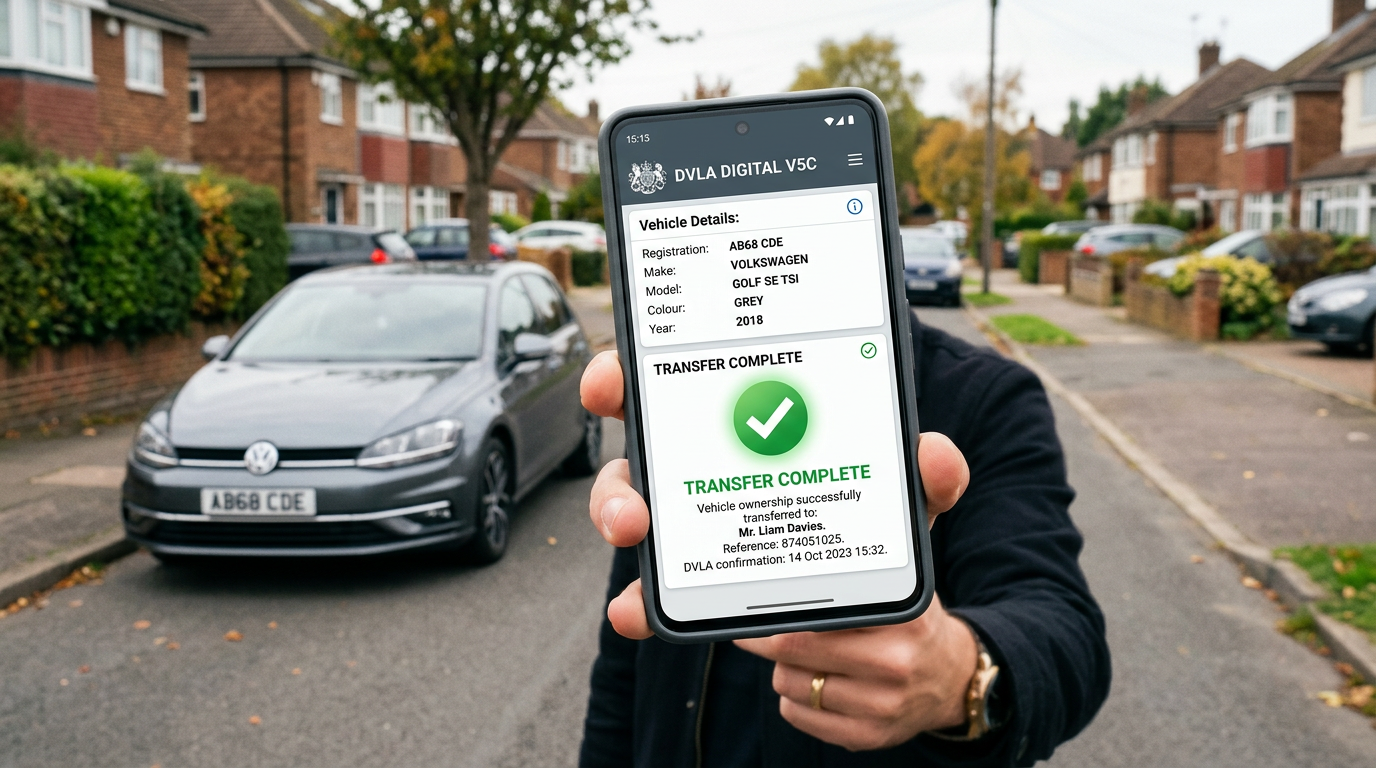
Since the British motor industry took its giant leap toward full digitisation in early 2025, the way we buy and sell cars across the UK has fundamentally shifted. Gone are the days of nervously waiting by the letterbox for a physical V5C document to arrive, or hunting for a pen that actually works in a rainy supermarket car park. In 2026, the DVLA Digital Logbook is the gold standard, offering a streamlined, secure, and instantaneous method for transferring vehicle ownership.
For both private buyers and professional traders, navigating these new digital rules is essential to ensure a legal and stress-free transaction. Whether you’re browsing listings on CarsLink.ai or visiting a local forecourt, here is everything you need to know about the 2026 DVLA digital landscape.
What is the DVLA Digital Logbook?
As of 2026, the DVLA has largely phased out the traditional multi-page paper V5C (the 'logbook') for new registrations and transfers. In its place is a secure digital record held on the DVLA’s central database, accessible via the GOV.UK One Login service.
While 'Legacy Paper V5Cs' still exist for some older vehicles, any car sold or transferred in 2026 now triggers a mandatory conversion to a digital record. This system is designed to combat fraud, stop the circulation of 'cloned' logbooks, and reduce the environmental impact of millions of tonnes of paper.
Key Changes in 2026
- Instant Ownership Proof: Digital V5Cs update in real-time.
- Unique Digital Transfer Codes: These replace the need for physical signatures.
- Integrated Tax & Insurance Checks: You cannot complete a digital transfer without a valid insurance policy appearing on the MID (Motor Insurance Database).
- The 'Digital Wallet': Owners can store their vehicle credentials on their smartphones alongside their driving licence.
Step-by-Step: Buying a Used Car with Digital Transfer
The process of buying a car has been condensed into a few seconds of screen-tapping. If you are buying from a private seller, the workflow now looks like this:
- Identity Verification: Both buyer and seller log into their DVLA accounts via the GOV.UK portal.
- The Digital Handshake: The seller selects 'Transfer Vehicle Ownership' and enters the buyer’s DVLA ID or email address associated with their One Login.
- Real-Time Validation: The system checks for outstanding finance (via HPI integration) and ensures the car isn't marked as stolen or scrapped.
- The Transfer Code: A one-time 6-digit code is sent to the buyer. Once the buyer provides this to the seller and it's entered into the portal, the ownership is transferred instantly.
- Immediate Road Tax: The buyer is redirected to pay their road tax immediately. In 2026, you still cannot 'transfer' road tax; the previous owner receives an automatic refund, and the new owner must pay before driving away.
Digital Logbooks for Dealers and Traders
For motor traders, the 2026 rules have been a significant boon for stock management. The 'Trader Portal' allows for bulk transfers and provides an immutable audit trail.
| Feature | Private Seller Process | Dealer/Trader Process |
|---|---|---|
| Transfer Time | Instant (requires both parties online) | Instant (via API integration) |
| Paperwork | Optional Digital PDF Printout | Bulk Digital Inventory Update |
| Notification | Email Confirmation | Automated CRM Integration |
| Road Tax | Must be paid immediately by buyer | Vehicle marked as 'In Trade' |
For traders using platforms like CarsLink.ai to source or sell, the digital logbook ensures that 'ticking over' stock is faster than ever. There is no longer a 5-day wait for a new V5C to arrive before you can sell a car on to the next customer.
The 'Legacy Paper' Transition
If you're buying a classic car or an older used model that hasn’t changed hands since 2023, you may still be handed a physical paper V5C.
Warning: In 2026, if you buy a car with a paper V5C, you must use the DVLA’s 'Convert to Digital' service during the sale. The paper document is essentially cancelled the moment the digital transfer is initiated. You should cross through the paper document and retain only the 'New Keeper's Slip' (Section 10) as a physical backup until your digital account reflects the change.
Security and Fraud Prevention
The main driver behind the 2026 digital mandate was the rise in sophisticated car cloning and V5C theft. The digital logbook mitigates these risks in several ways:
- Two-Factor Authentication (2FA): Sellers must prove their identity before they can initiate a transfer.
- Finance Alerts: If you attempts to sell a car with active PCP or HP finance, the DVLA system will flag this to the buyer instantly, preventing the sale from proceeding until the finance house gives digital 'Clearance for Sale.'
- Undeclared Total Losses (Write-offs): The digital record pulls live data from the ABI (Association of British Insurers), meaning a Category S or N status cannot be hidden by a seller.
Managing Your 'Vehicle Wallet'
Once the purchase is complete, your vehicle will appear in your 'Digital Vehicle Wallet.' From here, UK motorists can manage every aspect of ownership:
- MOT Reminders: Automated push notifications 30 days before expiry.
- ULEZ/CAZ Status: Check if your vehicle is compliant with London's ULEZ or Manchester’s Clean Air Zones.
- Road Tax Renewals: Set up monthly Direct Debits that automatically pause if the car is SORN’d (Statutory Off Road Notification).
- Service History: While not mandatory, many manufacturers now link digital service records directly to the DVLA portal, giving buyers a 'verified' maintenance history.
What to Check Before You Buy in 2026
Even with increased digitisation, the Golden Rules of buying used cars still apply. Before you finalise any transfer:
- Verify the 'Digital V5C Summary': Ask the seller to show you their DVLA dashboard (either on their phone or a printout). Check that the VIN (Vehicle Identification Number) on the dashboard matches the one stamped on the car's chassis.
- Check the 'Last Transfer Date': If a car has changed hands multiple times in the last 6 months, ask why.
- Search Smart: Use AI-driven search tools like CarsLink.ai to filter for vehicles with 'Verified Digital History' to save time and ensure you're looking at legitimate stock.
Conclusion
The 2026 DVLA Digital Logbook rules have brought the UK's used car market into the modern age. While the shift from paper to pixels might feel daunting to those used to the old ways, the benefits of instant transfers, reduced fraud, and simplified tax management are undeniable.
For buyers, it means more transparency. For dealers, it means faster turnarounds and less administration. As we continue through 2026, the paper V5C will soon become a relic of the past, much like the tax disc before it.
Looking for your next car? Skip the stress and head over to CarsLink.ai to browse thousands of used cars across the UK with verified backgrounds and instant digital availability.