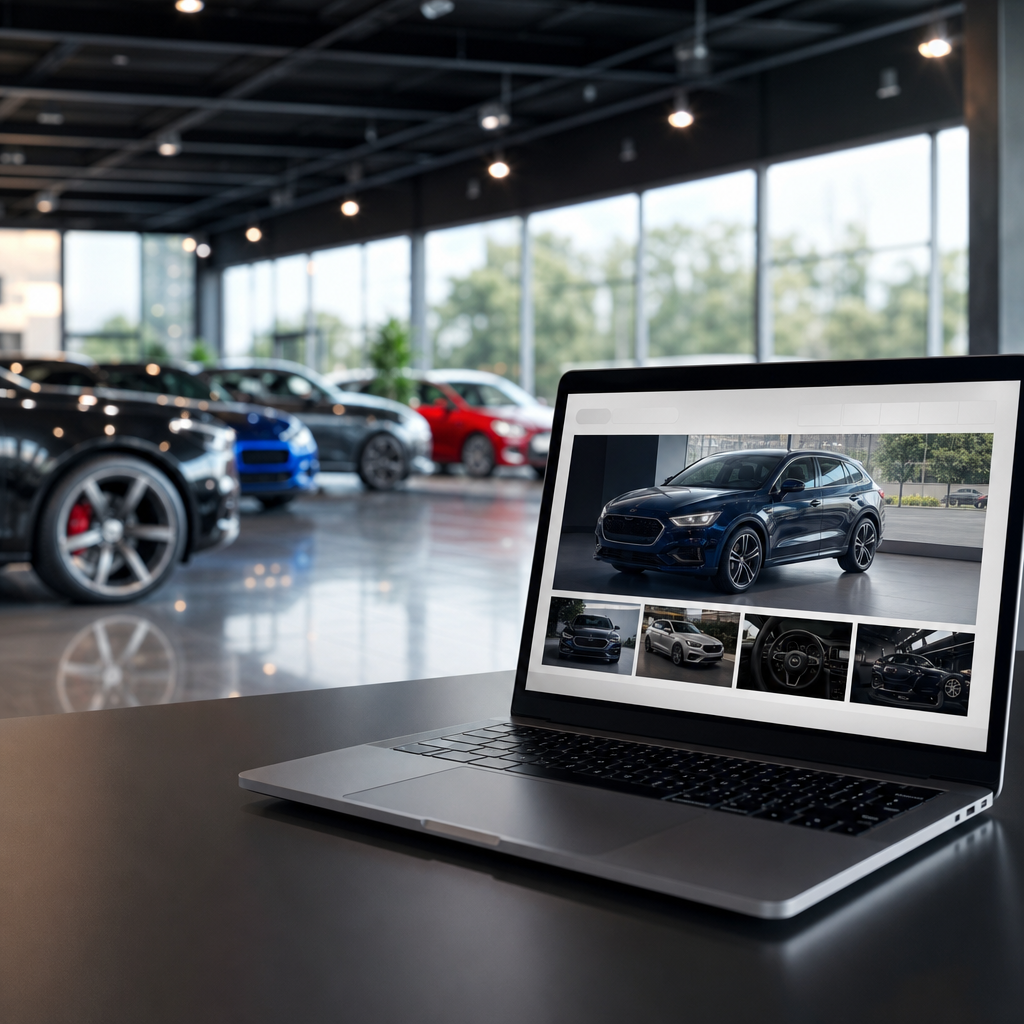
Boosting Your Digital Forecourt: Local SEO Strategies for UK Used Car Dealers
In the rapidly evolving world of car sales, the traditional forecourt is no longer enough. Today, your primary showroom exists online – it's your 'digital forecourt'. While glistening paintwork and friendly sales staff still matter, the journey to your physical premises almost invariably begins with a search query. For UK used car dealers, understanding and mastering Local SEO isn't just an advantage; it's a fundamental necessity for attracting nearby buyers and driving sales.
The modern car buyer starts their search digitally, often with a clear idea of what they're looking for and, crucially, where they're looking for it. Ignoring your local search visibility is akin to hiding your showroom down an unlisted alley. This article will guide you through practical, actionable strategies to ensure your dealership stands out in local search results, converting online interest into valuable footfall and, ultimately, completed sales.
The Local Edge: Why Nearby Buyers Matter Most
Think about how you search for local services yourself. When you need a plumber, a hairdresser, or even a takeaway, you typically add your location to the search query, or rely on Google to understand your proximity. Car buying is no different, perhaps even more so given the logistics of viewing, test driving, and collecting a vehicle. A significant proportion of car buyers actively seek out dealerships within a manageable distance from their home or workplace.
Studies consistently show that searches for "used cars near me," "second-hand Ford Focus Bristol," or "car dealer Sheffield" represent high-intent buyers. These individuals are not just browsing; they are often further down the purchasing funnel, actively looking to engage with a local business. Attracting these nearby buyers means a higher likelihood of them visiting your forecourt, easier logistics for test drives and viewings, and a stronger foundation for local word-of-mouth referrals. For a dealership in, say, Manchester, appearing prominently for "used cars Manchester" or "pre-owned BMW 3 Series Greater Manchester" directly translates to genuine sales opportunities that might otherwise go to a competitor just around the corner.
Mastering Your Google My Business Profile
Your Google My Business (GMB) profile is the cornerstone of your local SEO strategy – consider it your dealership's primary digital shopfront on Google Maps and local search results. An optimised GMB profile can significantly impact your visibility, credibility, and customer engagement.
Here’s how to make it shine:
- Claim and Verify: This is non-negotiable. If you haven't already, claim your business profile and verify it through Google's process (usually by postcard).
- Accurate & Consistent NAP: Ensure your Name, Address, and Phone number (NAP) are identical across your GMB profile, website, and all other online directories. Inconsistencies confuse search engines and deter customers.
- Comprehensive Business Information:
- Categories: Select primary and secondary categories that accurately describe your business (e.g., "Used Car Dealer," "Car Dealership," "Car Finance").
- Description: Craft a keyword-rich description that highlights your unique selling points, the types of vehicles you stock, and your commitment to customer service. Include your town/city here.
- Hours of Operation: Keep these meticulously updated, including bank holiday hours.
- Website Link: Ensure it points directly to your main dealership website.
- High-Quality Photos & Videos: Visuals are vital. Upload high-resolution photos of your forecourt, showroom, staff, and, crucially, a rotating selection of your actual vehicle stock. Showcase different makes, models, and angles. Videos of popular cars or a quick tour of your facilities can also significantly boost engagement.
- Services & Products: Utilise these sections to list specific car brands you specialise in, particular services (e.g., part-exchange, finance options), or even popular models you regularly stock.
- Regular Google Posts: Treat GMB posts like mini-blog updates. Use them to announce new arrivals, special offers, finance deals, or upcoming events. This keeps your profile fresh and signals activity to Google.
- Monitor Q&A: Customers can ask questions directly on your GMB profile. Monitor this section and provide prompt, helpful answers. You can even pre-populate common questions and answers.
An example of a well-optimised GMB profile might highlight a dealership like "Bristol Motor Centre," featuring clear pictures of their diverse stock, a recent post advertising "0% Finance on Select Hatchbacks this Autumn," and positive customer reviews.
Pinpointing Your Audience: Location-Specific Keywords
While a strong GMB profile lays the foundation, effective keyword targeting ensures your digital forecourt appears when local buyers search for specific vehicles. It’s about being precise with your language to match what potential customers are typing into search engines.
Move beyond just "used cars [your town]". Think about how people search for specific needs:
- Make, Model & Location: "used Ford Focus Stourbridge," "pre-owned Mercedes C-Class Leeds," "second-hand Audi A3 Birmingham."
- Body Type & Location: "used family SUVs Manchester," "cheap used hatchbacks Glasgow," "estate cars for sale Edinburgh."
- Specific Features/Criteria & Location: "used automatic cars Cardiff," "diesel cars Lincoln," "hybrid cars Newcastle upon Tyne."
- Price Range & Location: "used cars under £10,000 Leicester."
You can uncover these keywords using tools like Google Keyword Planner or by simply observing common search suggestions when you start typing into Google.
Once identified, integrate these keywords naturally throughout your website content. Create dedicated landing pages for popular models combined with your location (e.g., yourdealership.co.uk/used-volkswagen-golf-southampton). Use them in your website's meta titles, descriptions, heading tags, and in the body copy of your vehicle listings and blog posts. Regularly refreshing your stock listings with descriptive, keyword-rich language for each vehicle will also serve this purpose effectively. A dealer specialising in German marques in Nottingham, for instance, should have pages like "Used BMW Nottingham," "Pre-Owned Audi Nottingham," and so forth, clearly signposting their local expertise.
The Power of Positive Feedback: Customer Reviews
In the digital age, customer reviews are the new word-of-mouth. They are a powerful trust signal for both potential buyers and search engines. Google's local search algorithm heavily factors in the quantity, quality, and recency of your reviews when determining your local ranking. A dealership with numerous 5-star reviews will almost always outrank a competitor with few or poor reviews, even if other SEO factors are equal.
Here’s how to leverage them:
- Actively Encourage Reviews: Don't be shy about asking satisfied customers for a review.
- Post-Sale Follow-Up: Send an email a few days after collection with a direct link to leave a Google review.
- In-Showroom Prompts: Use QR codes on point-of-sale materials, business cards, or even on a small sign at the reception desk, directing customers to your GMB review page.
- SMS Reminders: A polite text message after a positive interaction can be very effective.
- Respond to All Reviews:
- Positive Reviews: Thank customers for their feedback, reinforcing their positive experience. A simple "Thank you for your kind words, [Customer Name]! Enjoy your new [Car Model]!" goes a long way.
- Negative Reviews: This is where you can truly shine. Address concerns professionally, empathetically, and constructively. Apologise where appropriate, offer solutions, and invite them to contact you directly to resolve the issue. A thoughtful, public response demonstrates excellent customer service and transparency, often turning a potentially damaging review into a positive showcase of your commitment. For example, if a customer mentions a minor scratch, responding with "We're so sorry to hear about that, please contact our service manager, John, on [number] so we can arrange a professional repair for you immediately" shows genuine care.
Consistent, positive reviews build social proof, enhance your brand reputation, and significantly improve your chances of appearing in Google's coveted 'local pack' – the top three business listings shown prominently in local search results.
Mobile-First and Lightning Fast: Website Optimisation
Your dealership's website is the ultimate destination for those high-intent local searchers. If it's slow, clunky, or difficult to navigate on a mobile phone, all your hard work on GMB and keywords could be wasted. Google operates on a 'mobile-first' indexing principle, meaning it primarily uses the mobile version of your website for ranking.
Here’s what to focus on:
- Mobile-Friendly/Responsive Design: This is non-negotiable. Your website must adapt seamlessly to any screen size – smartphones, tablets, and desktops. Text should be legible without pinching and zooming, buttons should be easily tappable, and navigation intuitive. Test your site regularly on different devices.
- Page Speed: Users have zero patience for slow-loading websites, and neither does Google. A slow site leads to higher bounce rates and poorer search rankings.
- Optimise Images: Compress images without sacrificing quality. Large image files are often the biggest culprit for slow loading times.
- Minimise Code: Reduce unnecessary HTML, CSS, and JavaScript.
- Leverage Caching: Implement browser caching to store parts of your site, making subsequent visits faster.
- Reliable Hosting: Invest in good quality, fast web hosting.
- Clear Calls to Action (CTAs): Once a potential buyer is on your site, make it effortless for them to take the next step. Prominently display "Book a Test Drive," "View Our Stock," "Get a Finance Quote," or "Value Your Part-Exchange" buttons.
- Local Contact Information: Your Name, Address, and Phone number (NAP) should be clearly visible on every page, ideally in the header or footer. Include an interactive map to your dealership and opening hours.
- Secure (SSL) Website: Ensure your website uses HTTPS (look for the padlock symbol in the browser bar). This encrypts data, protects user privacy, and is a ranking factor for Google.
Imagine a customer searching for "used cars Leicester" on their commute home. If they click through to your site and it loads instantly, looks great on their phone, and clearly shows "Used Ford Focus ST" with a "Book Test Drive" button and your address, they're far more likely to engage than if they encounter a slow, broken site.
Conclusion
Your digital forecourt is just as vital as your physical one, and local SEO is the engine that drives traffic to both. By diligently optimising your Google My Business profile, targeting specific local keywords, actively managing customer reviews, and ensuring your website is mobile-friendly and fast, you're not just improving your online presence – you're directly impacting your bottom line.
Remember, local SEO isn't a one-off task; it's an ongoing commitment to staying visible, relevant, and trustworthy in the eyes of local car buyers and search engines alike. Start implementing these strategies today, and watch as your digital forecourt flourishes, bringing more local customers through your doors and boosting your dealership's success in the competitive UK used car market.