The Evolving Landscape of Vehicle Provenance
In 2026, the traditional handshake deal for a used car has been replaced by a digital-first verification process. While most buyers are now familiar with the shift from Category C and D to Category S (Structural) and Category N (Non-Structural), the landscape of vehicle history has become significantly more nuanced.
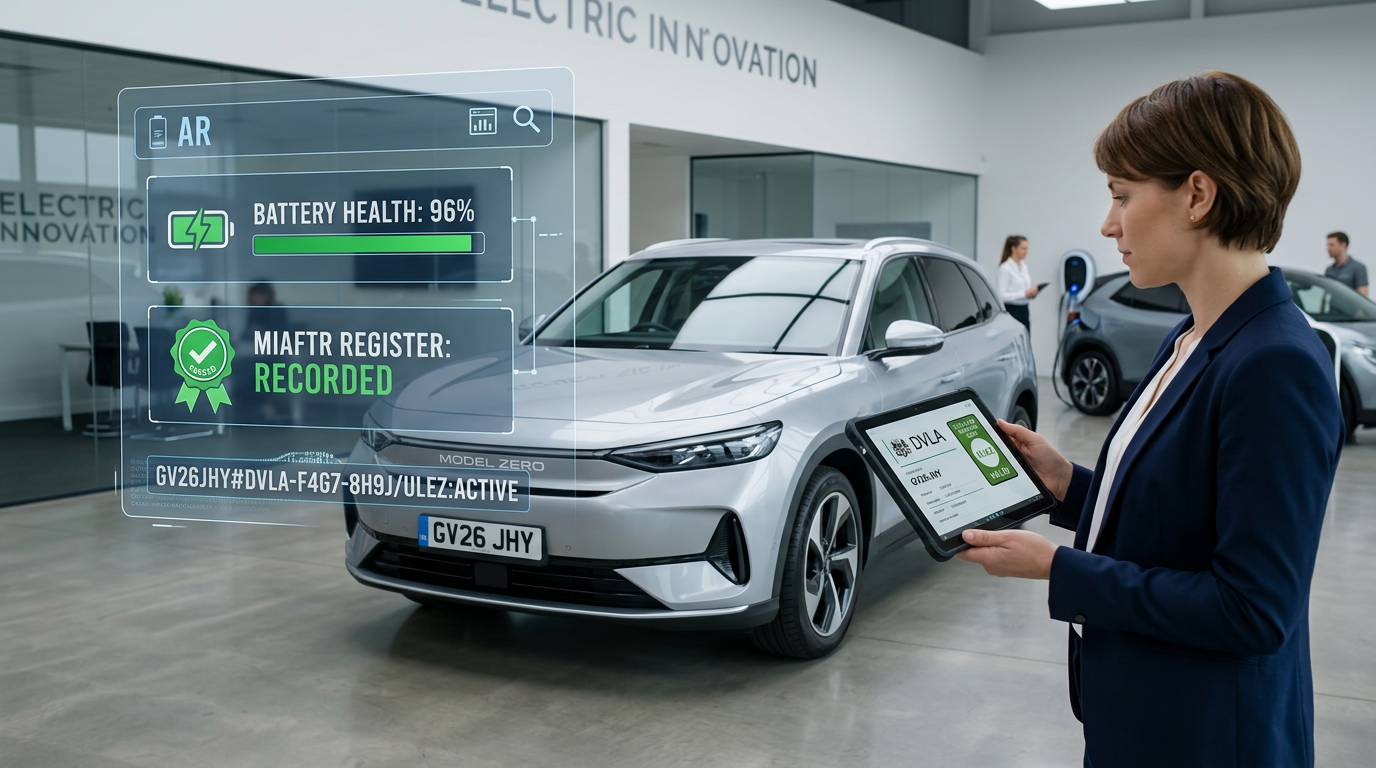
With the rise of Electric Vehicles (EVs) and Automated Driving Systems (ADS), the data points we look for in a vehicle history check have expanded. Navigating vehicle history statuses in 2026 requires understanding not just what happened to the chassis, but what is happening with the software, the battery health, and the digital markers on the MIAFTR (Motor Insurance Anti-Theft and Salvage) register.
Understanding the ABI Salvage Categories in 2026
The Association of British Insurers (ABI) salvage code remains the backbone of vehicle grading, but the criteria for "repairability" have shifted due to the skyrocketing costs of ADAS (Advanced Driver Assistance Systems) sensors.
| Category | Description | 2026 Implications |
|---|---|---|
| Category A | Scrap only. Must be crushed. | Includes EVs with compromised battery casings. |
| Category B | Break for parts. Shell must be destroyed. | High demand for recycled electric motors and high-voltage cabling. |
| Category S | Structural damage. Repairable. | Requires professional alignment certification for resale value. |
| Category N | Non-structural damage. Repairable. | Often triggered by "minor" bumps that damage expensive LiDAR or radar units. |
Crucially, in 2026, many vehicles that would have been Category N five years ago are now being written off because the cost of recalibrating the Level 3 autonomous sensors exceeds the vehicle's market value. When browsing listings on CarsLink.ai, buyers are increasingly looking for "Sensor Calibration Certificates" alongside traditional service history.
The Modern HPI Check: More Than Just Finance
The term "HPI check" has become shorthand for a comprehensive provenance report. In 2026, a high-quality check now investigates layers of data that were previously ignored:
1. Battery Health Status (SOH)
For EVs, the V5C now often links to a State of Health (SOH) registry. A "Clear" status means the battery hasn't been subject to a thermal event or deep-discharge cycle that could void the manufacturer warranty.
2. Software Integrity and "Bricking" Risk
As cars become "computers on wheels," some written-off vehicles—particularly high-end EVs—are being software-locked by manufacturers for safety. A vehicle might look physically perfect, but if the MIAFTR register flags it as a total loss, the manufacturer may remotely disable rapid charging or over-the-air (OTA) updates.
3. Outstanding "Connected" Subscriptions
A new status in 2026 involves "Digital Encumbrance." This checks whether the vehicle has outstanding PCH (Personal Contract Hire) payments or, curiously, unpaid subscriptions for features like heated seats or performance boosts, which can lead to features being deactivated for the second owner.
The MIAFTR Register: The Silent Truth-Teller
The MIAFTR register is maintained by the bespoke data agencies and used by insurers to log every total loss. In 2026, the speed at which a car hits MIAFTR has increased. Previously, it could take weeks for a write-off to show; now, via automated insurance claims AI, a vehicle can be flagged within 48 hours of an accident.
If you are buying privately, a vehicle might not yet have "Cat S" or "Cat N" printed on the V5C logbook, as the DVLA updates can lag. However, a real-time check against the MIAFTR database will reveal the truth. Never take a seller's word that "the insurance didn't write it off" without verifying this digital footprint.
Grey Areas: V-SDR and Condition Alerts
By 2026, we have seen the emergence of V-SDR (Vehicle Software Damage Reports). These are not official ABI categories, but they appear on premium history checks. They indicate that a vehicle has been involved in a cyber-security breach or a significant system failure that required a full factory reset of the infotainment and safety modules.
High-Risk Indicators to Watch:
- V5C Frequent Changes: If a car has had three owners in the last 12 months, it’s a "lemon" warning, regardless of its Cat S/N status.
- Plate Transfers: Hidden histories are often masked by frequent private plate changes. Modern checks now trace all previous VRMs (Vehicle Registration Marks) automatically.
- MOT "Software Advisories": Since 2025, MOT testers have been checking for ECU fault codes. If a car has "Pass with Software Advisory," treat it with the same caution as a mechanical fault.
Navigating the Purchase: PCP, HP, and PCH
If you are financing a used car with a salvage history, be prepared for hurdles. Most major UK lenders will not provide PCP (Personal Contract Purchase) deals on Category S vehicles. This is because the "Guaranteed Minimum Future Value" (GMFV) is impossible to calculate reliably.
However, HP (Hire Purchase) is often still available through specialist lenders, provided the vehicle has a valid MOT and a mechanical inspection report. At CarsLink.ai, we recommend that any buyer looking at a Category N car ensures the road tax status is current and that the insurer is notified of the salvage marker before the policy is activated—failure to do so is a common cause of voided insurance in 2026.
Summary Checklist for Used Car Provenance in 2026
- Run a Level 3 Provenance Check: Ensure it includes MIAFTR data, battery health (if EV), and software lockout status.
- Verify the V5C: Check for the "S" or "N" marker and ensure the VIN matches the digital records.
- Inspect the ADAS: Ask for proof that cameras and radars were recalibrated by a Thatcham-certified technician.
- Check for "Digital Liens": Ensure there are no outstanding OTA subscription debts.
- ULEZ/Zez Compliance: Ensure the vehicle’s status hasn't changed due to updated emissions hardware (rare but possible with older hybrids).
Conclusion: Data is the New Paintwork
In the mid-2020s, a car's history is more important than its mileage. A "low mileage" EV with a flagged MIAFTR entry and a software-locked charging port is effectively a very expensive paperweight. By looking beyond the simple Cat S/N labels and diving into the deeper vehicle history statuses, you can buy with confidence in 2026.
Looking for a used car with a verified history? Browse the latest listings at CarsLink.ai, where transparency and data-driven provenance come as standard. Whether you're after a zero-emission hatchback or a long-range executive saloon, we help you see the full picture before you sign.