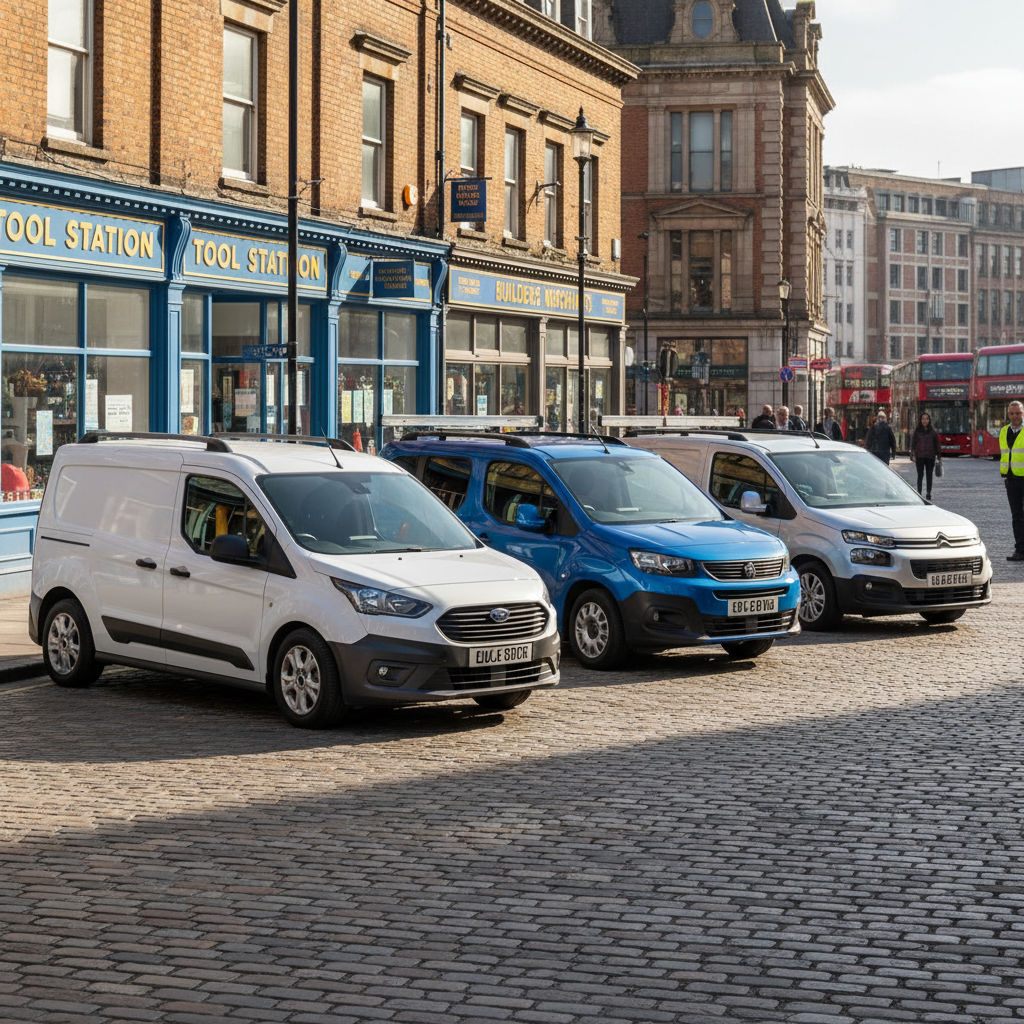
For a self-employed tradesperson in the UK, your van is more than just a vehicle; it is your mobile office, your toolbox, and a crucial part of your business. Choosing the right used small van is a balance of practicality, reliability, and affordability. A dependable van keeps you on the road earning, while an unreliable one can cost you time and money.
This guide will walk you through the top contenders in the used small van market for 2026, helping you make an informed decision. When you are ready to look at specific examples, searching on a free platform like Carslink lets you browse thousands of vehicles from trusted dealers across the country with 0% commission.
Key Considerations Before You Buy
Before diving into specific models, let's cover the essential factors every tradesperson should consider.
Payload and Load Volume: Payload is the maximum weight your van can legally carry, including passengers. Load volume is the amount of space inside the cargo area, measured in cubic metres (m³). A plumber carrying heavy copper piping needs a high payload, whereas a painter and decorator might prioritise load volume for ladders and dust sheets. Always check the specific model's rating, as it can vary.
Running Costs: Look beyond the sticker price. Consider fuel economy (MPG), insurance group, and Vehicle Excise Duty (road tax). Most modern vans have efficient diesel engines, but their real world MPG will depend on your driving style and load.
ULEZ and Clean Air Zones (CAZ): This is a critical factor, especially if you work in or travel through major cities like London, Bristol, or Birmingham. To avoid daily charges, you will generally need a diesel van that meets Euro 6 emissions standards. Most vans registered from late 2016 onwards are Euro 6 compliant, but always verify this before purchasing. It is a detail worth confirming with the dealer.
Reliability and History: A full service history is non-negotiable. It shows the van has been maintained correctly. You can check a vehicle's MOT history for free on the GOV.UK website. This reveals past advisories and failures, giving you an insight into its mechanical past. When you view the van, ensure the V5C logbook details match the vehicle and the seller.
The Top 5 Used Small Vans for Tradespeople in 2026
Here are our top picks for the best used small vans, chosen for their all-round capabilities and suitability for UK trades.
| Van Model | Typical Payload | Load Volume (m³) | Pro Tip | Est. Price (3-5yr old) |
|---|---|---|---|---|
| Ford Transit Connect | 600 - 900 kg | 2.9 - 3.6 m³ | Excellent to drive, tough build | £13,000 - £20,000 |
| Volkswagen Caddy | 650 - 750 kg | 3.2 m³ | Premium feel, strong residuals | £15,000 - £24,000 |
| Citroën/Peugeot/Vauxhall | up to 1,000 kg | 3.3 - 3.9 m³ | Huge choice and great payload | £12,000 - £19,000 |
| Renault Kangoo | 650 - 800 kg | 3.0 - 3.5 m³ | Great value, often well equipped | £10,000 - £17,000 |
| Toyota Proace City | up to 1,000 kg | 3.3 - 3.9 m³ | Toyota reliability, excellent warranty | £14,000 - £22,000 |
1. Ford Transit Connect
The Ford Transit name is synonymous with 'van' in the UK for a reason. The smaller Transit Connect is the go to choice for thousands of tradespeople. It drives more like a car than a commercial vehicle, making it comfortable on long journeys.
- Pros: Superb handling and ride comfort, robust build quality, available in two lengths (L1 and L2), and practical load-through bulkhead for longer items like pipes or timber.
- Cons: The interior can feel a bit dated on pre-2020 models compared to rivals. Some owners report electrical gremlins on higher mileage examples.
- What to Look For: Check for smooth operation of the sliding side doors. On diesel models, ensure the timing belt has been changed according to Ford's schedule. A good service history is vital.
2. Volkswagen Caddy
The VW Caddy has long been the 'premium' choice in the small van sector. It feels exceptionally well built, refined to drive, and holds its value better than most. The Caddy 4 (2015-2020) is a popular used buy, offering efficient engines and a comfortable cab.
- Pros: Top tier build quality, car-like interior and refinement, strong resale values, reliable TDI diesel engines.
- Cons: Generally more expensive to buy than rivals. The load bay is practical but not the largest in its class. Standard equipment can be sparse on entry-level models.
- What to Look For: The DSG automatic gearbox needs a fluid change at set intervals; check this has been done. Listen for any suspension knocks, as it can be a weak point if the van has had a hard life.
3. Citroën Berlingo / Peugeot Partner / Vauxhall Combo Cargo
These three vans, often called the 'Stellantis trio', are fundamentally identical under the skin. This is great news for buyers as it triples your choice. Launched in 2019, they brought new levels of technology and practicality to the market, including class leading payloads.
- Pros: Potential for a huge 1,000 kg payload, available in two body lengths, clever features like an overload sensor and surround view cameras on some models, comfortable and modern interior.
- Cons: The 1.5-litre BlueHDi diesel engine requires AdBlue; ensure the system is functioning correctly as repairs can be expensive.
- What to Look For: Test all the electrics, as the sheer amount of tech means there's more to potentially go wrong. Check the V5C document to confirm its Euro 6 status for ULEZ compliance.
4. Renault Kangoo
The Renault Kangoo often flies under the radar but represents excellent value for money. It is a no nonsense workhorse that focuses on practicality and low running costs. You will often find used Kangoos with a higher level of standard equipment than their rivals for a similar price.
- Pros: Excellent value on the used market, comfortable ride, available as a zero-emission electric 'E-Tech' model which is perfect for city based work.
- Cons: The interior feels less modern than competitors. The driving experience is safe and predictable rather than engaging.
- What to Look For: The interior plastics can show wear and tear easily, so a tidy cabin suggests a well cared for van. Check for any warning lights related to the fuel injection system.
5. Toyota Proace City
The Toyota Proace City is based on the same platform as the Citroën Berlingo trio but comes with a crucial difference: Toyota's legendary reputation for reliability and its excellent dealer network. For many self-employed people, this peace of mind is worth its weight in gold.
- Pros: Up to 10 years of warranty through the 'Toyota Relax' programme (if serviced at a main dealer), excellent payload capacity, all the modern tech of its French cousins.
- Cons: As a newer model on the used market, it can command a higher price. Fewer used examples are available compared to its Stellantis stablemates.
- What to Look For: Most will still be within their manufacturer warranty period. Ensure it has a full Toyota service history to keep the warranty valid. It is a fantastic option if your budget allows.
The Buying and Financing Process
Once you have shortlisted a few models, you can start your search on Carslink to see what's available near you. When you find a promising van, it is time for the final checks.
Paperwork: The V5C (logbook) is essential. It proves ownership and provides key details. Cross-reference the VIN (Vehicle Identification Number) on the V5C with the one on the van itself. Always perform a private history check (HPI check) to ensure there is no outstanding finance and that it has not been written off.
Financing: Most dealers offer finance. The two main types for business users are Hire Purchase (HP) and Personal Contract Purchase (PCP). With HP, you pay monthly instalments and own the van at the end. With PCP, your monthly payments are lower, but at the end of the term, you have a large 'balloon' payment to make if you want to keep it. HP is often more straightforward for a commercial vehicle you intend to keep for a long time. Discussing options with the dealer's finance specialist is the best course of action.
The Test Drive: Test the van in conditions you will be driving in. Take it on a dual carriageway to check for noise and stability at speed, and drive it around a town centre to check visibility and manoeuvrability. Listen for unusual noises and ensure everything works as it should.
Choosing the right used van is a significant business decision. By taking your time, doing your research, and performing thorough checks, you can secure a reliable and cost effective partner for your trade for years to come.
Disclaimer: This article is for informational purposes only. Vehicle specifications, prices, and availability can change. Always verify all details directly with the selling dealer before making a purchase.
Frequently asked questions
Are used small vans ULEZ compliant?
Yes, most small vans registered after September 2015 (Euro 6 diesel) or January 2006 (Euro 4 petrol) are ULEZ compliant. Always check the vehicle's registration via the TfL website before purchasing to avoid daily charges in London or other Clean Air Zones.
How much is the road tax (VED) for a small used van?
For most used small vans, the standard light commercial vehicle (LCV) rate of Vehicle Excise Duty applies. This is a flat annual rate regardless of CO2 emissions, unlike passenger cars. You must ensure the V5C logbook correctly identifies the vehicle as an N1 class commercial.
What paperwork should I check when buying a used van?
When buying a used van, ensure it has a valid MOT certificate (required annually for vehicles over 3 years old) and a full service history. Check the V5C for previous keepers and verify the VIN matches the paperwork to avoid buying a stolen or written-off vehicle.
What does payload mean for a tradesperson?
A payload is the maximum weight a van can carry, including tools, materials, and passengers. Exceeding the Gross Vehicle Weight (GVW) listed on the manufacturer's plate is illegal and can lead to fines, points on your licence, and voided insurance.
Can I get finance on a used small van?
Small trades can choose between Hire Purchase (HP), where you own the van after the final payment, or Personal Contract Purchase (PCP), which offers lower monthly costs but a large optional 'balloon' payment at the end. Many dealers also offer Contract Hire for VAT-registered businesses.
Should I buy a diesel or electric small van in 2026?
Diesel remains the most popular for fuel economy on long journeys, but electric small vans are increasingly viable for urban trades. Note that electric vans often have higher initial costs but benefit from lower maintenance and exemptions from congestion charges.
Information current as of 2026. Always verify the latest specification, price and availability with the dealer before purchasing. Carslink is a free search engine and does not handle the sale.