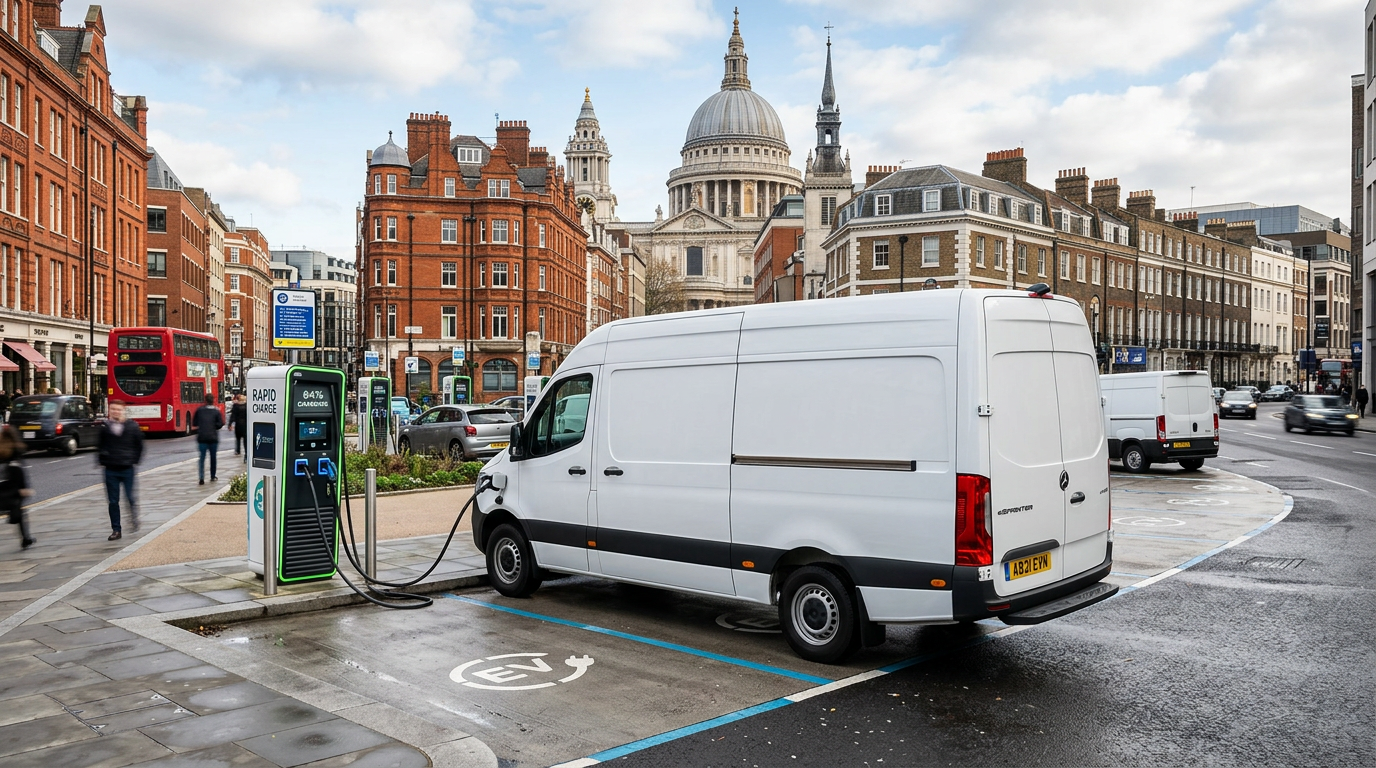
As of April 2026, the landscape for commercial vehicle operators in London has reached a critical tipping point. With the Ultra Low Emission Zone (ULEZ) standards remaining stringent and several Inner London boroughs now piloting "Zero Emission Zones" (ZEZ), the shift from diesel to electric is no longer a matter of 'if', but 'when'. For small business owners and fleet managers alike, the used market has finally matured, offering a range of capable electric vans that don't require the eye-watering capital outlay of a brand-new showroom model.
At CarsLink.ai, we’ve analysed the latest 2026 market data to identify which used electric delivery vans offer the best balance of range, payload, and reliability for the London circuit. Whether you are navigating the narrow streets of Soho or making the "last mile" dash from an Enfield distribution centre, these are the top contenders for your fleet.
Why 2026 is the Year for Used Electric Vans
The used electric van market in 2026 is significantly more robust than it was even two years ago. This is largely due to the influx of three-year-old vehicles coming off their initial PCP or fleet lease cycles from 2023—a year that saw a massive spike in EV commercial registrations.
Furthermore, the UK's charging infrastructure has expanded by 40% since 2024, with a specific focus on dedicated rapid-charging hubs for commercial vehicles in North and South London. However, range anxiety hasn't totally vanished; it has simply evolved into "efficiency management."
Top Used Electric Vans for London: Performance Comparison
When selecting a van for London operations, you must balance Load Volume (m³) against Real-World Range. Winter temperatures in the UK can sap up to 25% of an EV's range, so we have provided "Realistic City Range" figures alongside the official WLTP data.
| Model (2023/24 Reg) | Battery Size (kWh) | Official WLTP Range | Realistic City Range (Loaded) | Max Payload (kg) |
|---|---|---|---|---|
| Ford E-Transit | 68kWh | 196 miles | 145-155 miles | 1,758kg |
| Vauxhall Vivaro Electric | 75kWh | 205 miles | 160-170 miles | 1,000kg |
| Maxus eDeliver 3 | 52.5kWh | 151 miles | 115-125 miles | 905kg |
| Renault Kangoo E-Tech | 45kWh | 186 miles | 135-145 miles | 600kg |
| Mercedes-Benz eSprinter | 113kWh* | 270 miles | 210-225 miles | 1,180kg |
*Note: 2024+ 113kWh model. Earlier 47kWh models offer significantly less range (approx. 80-90 miles).
1. The All-Rounder: Ford E-Transit (2023 onwards)
The Ford E-Transit has become the gold standard for fleet electrification in the UK. By 2026, many 23 and 73-plate models are appearing on the used market. Its success lies in its familiarity; it retains the same load dimensions as the diesel Transit, making it easy to swap over existing racking systems.
- Why it’s perfect for London: The independent rear suspension provides a much smoother ride over London’s speed bumps compared to its diesel counterparts.
- Dealer Tip: Look for models equipped with "Pro Power Onboard," which allows you to run power tools or refrigeration units directly from the vehicle battery.
2. The Multi-Drop Master: Vauxhall Vivaro Electric
The Vivaro (and its Stellantis siblings: the Peugeot e-Expert and Citroen ë-Dispatch) is perhaps the most common sight in London. Its "standard" height of under 1.9m is a lifesaver for navigating height-restricted underground car parks in the West End.
- Connectivity: By 2026, most these vans integrated with fleet management software that allows London operators to monitor state-of-charge (SoC) remotely, essential for planning multi-drop routes.
- Payload Consideration: Ideally, seek out the 75kWh battery version for used purchases. While the 50kWh version is cheaper, the 75kWh offers the buffer needed for heavy winter traffic on the North Circular.
3. The Specialist: Maxus eDeliver 3
Often overlooked, the Maxus (formerly LDV) was designed from the ground up as an electric vehicle. This means it is incredibly light, which aids its efficiency.
- Value Proposition: In the 2026 used market, the Maxus represents significant value. It often retails for 15-20% less than a comparable Ford or Vauxhall, making it an excellent entry point for sole traders looking to avoid the £12.50 daily ULEZ charge (which applies to older non-compliant diesel vans).
Navigating the V5C and Taxation for Used EV Vans
When purchasing a used electric van, ensuring your paperwork is in order is critical for ULEZ exemption and tax benefits.
- V5C Logbook: Ensure the "Fuel Type" is marked as 'ELECTRIC'. This automatically triggers the ULEZ exemption via the TfL database.
- Annual Tax (VED): While electric vans enjoyed a zero-rate for years, as of April 2025, they transitioned into the standard VED system. However, rates remain significantly lower than high-emission Euro 5 diesels.
- Benefit-in-Kind (BIK): For fleet operators providing vans for employee private use, the BIK rate for zero-emission vans remains highly competitive in the 2026/27 tax year compared to ICE vans.
Battery Health: The "MOT" of the Future
The biggest concern for a van buyer in 2026 is battery degradation. Commercial vehicles lead a hard life. When browsing listings on CarsLink.ai, look for sellers who provide a State of Health (SoH) certificate.
A van with 60,000 miles on the clock might still have 94% battery health if it was slow-charged overnight, whereas a van with 30,000 miles that was exclusively rapid-charged at 150kW hubs might show more degradation. In London's stop-start traffic, regenerative braking actually helps preserve range, but the constant power draw for heating or air conditioning can take its toll.
Charging Strategy for London Fleets
Buying the van is only half the battle. A successful shift to a used electric fleet requires a charging strategy:
- Depot Charging: If you have an O-licence and a yard, installing AC fast chargers (22kW) is the most cost-effective way to fuel your fleet.
- On-Street Commercial Charging: 2026 has seen a rise in "kerbside" charging specifically for vans that cannot park on residential driveways. Companies like Ubitricity and Zap-Map offer business accounts that consolidate VAT invoicing—a dream for fleet managers.
Summary: Which Van Should You Choose?
- For the Highest Payload: The Ford E-Transit remains king.
- For Tight Urban Access: The Vauxhall Vivaro Electric is the most versatile.
- For Long-Distance Hub-to-Hub: The New-Gen Mercedes eSprinter (113kWh) is the only real choice, though it commands a premium price even when used.
- For the Budget-Conscious: Look for a Renault Kangoo E-Tech (45kWh) which is perfect for florists, caterers, or small parcel deliveries.
The transition to electric is no longer a PR exercise; it is a fundamental requirement for doing business in the capital. By choosing the right used electric van, you can protect your margins from ULEZ charges while benefiting from the lower maintenance costs inherent in EV drivetrains.
Ready to upgrade your commercial fleet? Use the AI-powered search at CarsLink.ai to filter thousands of used electric vans by battery health, load volume, and ULEZ compliance to find the perfect workhorse for your business today.