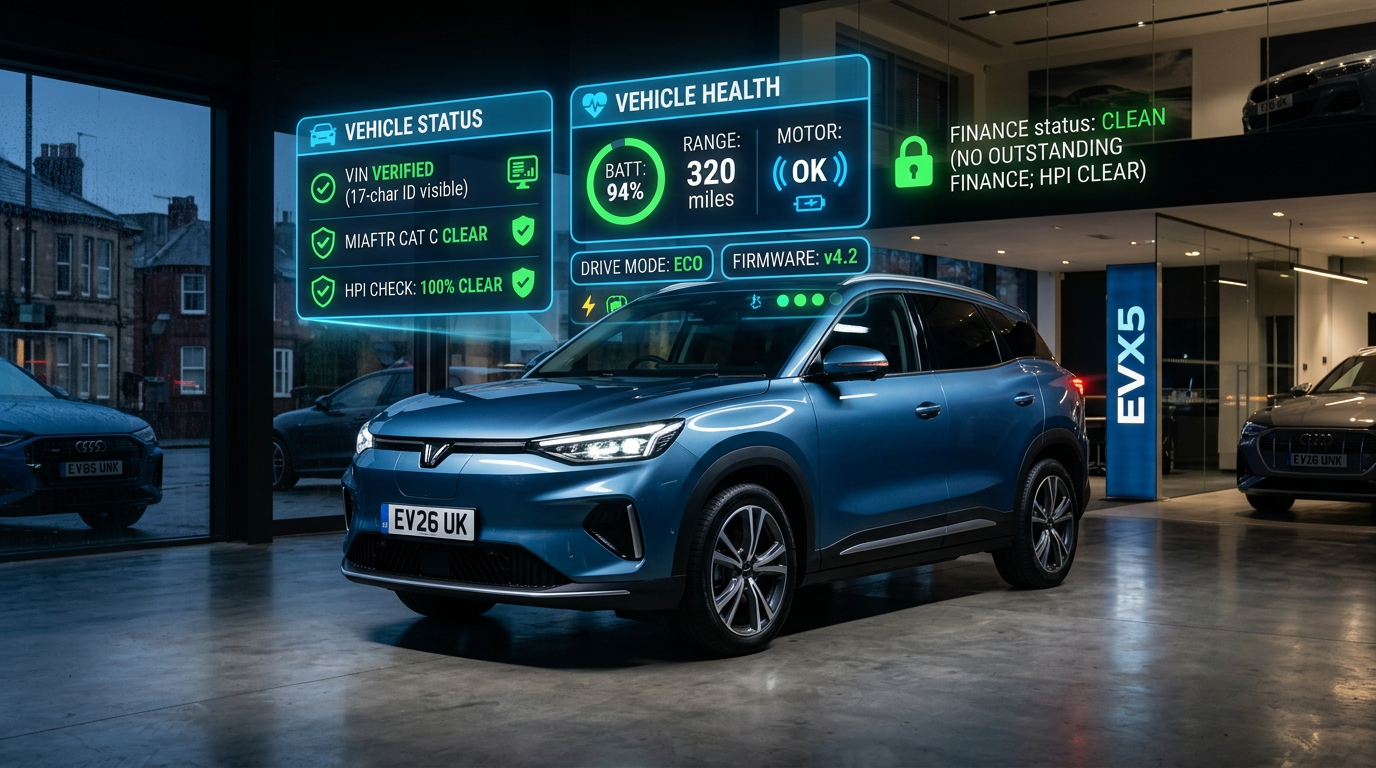
In 2026, the UK used car market is more transparent than ever, yet the sheer volume of data can be overwhelming for the average buyer. While most motorists know that an HPI Check confirms if a car has outstanding finance or has been reported stolen, the modern vehicle provenance report digs far deeper into the digital "black box" of a car's history.
As we move further into the era of connected vehicles and stricter environmental regulations, simply checking the V5C logbook isn't enough. To truly protect your investment, you need to understand the hidden layers of data that professional dealers use to vet their stock.
Here are five hidden data points within a comprehensive 2026 vehicle history check that you likely didn't know existed.
1. MIAFTR Hidden Salvage Data
Most buyers are familiar with Category S (Structural) and Category N (Non-structural) write-offs. However, the Motor Insurance Anti-Fraud and Theft Register (MIAFTR) contains nuances that don't always result in a simple 'Category' label on a standard advert.
In 2026, insurance companies are increasingly proactive. A car might have been involved in a "total loss" claim that hasn't yet been fully processed by the DVLA, or it may have been handled via a "cash-in-lieu" settlement. In these cases, the owner keeps the damaged car, and it might not appear as a write-off on some basic checks. A full vehicle provenance check cross-references MIAFTR data to flag these inconsistencies before they become your legal headache.
2. High-Risk Asset Alerts
This is arguably the most critical "hidden" data point for high-value car buyers. A vehicle might be clear of traditional HP (Hire Purchase) or PCP (Personal Contract Purchase) debt, but it could still be flagged on the High-Risk Asset Register.
This register is used by finance companies to protect vehicles that are part of a fleet, sub-leasing agreement, or certain types of corporate credit lines where the vehicle is technically an asset of a company under investigation or liquidation. If you buy a car with an active High-Risk Asset alert, you face a genuine risk of the vehicle being repossessed by a third party, even if you paid the seller in full. At CarsLink.ai, we always recommend ensuring this specific field returns a 'Clear' status.
3. Plate Transfer History and "V5C Logbook Forgery" Detection
Changing a number plate to a "private" or "cherished" reg is a British tradition. However, fraudsters often use plate transfers to hide a vehicle’s true identity or to mask a period where the car was "clocked" or off the road for major repairs.
Modern HPI checks track the entire plate history linked to a specific VIN (Vehicle Identification Number). If a car has had four different plates in three years, it's a red flag for "plate cloning" or "identity masking." Furthermore, the check verifies the V5C issue date and serial number. If the seller presents a logbook that doesn't match the latest DVLA record captured in the check, the document could be a high-quality forgery or an invalidated duplicate.
Comparing Data Points: Basic vs. Premium Checks
| Feature | Basic "App" Check | Comprehensive HPI/Provenance |
|---|---|---|
| Outstanding Finance (PCP/HP) | Yes | Yes |
| Stolen Vehicle Status | Yes | Yes |
| MIAFTR Salvage Records | Partial | Full Access |
| High-Risk Asset Alert | No | Yes |
| Mileage Anomaly Detection | Basic | Predictive AI Analysis |
| V5C Document Issue Tracking | No | Yes |
4. ULEZ & ZEZ "Future-Proofing" Metadata
By 2026, Ultra Low Emission Zones (ULEZ) have expanded, and many UK cities have introduced Zero Emission Zones (ZEZ). While you can check a car's Euro rating on the government website, a deep-dive history check provides the Technical Certificate Data.
This includes the specific CO2 and NOx emissions recorded at the point of first registration. Why does this matter? Occasionally, a vehicle’s V5C might list a generic Euro 6 status, but the specific manufacture date or engine variant might actually fall foul of local councils' tightening "Clean Air" criteria. The hidden data points in a provenance report confirm the exact "Real Driving Emissions" (RDE) step the car satisfies, ensuring you don't buy a car that will be banned from your city centre next year.
5. Mileage "Divergence" Trends
Clocking hasn't gone away; it has just gone digital. While MOT history (available via the DVLA) shows a linear progression of mileage, it only records the odometer once a year.
Hidden data points now include mileage sightings from various sources: national service centres, car parking databases, and even insurance telematics. A high-quality check will highlight "Divergence Trends." For example, if the MOT says 30,000 miles in May, but a service centre recorded 35,000 miles in February, the car has been clocked. These "non-MOT" mileage captures are the "smoking gun" in 1 in 11 vehicle checks performed today.
Why "Free" Checks Aren't Enough in 2026
We often see buyers trying to save £20 by using free apps. However, these apps usually only pull publicly available MOT data. They lack the commercial agreements to access finance house databases, insurance registers (MIAFTR), and the High-Risk Asset Register.
When you use a platform like CarsLink.ai to research your next purchase, you are benefiting from an ecosystem that values data accuracy. Buying a car is likely your second-largest lifetime expense; skipping the depth of an HPI check is a gamble that rarely pays off.
Essential Checklist Before You Hand Over the Cash:
- Verify the VIN: Ensure the VIN on the dashboard/chassis matches the V5C and the digital report.
- Check the Logbook Date: Does the V5C issue date match the report? If not, the seller might not be the legal keeper.
- Look for "Finance Subject to Interest": This means a finance house has a claim on the car. You cannot legally buy it until that is cleared.
- Assess the "Number of Owners": A high number of owners in a short period often suggests a "lemon" with recurring mechanical faults.
The Bottom Line
The "hidden" data points—MIAFTR nuances, high-risk assets, and technical emissions metadata—are what separate a "good deal" from a "financial disaster." As we navigate the 2026 car market, being armed with a full vehicle provenance report is your only true protection against the sophisticated scams of the modern era.
Ready to find your next car with confidence? Explore hundreds of vetted listings and expert buying guides at CarsLink.ai—where UK car buyers come for transparency and trust.