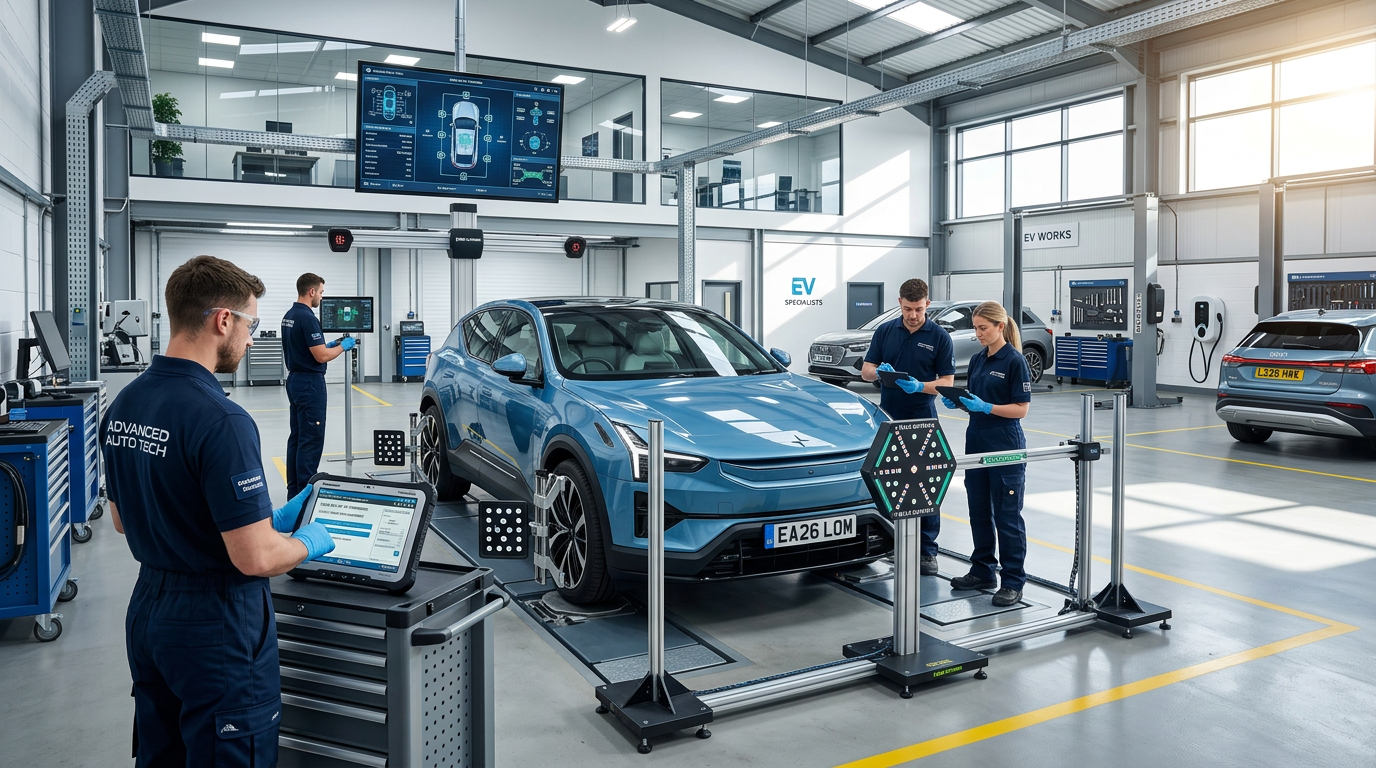
In 2026, the landscape of vehicle maintenance has shifted dramatically. While traditional mechanical components like brakes and tyres remain critical, a silent, digital force now dictates whether your car is roadworthy: Advanced Driver Assistance Systems (ADAS).
As of this year, the DVLA and the DVSA have integrated stricter scrutiny regarding safety sensors into the annual MOT test. If your vehicle’s radar or camera systems are misaligned, you aren’t just looking at a dashboard warning light—you are looking at a mandatory MOT failure.
What is ADAS and Why Is It Failing MOTs in 2026?
ADAS covers a suite of safety technologies including Lane Keep Assist (LKA), Autonomous Emergency Braking (AEB), Adaptive Cruise Control, and Blind Spot Detection. By 2026, these systems are standard on almost every used car under ten years old.
The 2026 MOT criteria now specify that any "malfunction indicator lamp" (MIL) relating to ADAS constitutes a 'Major' fail. More importantly, inspectors are now trained to spot physical misalignments—such as a slightly displaced radar sensor or a poorly fitted windscreen—that could cause these systems to behave unpredictably.
Why Calibration is Non-Negotiable
These systems rely on millimetre-precision. A camera mounted behind your rearview mirror or a radar sensor in your front bumper only needs to be out of alignment by a fraction of a degree to "see" the world incorrectly. On the motorway at 70mph, a 1-degree misalignment can result in the car misidentifying the position of a vehicle in the next lane by several metres.
Common Scenarios Requiring ADAS Calibration
Many UK drivers are caught out because they don’t realise that routine repairs often necessitate a system recalibration. If you are browsing for a vehicle on CarsLink.ai, ensure you check the service history for these specific triggers:
- Windscreen Replacement: The most common cause. Most front-facing ADAS cameras are mounted to the glass. Even a premium OEM-spec windscreen requires the camera to be recalibrated once fitted.
- Suspension Work or Wheel Alignment: Changes to the car’s geometry (the "thrust angle") change where the sensors are pointing relative to the road.
- Front-End Body Repairs: Even a minor "fender bender" that clips the bumper can jar the radar sensors used for AEB.
- Battery Disconnection: In some newer models, a total loss of power can occasionally cause ADAS modules to lose their "set" parameters.
ADAS Calibration Cost UK: What to Expect in 2026
The cost of calibration has become a standard part of vehicle ownership. In 2026, prices vary based on whether your car requires Static or Dynamic calibration.
| Calibration Type | Method | Average Cost (2026) |
|---|---|---|
| Static Calibration | Performed in a workshop using specialist boards/targets and lasers. | £180 - £350 |
| Dynamic Calibration | Performed by driving the car at specific speeds on well-marked roads with a diagnostic tool. | £150 - £250 |
| Dual Calibration | Some premium brands (BMW, Mercedes, Audi) require both methods. | £400 - £600 |
While these costs might seem high, they are a fraction of the cost of an insurance deductible following an avoidable collision caused by a failing AEB system.
The "Used Car Trap": What Buyers Must Look For
When buying a used car in 2026, the V5C and service history tell only half the story. You must ensure the ADAS suite is functional.
At CarsLink.ai, we recommend that buyers specifically ask for an ADAS Health Check report. If a car has recently had a new windscreen or bodywork and there is no certificate of calibration, you are likely inheriting a future MOT failure.
Warning Signs Your ADAS is Misaligned:
- The Lane Keep Assist "drifts" or pulls the steering wheel unnecessarily.
- Adaptive Cruise Control cancels itself frequently.
- The AEB warning light flashes when no obstacles are present (ghost braking).
- The dashboard displays "Sensor Blocked" or "System Unavailable" despite the car being clean.
The Legal and Insurance Implications
It isn't just about the MOT. In 2026, UK insurers are increasingly scrutinising ADAS data following accidents. If it is discovered that your AEB failed to engage because you bypassed a calibration after a windscreen replacement, your insurer may have grounds to reduce your payout or void the policy under the "duty to maintain a roadworthy vehicle" clause.
Furthermore, driving a vehicle with a known safety system fault can lead to prosecution if that fault contributes to a "Careless Driving" charge.
How to Ensure Your Car Passes the 2026 MOT
To avoid being one of the thousands of UK motorists facing MOT failure items related to sensors this year, follow this checklist:
- Check the Glass: Ensure there are no chips or cracks within "Zone A" (the area directly in front of the driver and around the ADAS camera).
- Review Recent Repairs: If the car has had a wheel alignment or new tyres recently, ask the garage if the ADAS steering angle sensor was reset.
- Dash Scan: If any warning lights are present, use a diagnostic tool to identify the fault code before heading to the MOT centre.
- Professional Calibration: Only use centres with IMI (Institute of the Motor Industry) certified technicians.
Conclusion
By 2026, the "driver" in "driver assistance" is a partnership between you and the car’s software. Keeping that partnership calibrated is no longer optional—it is a cornerstone of UK road safety and a prerequisite for a valid MOT.
Whether you are selling a car or looking to buy your next one, transparency regarding sensor health is key. Visit CarsLink.ai today to browse our listings, where we prioritise detailed vehicle histories and safety documentation to keep you moving safely.
Are you unsure if your car needs a recalibration? Contact your local specialist today to book an ADAS health check before your next MOT anniversary.