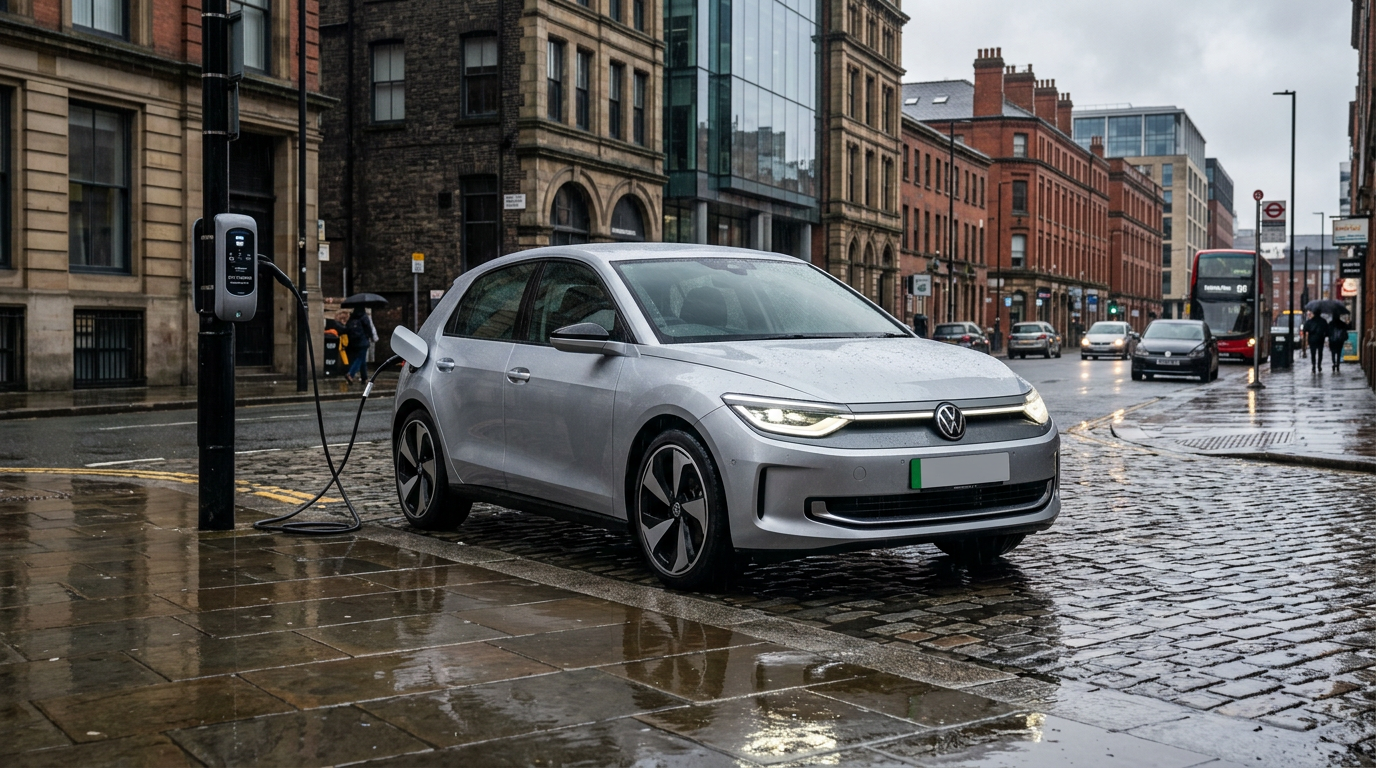
For years, the British motoring public has been waiting for the "tipping point"—the moment an electric vehicle (EV) becomes as affordable and practical as the petrol-powered superminis that have dominated our roads for decades. In 2024 and 2025, we saw flashes of brilliance, but as we move through 2026, the arrival of the Volkswagen ID.2 feels like the definitive moment the UK car market shifts for good.
Positioned below the ID.3 in size but offering comparable interior space, the ID.2 isn't just another EV; it's a direct challenge to the supremacy of the Vauxhall Corsa Electric and the Renault 5 E-Tech. With a starting price targeted at under £22,000, it marks the first time a premium German brand has truly competed in the budget-friendly electric hatchback segment.
Design and Dimensions: The Return of the 'People's Car'
One of the most striking things about the ID.2 is how traditional it feels. After the futurism of the ID.3 and ID.4, Volkswagen has returned to a more classic "Golf-like" silhouette. It’s shorter than a Polo but, thanks to the MEB Entry platform, the wheelbase is stretched to provide interior room that rivals the segment above.
Local UK buyers who have been put off by the touch-sensitive sliders of previous VW electric models will be delighted to hear that the ID.2 reintroduces physical buttons for climate control and a tactile rotary controller on the centre console.
Key Specifications Comparison
| Feature | VW ID.2 (Base) | Vauxhall Corsa Electric (2026) | Renault 5 E-Tech |
|---|---|---|---|
| Starting Price | ~£21,500 | £26,400 | £23,000 |
| Battery Size | 38kWh (LFP) | 50kWh | 40kWh |
| WLTP Range | 190 miles | 222 miles | 186 miles |
| Charging (10-80%) | 20 mins | 28 mins | 30 mins |
| Boot Space | 490 Litres | 309 Litres | 326 Litres |
Range, Battery, and Charging in the UK
In 2026, UK car buyers are being offered two distinct battery choices for the ID.2. The entry-level model uses a Lithium Iron Phosphate (LFP) battery. These are cheaper to produce and more durable over high charge cycles—perfect for urban commuters and those worried about long-term battery degradation.
The higher-spec "Pro" versions utilize a 56kWh pack capable of up to 280 miles on the WLTP cycle. For a car that will primarily spend its life tackling school runs in Manchester or commuting into London’s ULEZ, the base 190-mile range is more than sufficient, especially considering the 125kW DC fast-charging capability which adds 100 miles of range in just over 10 minutes.
Road Tax and ULEZ Benefits
Despite the 2025 changes to VED (Vehicle Excise Duty), which saw EVs lose their £0 tax rating, the ID.2 remains incredibly cost-effective. As a zero-emission vehicle, it avoids all current and proposed UK Clean Air Zone charges, including the expanded London ULEZ and Birmingham’s CAZ. For fleet operators and traders, the low Benefit-in-Kind (BiK) rates (currently 3% for 2026/27) make it an unbeatable proposition for company car schemes.
Interior Tech and Practicality
The ID.2 features a 12.9-inch infotainment screen running the latest VW OS 6.0 software. It is lightyears ahead of the laggy systems found in early ID models. However, the real "killer feature" for UK families is the storage.
Because the electric motor is mounted on the front axle, VW has managed to create a massive hidden storage compartment under the boot floor, large enough to hold several crates of water or all your charging cables. With the rear seats folded, the total capacity nears 1,300 litres, making it more practical than most petrol SUVs in the class.
Driving Dynamics: Is it a UK B-Road Hero?
On our notoriously bumpy and narrow UK B-roads, the ID.2 feels remarkably planted. The front-wheel-drive setup provides a familiar sensation for those transitioning from a Polo or Golf. The steering is light and precise, ideal for navigating tight multi-storey car parks in Leeds or Bristol.
Performance-wise, even the entry model produces 226PS (roughly 223bhp), allowing it to hit 62mph in under 7 seconds. This "zippiness" makes it excellent for joining fast-moving motorway traffic on the M1 or M25, where older, heavier EVs sometimes feel breathless.
The Dealer Perspective: Why Traders are Excited
For car dealers and traders, the ID.2 is the car they’ve been waiting for to revitalise the used EV market. The simplicity of the LFP battery chemistry in the base models means that 3-year-old used examples will likely show very little range loss, maintaining strong residual values.
Predictive data suggests the ID.2 will have some of the highest RV (Residual Value) percentages in its class. For traders using tools like CarsLink.ai to source stock, the ID.2 is expected to have a high "turn rate"—meaning it won't sit on the forecourt for long. Consumers are actively looking for premium-badge EVs that don't come with a £40,000 price tag.
Financing the ID.2: PCP and HP in 2026
With interest rates stabilising in 2026, we are seeing competitive PCP (Personal Contract Purchase) deals returning to the market.
- PCP Estimates: With a £3,000 deposit, buyers can expect monthly payments around £249–£289 for a 48-month term.
- Insurance Groups: The ID.2 is expected to sit between Group 15 and 22, making it accessible for younger drivers or those looking to reduce their annual premiums.
Verdict: Britain’s New Best-Seller?
The Volkswagen ID.2 feels like the right car at the right time. It solves the three biggest hurdles to EV adoption in the UK: price, complexity, and practicality. It doesn't feel like a "cheap" car; it feels like a Volkswagen that happens to be affordable.
While the competition from the likes of MG and BYD remains fierce, the ID.2’s combination of physical buttons, massive boot space, and the reassurance of the VW badge is likely to see it top the UK sales charts by the end of 2026.
If you are looking to secure one of the first used examples or want to compare current dealer stock across the country, CarsLink.ai provides the fastest way to filter through the latest ID.2 listings, ensuring you find the right battery spec and trim for your budget.
Ready to make the switch? Start your search for the perfect electric hatchback on CarsLink.ai today.