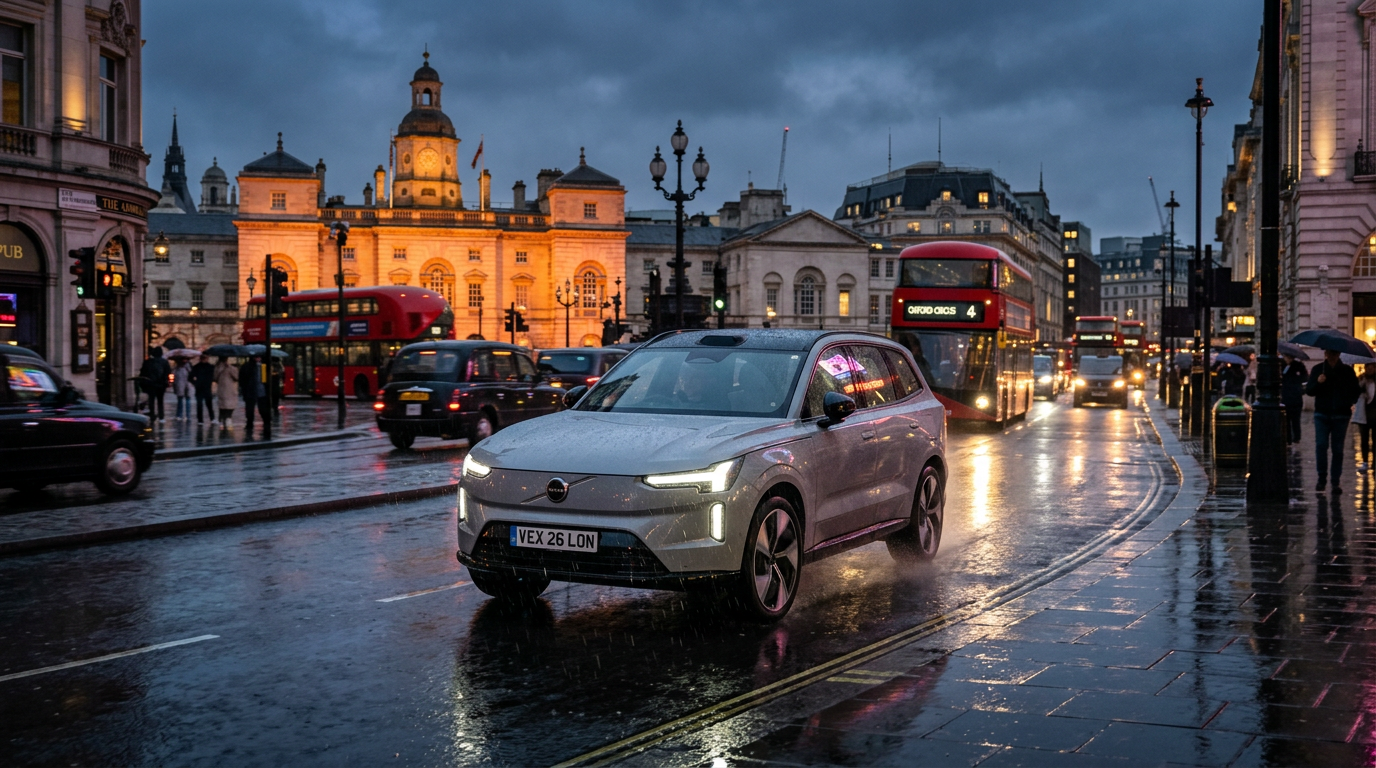
The 2026 automotive landscape is dominated by a clear shift: drivers are no longer just asking about range, they are asking about intelligence. Leading that conversation is the Volvo EX90. Now that the first wave of these flagship electric SUVs has reached the second-hand market, UK buyers are looking closely at whether this "computer on wheels" lives up to the Swedish brand's legendary safety reputation.
With initial supply chain hurdles now a thing of the past and the 2026 UK road tax changes for EVs having settled into the market, the EX90 is becoming a top-tier choice for families who want to skip the new-car depreciation curve. In this review, we’ll explore how it handles British roads, the reality of its LiDAR-backed safety, and what you should expect to pay for a pre-owned model today.
The Design: Scandi-Minimalism Meets High Tech
The EX90 doesn't scream for attention like some of its German rivals. It’s a masterclass in understated luxury. Despite its footprint—which is slightly longer than the outgoing XC90—it feels aerodynamic and sleek. The signature "Thor’s Hammer" headlights now feature a mechanical "eye-blink" animation when switching to high beams, a detail that still feels futuristic in 2026.
Inside, Volvo has doubled down on sustainable luxury. You won't find leather here; instead, the "Nordico" textile made from recycled PET bottles and bio-attributed material from Swedish forests offers a tactile, high-end feel. For UK families, the seven-seat configuration is standard, providing legitimate space for adults in the third row—a rarity in the EV SUV segment.
Understanding Volvo LiDAR Technology in the UK
The most talked-about feature of the EX90 is the roof-mounted LiDAR sensor. Situated just above the windscreen, it looks like a subtle taxi light, but it’s the brain of the car’s safety suite.
In 2026, the software updates have finally unlocked the full potential of this hardware. Unlike traditional cameras that can be blinded by the low-lying British winter sun or heavy Yorkshire fog, the Volvo LiDAR technology uses pulse laser light to "see" the road up to 250 metres ahead, even in total darkness.
For UK drivers, this means:
- Enhanced Pedestrian Protection: Better detection of cyclists and pedestrians in poorly lit urban areas like London or Manchester.
- Advanced Adaptive Cruise Control: Smoother braking and acceleration on the M1 or M6, as the car anticipates traffic patterns far more accurately than radar-only systems.
- Future-Proofing: While full Level 3 autonomy is still navigating UK legislative hurdles, the hardware is ready to go as soon as the DVLA gives the green light.
Performance, Range, and Charging
The EX90 is built on the SPA2 platform, shared with the Polestar 3. In the UK, we typically see two primary powertrains on the used market: the Twin Motor and the Twin Motor Performance.
| Specification | Twin Motor | Twin Motor Performance |
|---|---|---|
| Battery Size (Usable) | 107 kWh | 107 kWh |
| Power (BHP) | 402 bhp | 510 bhp |
| 0-62 mph | 5.9 seconds | 4.9 seconds |
| WLTP Range | 363 miles | 360 miles |
| Max DC Charging | 250 kW | 250 kW |
On the road, the EX90 prioritises comfort. Even on 22-inch wheels, the air suspension (standard on Ultra trims) glides over pockmarked B-roads. It’s heavy—tipping the scales at nearly 2.8 tonnes—but the low centre of gravity ensures it never feels wallowy through roundabouts.
Used 7 Seater EV Prices: The 2026 Market
Buying a used EX90 in 2026 makes significant financial sense. Early 2024 and 2025 models have now faced their steepest depreciation drop. While still an expensive vehicle, the "used premium" has evaporated, making it competitive against a new Kia EV9 or a used Tesla Model X.
Drivers can find the best deals by using CarsLink.ai, which aggregates listings from trusted UK dealers and uses AI to highlight the best value-for-money examples based on battery health and optional extras.
- 2024/25 Twin Motor (Ultra): Expect to pay between £68,000 – £75,000 depending on mileage.
- 2025 Twin Motor Performance: Prices generally sit between £78,000 – £85,000.
Ownership Costs: Tax, Insurance, and Maintenance
Transitioning to an EX90 in 2026 involves navigating the updated UK road tax (VED) rules. As of April 2025, electric vehicles are no longer exempt from the "Expensive Car Supplement."
- Road Tax: Since the EX90 has a list price well over £40,000, owners will pay the standard VED rate plus the £410 supplement for the first five years of the vehicle's life (after the first year).
- Insurance: The EX90 sits in Insurance Group 50. Expect premiums to reflect the high-tech nature of the LiDAR and sensor arrays. It's recommended to seek specialist EV insurance providers or use a broker familiar with high-value Swedish imports.
- Service Intervals: Volvo suggests a service every 18,000 miles or 2 years. Being an EV, brake wear is minimal thanks to the excellent one-pedal driving system, but you should check tyre tread depth carefully on used models, as the weight of the battery can lead to faster wear on the rear tyres.
The Verdict: Is it the Best Used Family EV?
The 2026 Volvo EX90 represents the pinnacle of family transport. It solves the "range anxiety" issue with a massive 107 kWh battery and addresses the "safety anxiety" with the world’s most advanced sensor suite.
Pros:
- Unrivalled safety tech (LiDAR)
- Genuine seven-seat capacity
- Bi-directional charging capability (V2G ready)
- Google Built-in infotainment is snappy and intuitive
Cons:
- High insurance costs
- Heavier than many rivals
- Second-row middle seat is slightly narrow for three adults
For the UK buyer who prioritises the safety of their children above all else, there is simply no better used EV on the market in 2026. It feels like a fortress, but drives like a cloud.
To find the best deals on a used Volvo EX90 or to compare it against other seven-seater electric SUVs, start your search at CarsLink.ai today. Our AI-driven platform helps you filter by battery health, ULEZ compliance, and local UK dealer ratings to ensure your next family car is a smart investment.