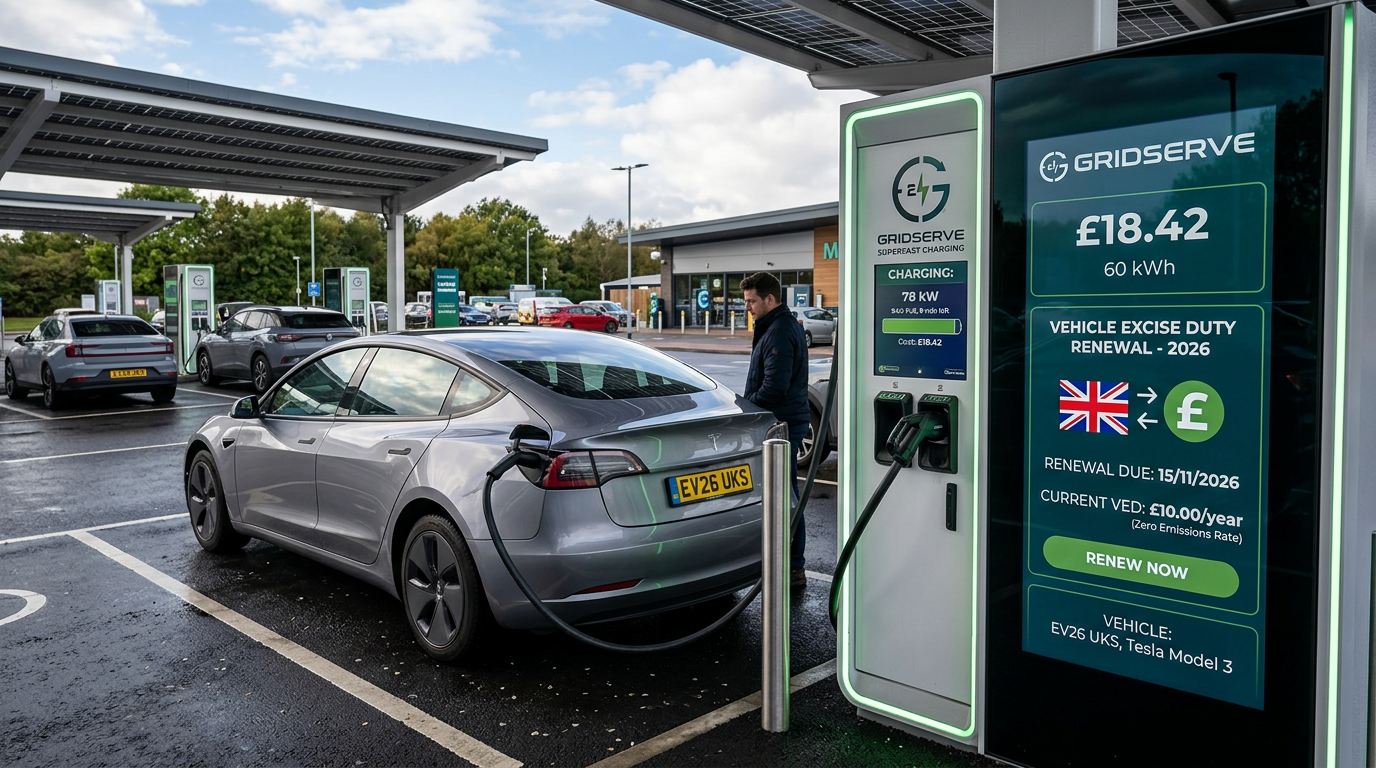
The UK automotive landscape has hit a historic milestone. As of April 2025, the honeymoon period for electric vehicle (EV) owners officially ended, and by now, in May 2026, the first wave of renewals under the new VED (Vehicle Excise Duty) regime has been felt by millions.
For years, zero-emission vehicles were the 'golden children' of the DVLA, enjoying £0 road tax. However, to plug the shortfall in Treasury revenue as petrol and diesel cars are phased out, the government has integrated EVs into the standard tax structure. If you are an EV owner or are browsing CarsLink.ai for your next upgrade, here is exactly what you need to know about the 2026 road tax shake-up.
The End of the £0 Rate: What Changed?
From April 2025, the exemption for electric cars was abolished. For 2026, the rules have solidified into a tiered system based on when your vehicle was first registered.
1. New EVs (Registered after April 1, 2025)
If you are buying a brand-new electric car in 2026, you will pay the lowest first-year rate, currently set at £10. However, from the second year of registration onwards, you move to the 'standard rate,' which applies to almost all cars on the road.
2. Existing EVs (Registered between 2017 and 2025)
If you own a Tesla Model 3, Hyundai Ioniq 5, or Nissan Leaf registered during this period, you are no longer exempt. You must now pay the Standard Annual Rate.
3. Older EVs (Registered before 2017)
Even vintage EVs (like early Renault Zoes or BMW i3s) are now captured by the tax net, moving into the Graduated VED system, specifically the 120-150g/km bracket rates of yesteryear, though most settle at the modern standard rate.
2026 Road Tax Rates: A Summary Table
| Vehicle Type | First Year Rate (2026) | Standard Annual Rate (Years 2+) |
|---|---|---|
| New Electric Cars | £10 | £190* |
| Used Electric Cars (2017-2025) | N/A | £190* |
| Hybrids/PHEVs | Based on CO2 (£10 - £110) | £180 |
| Petrol/Diesel (Post-2017) | Based on CO2 (£10 - £2,700+) | £190 |
*Note: Subject to the 'Expensive Car Supplement' if applicable.
The 'Expensive Car' Sting: The £40,000 Threshold
This is the area catching many 2026 EV buyers off guard. The Expensive Car Supplement originally targeted luxury petrol SUVs, but it now applies to electric vehicles.
If your EV has a list price of over £40,000 when new, you must pay an additional surcharge for five years, starting from the second time the vehicle is taxed.
- The Surcharge: £410 per year.
- Total Annual Cost: £190 (Standard Rate) + £410 (Surcharge) = £600 per year.
Given that many family-sized EVs (like the Volkswagen ID.4 or the Kia EV6) exceed the £40,000 mark, this has become a significant consideration for those shopping on CarsLink.ai. When checking the V5C logbook, always verify the original list price, not just what you paid for it used.
Impact on Used EV Values and the V5C
Managing your tax is more critical than ever during a private sale. When you buy a used EV in 2026, the previous owner’s tax does not transfer. You must tax the vehicle immediately using the 12-digit reference number on the New Keeper Supplement (V5C/2).
For dealers and buyers alike, the "tax status" is now a vital part of the valuation. A car that sits just under the £40k threshold is often more desirable on the secondary market because it saves the new owner over £2,000 in tax costs over five years.
Why the Change? The ULEZ and Net Zero Context
While the introduction of EV road tax in the UK felt like a policy reversal, the government argues it makes the system fairer. As the UK moves toward the 2030/2035 ban on new internal combustion engine (ICE) sales, the Treasury was facing a multi-billion pound "black hole" from lost fuel duty and VED.
However, EVs still hold significant financial advantages:
- Company Car Tax (BIK): Benefit-in-Kind rates for EVs remain significantly lower than petrol/diesel alternatives (rising slowly to 4% or 5% in 2026), making PCH and salary sacrifice schemes highly attractive.
- ULEZ/Clean Air Zones: EVs remain exempt from London’s ULEZ and similar zones in Birmingham, Bristol, and Glasgow, saving daily commuters thousands.
- Maintenance: Generally, MOT pass rates for 3-year-old EVs remain high due to fewer moving parts, though tyre wear is a more frequent cost.
How to Pay and Check Your Status
The DVLA has streamlined the process. You can pay via:
- Direct Debit: Spreading the cost monthly (though this costs slightly more than a single annual payment).
- Online: Using your V5C or renewal reminder (V11).
- Post Office: For those who prefer in-person transactions.
Pro Tip: Even if your tax rate is £0 (which applies to very few vehicles now, such as certain disabled passenger vehicles), you must still "renew" your tax online every year. Failure to do so can result in an automated fine, even if no money is owed.
Summary: Is an EV Still Worth It in 2026?
Despite the 2026 road tax changes, EVs remain the most cost-effective way to drive for the majority of UK motorists. When you factor in the lower cost-per-mile of home charging (especially on off-peak EV tariffs) and the significantly lower BIK rates for professionals, the annual £190 VED payment is a relatively small hurdle.
Whether you are looking for a tax-efficient commuter or a luxury long-range cruiser, CarsLink.ai provides the data and listings you need to navigate the 2026 market with confidence. Check the "Tax Band" section on our vehicle listings to see exactly what your chosen car will cost you each year.
Ready to find your next electric car? Visit CarsLink.ai today to compare the latest models and calculate your 2026 running costs.