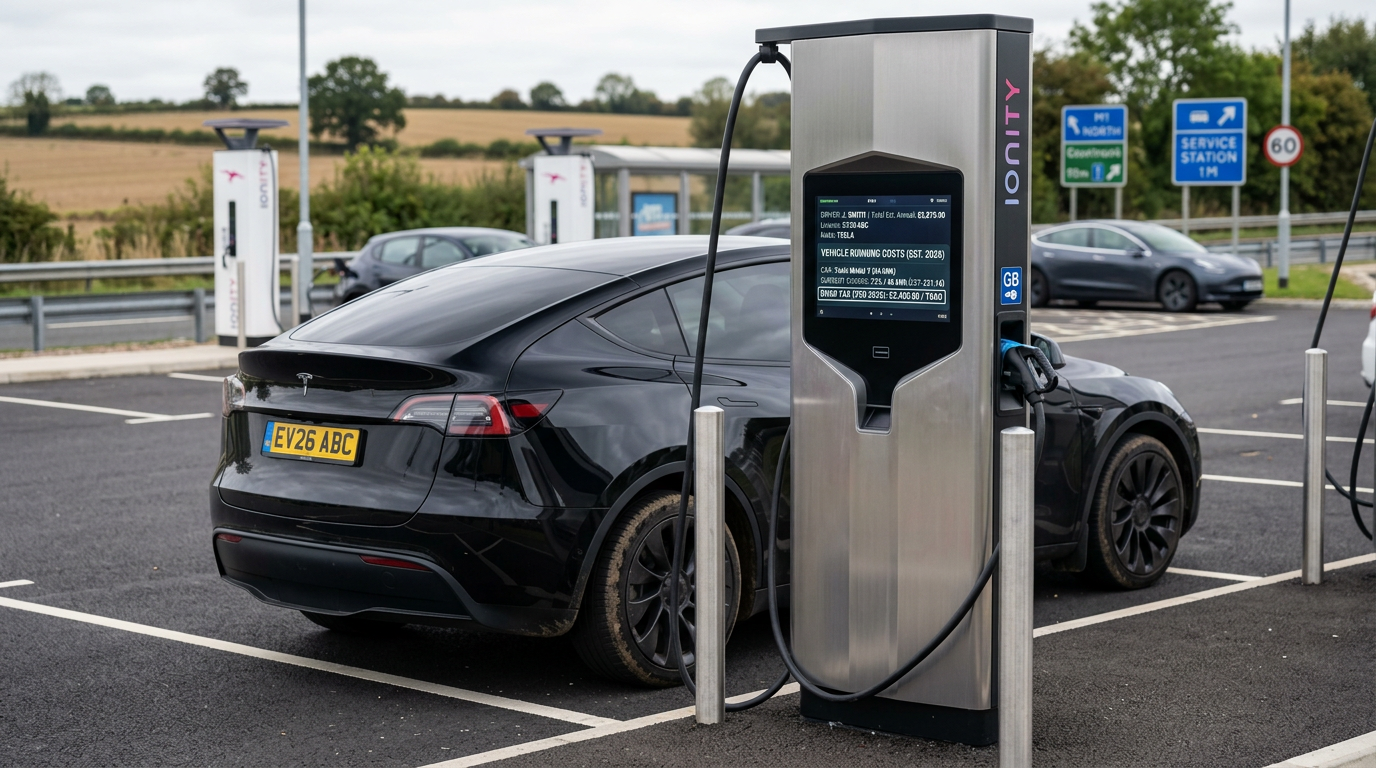
Since the first wave of modern electric vehicles (EVs) hit British roads, the promise of "zero road tax" was a primary carrot dangled by the government. However, as of April 2025, that honeymoon period ended, and in 2026, the reality is hitting home for thousands of motorists.
If you are currently browsing for a new or used electric car on CarsLink.ai, you may notice a significant jump in the total cost of ownership for models that were previously considered "standard" family transport. This is because Mid-Range EVs now face the 'Expensive Car' Supplement, a levy once reserved for luxury petrol saloons and high-performance SUVs.
The 2026 Vehicle Excise Duty (VED) Landscape
In 2026, the UK’s Vehicle Excise Duty (VED) system—commonly known as road tax—no longer distinguishes between "clean" and "dirty" propulsion in the way it once did. The DVLA now applies a standardised rate for almost all vehicles registered after April 2017.
For EV owners, the changes are twofold:
- Standard Rate: All mass-market EVs now pay the same annual standard rate as petrol and diesel cars (currently £190+ depending on the 2026 inflation adjustment).
- The Expensive Car Supplement: This is the real sting. Any car with a list price exceeding £40,000 must pay an additional surcharge for five years, starting from the second time the vehicle is taxed.
Why Mid-Range EVs are the New Targets
In the 2010s, a £40,000 car was a Jaguar or a top-tier BMW. Today, due to the high cost of lithium-ion battery packs and general automotive inflation, £40,000 is the entry point for many family-sized EVs.
Popular models like the Tesla Model 3, Hyundai IONIQ 5, Kia EV6, and even higher-trim versions of the Volkswagen ID.4 almost all sit above this £40,000 threshold. Consequently, a family car that produces zero tailpipe emissions is now being taxed at a rate equivalent to a luxury 3.0-litre diesel SUV.
Breakdown: What You Will Pay in 2026
If you register a new EV today that costs over £40,000, your tax liability over the first six years of ownership will look significantly different than it did just two years ago.
| Year of Ownership | Tax Type | Estimated Cost (2026 Rates) |
|---|---|---|
| Year 1 | First Year Rate | £10 (Fixed for EVs) |
| Year 2 | Standard Rate + Supplement | £190 + £410 = £600 |
| Year 3 | Standard Rate + Supplement | £190 + £410 = £600 |
| Year 4 | Standard Rate + Supplement | £190 + £410 = £600 |
| Year 5 | Standard Rate + Supplement | £190 + £410 = £600 |
| Year 6 | Standard Rate + Supplement | £190 + £410 = £600 |
| Year 7+ | Standard Rate Only | £190 |
Note: Rates are subject to annual RPI adjustments by the Treasury.
The "List Price" Trap: A Warning for Buyers
One of the most common pitfalls for buyers on CarsLink.ai is misunderstanding the "List Price." The DVLA defines the list price as the published price of the car before any discounts are applied, but including optional extras, VAT, and delivery charges.
If you buy a car with a base price of £39,500 but add metallic paint (£600) and an upgraded sound system (£500), your car’s official list price becomes £40,600. Even if you negotiate a "dealer discount" that brings the price you actually move from your bank account down to £38,000, you will still be liable for the Expensive Car Supplement. The tax is based on what the car could have been sold for, not what you paid.
Checking the V5C and MOT History
For those buying used EVs in 2026, it is vital to check the original list price. A car registered in late 2025 will still be subject to the supplement until its sixth birthday. When browsing listings, always verify the registration date and original trim level to avoid an unexpected £600 annual bill from the DVLA.
Impact on Finance: PCP and HP Agreements
The inclusion of EVs in the Expensive Car Supplement has also trickled down into monthly finance payments. When providers like Black Horse or Santander calculate PCP (Personal Contract Purchase) or HP (Hire Purchase) rates, the "Total Cost of Ownership" now includes these higher VED rates.
Dealers are increasingly being asked to show the "effective monthly cost" including tax. For a mid-range EV, that extra £2,000+ in tax over a four-year term adds roughly £45 to your monthly budget—money that used to be a "saving" when switching from combustion to electric.
Is the £40,000 Threshold Fair in 2026?
There is growing pressure from groups like the Society of Motor Manufacturers and Traders (SMMT) to raise the £40,000 threshold. When the limit was introduced in 2017, it affected only the top 5% of the market. In 2026, roughly 50% of all electric models on sale trigger the supplement.
Critics argue that the UK's Road Tax 2026 policy penalises motorists for making the environmentally conscious choice. While a petrol Ford Focus might sit safely under the threshold, its electric equivalent—the Mustang Mach-E—almost certainly will not.
How to Avoid the Expensive Car Supplement
If you want to keep your 2026 UK Road Tax to a minimum, you have three primary strategies:
- Stay Under the Limit: Opt for "Standard Range" models with smaller batteries. For example, a base-spec MG4 or certain trims of the Renault Megane E-Tech often fall comfortably under £40,000.
- The "6-Year" Used Strategy: Buy a used EV that is more than six years old. At this point, the Expensive Car Supplement expires, and you only pay the standard VED rate.
- Salary Sacrifice: If your employer offers a salary sacrifice scheme, the VED is often bundled into the monthly payment. While you still "pay" it, the tax efficiency of the scheme can offset the sting of the supplement.
Summary: Navigating the New Tax Reality
The 2026 car tax increases reflect a Treasury that needs to plug the multi-billion pound hole left by declining fuel duty revenues. As EVs move from a niche luxury to the mainstream, the "free ride" is officially over.
Whether you are buying a brand-new EV or looking at the growing second-hand market, awareness of the £40,000 threshold is essential. A "good deal" on a mid-range Tesla or Kia can quickly be eroded by a £600-a-year tax bill that persists for half a decade.
Are you ready to find your next electric car? Browse thousands of verified listings on CarsLink.ai today. Use our filter tools to find models that fit your budget—and your tax expectations—for 2026 and beyond.