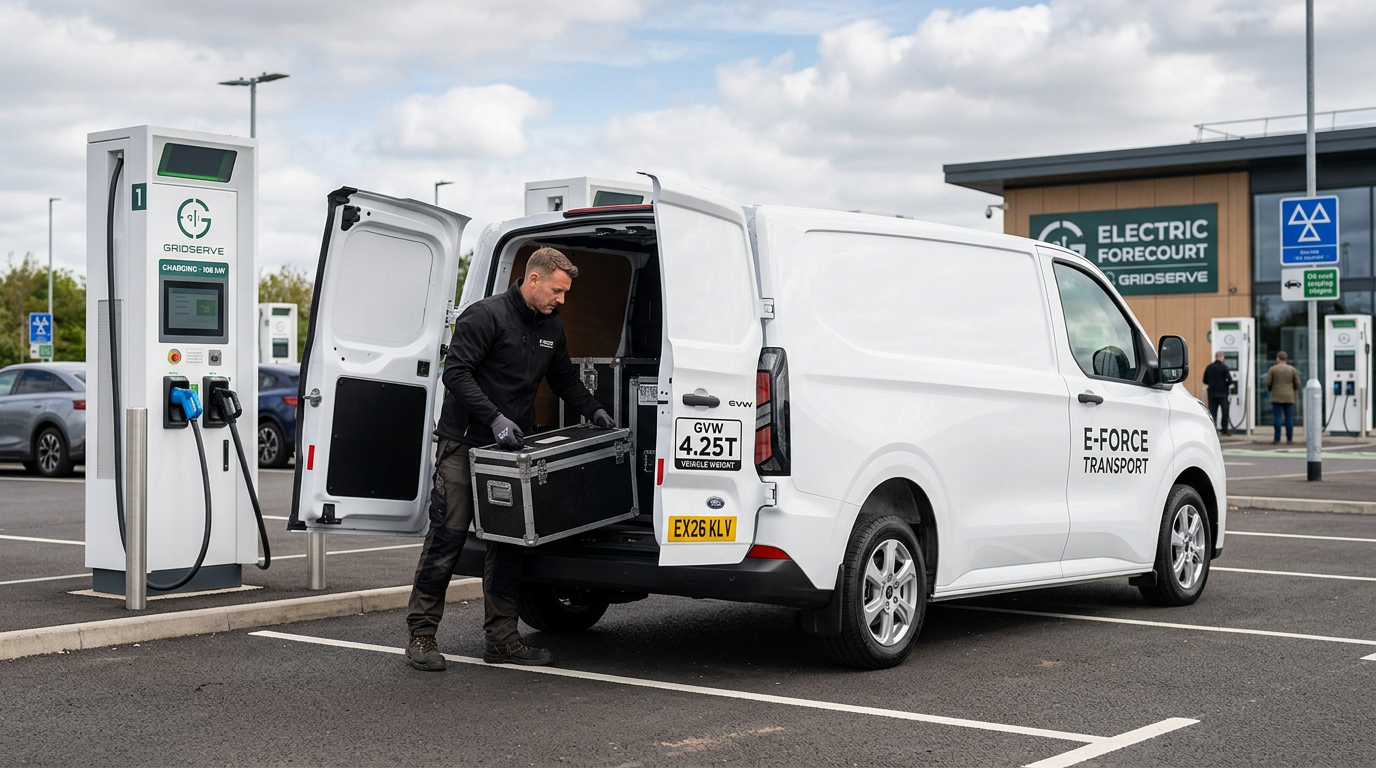
The transition to electric light commercial vehicles (e-LCVs) in the UK has reached a critical tipping point in 2026. While the environmental benefits and lower running costs of an electric fleet are clear, fleet operators and sole traders face a significant engineering hurdle: battery weight.
In a traditional diesel van, the engine and fuel tank are relatively light. In an electric van, a battery pack capable of delivering a 250-mile range can weigh upwards of 500kg. This weight eats directly into the legal payload capacity of a standard 3.5-tonne (3,500kg) van, leaving many businesses wondering how to stay legal without making more trips.
The 4,250kg Derogation: A Game Changer for 2026
To combat the "payload penalty" of heavy batteries, the UK government and the DVLA have formalised regulations allowing Category B (standard car) licence holders to drive alternatively-fuelled vehicles (AFVs) weighing up to 4,250kg (4.25 tonnes).
Under normal circumstances, any vehicle over 3,500kg is classified as an N2 vehicle, requiring a Category C1 (Medium Sized Goods Vehicle) licence. However, the current electric van payload 2026 rules provide a specific exemption to encourage EV adoption.
Key Requirements for the 4.25t Exemption
It isn't a "free-for-all." To drive a 4.25-tonne electric van on a standard car licence, the following conditions must be met:
- Alternative Fuel Only: The vehicle must be powered by electricity, hydrogen, or certain gaseous fuels.
- Increased Weight is Battery-Related: The extra 750kg must be purely for the purpose of the alternative fuel system (the battery or hydrogen tanks), not for extra cargo capacity beyond what a diesel equivalent would carry.
- Five Hours of Training: Drivers must complete a minimum of five hours of specialised training from a registered provider (such as those accredited by the National Logistics Academy).
- No Towing (Standard Licence): If you are operating at 4.25 tonnes, you generally cannot tow a trailer while relying on the Category B derogation.
N2 Driving Licence Rules: What has changed?
Historically, the jump from a standard 3.5t van to an N2 class vehicle was a bureaucratic nightmare. It involved tachographs, speed limiters, and O-licence (Operator's Licence) requirements.
In 2026, the landscape is more nuanced:
| Feature | 3,500kg Diesel Van | 4,250kg Electric Van |
|---|---|---|
| Licence Required | Category B (Car) | Category B + 5hrs Training |
| Tachograph | Not required (generally) | Exempt for UK hub-to-home |
| Speed Limiter | No (70mph) | Restricted to 56mph (90km/h) |
| MOT Class | Class 7 | Class 7 (up to 3.5t) or HGV Test |
| O-Licence | Required for Hire/Reward | Required for Hire/Reward |
CarsLink.ai Note: When browsing listings for XLWB or Luton electric vans on CarsLink.ai, always check the Gross Vehicle Weight (GVW). Many manufacturers now plate their large EVs at 4.25t as standard to ensure you aren't "under-payloaded" before you’ve even loaded the first pallet.
Navigating the O-Licence and Tachograph Minefield
While the DVLA permits the driving of these heavier vans on a car licence, the Operator's Licence regulations can still apply if the vehicle is used for "hire or reward."
In 2026, many light-weight fleet operators who never needed a Goods Vehicle Operator's Licence are finding themselves caught out. If your electric van exceeds 3.5 tonnes, you may need an O-licence unless your business falls under specific exemptions (such as carrying only your own tools/equipment within a certain radius).
Furthermore, modern 4.25t electric vans are legally required to have a speed limiter set to 56mph. While this can be frustrating on motorways, it is a crucial safety component of the N2 classification and helps preserve battery range.
Real-World Payload Comparisons
For a van buyer, the data is what matters. Let’s look at how the shift from diesel to electric affects popular LWB (Long Wheelbase) models in the 2026 market.
| Manufacturer Model | Fuel Type | GVW | Approx Payload |
|---|---|---|---|
| Ford E-Transit (High Roof) | Electric | 4,250kg | 1,750kg |
| Ford Transit (Diesel) | Diesel | 3,500kg | 1,400kg |
| Mercedes-Benz eSprinter | Electric | 4,250kg | 1,500kg |
| VW ID. Buzz Cargo | Electric | 3,000kg | 650kg |
As evidenced, the 4.25t derogation actually allows electric vans to out-perform their diesel counterparts in terms of raw payload. This is a massive win for sectors like refrigerated transport or construction where heavy materials and auxiliary cooling equipment are required.
Essential Checklist for 4.25t Electric Van Operators
If you are considering upgrading to a heavy-weight e-LCV in 2026, follow this checklist to ensure compliance:
- Check the V5C: Ensure the vehicle is registered at 4,250kg. Some older "converted" vans might still be plated at 3,500kg, making them illegal if the battery makes them overweight.
- Driver Training Logs: Keep records of the 5-hour training for every driver. The DVLA can request this during roadside checks or fleet audits.
- Speed Limiters: Verify the limiter is functioning. Bypassing this is a serious offence that can lead to vehicle seizure.
- ULEZ/CAZ Savings: Remember that even at 4.25 tonnes, these vans remain exempt from London’s ULEZ and other Clean Air Zones across the UK, saving up to £12.50 per day per vehicle.
- Insurance: Not all standard commercial van insurance policies cover 4.25t vehicles. Explicitly state the GVW to your provider to avoid voiding your cover.
The Future of the "Luton" Problem
The Luton body style has always been the victim of payload issues. A 3.5t diesel Luton often has a measly 900kg payload once the heavy box tail-lift is factored in. In 2026, the 4.25t electric Luton is becoming the industry standard for removals. By utilising the extra 750kg allowance, movers can finally carry a full load of furniture without flirting with a DVLA fine.
Conclusion
The "payload gap" is no longer a valid excuse to avoid going electric. With the 4250kg electric van UK regulations now firmly part of the legislative landscape, the industry has the breathing room it needs to decarbonize. While there is more "red tape" regarding speed limiters and training, the trade-off is a higher legal payload and significantly lower tax liabilities.
Whether you are a solo trader or a fleet manager, understanding these DVLA van regulations is the key to a profitable 2026. Explore the latest high-payload electric vans and compare finance options at CarsLink.ai today to future-proof your business against the upcoming 2030/2035 deadlines.
Are you ready to make the switch? Search our extensive database of 3.5t and 4.25t electric commercials on CarsLink.ai and find the perfect match for your payload requirements.