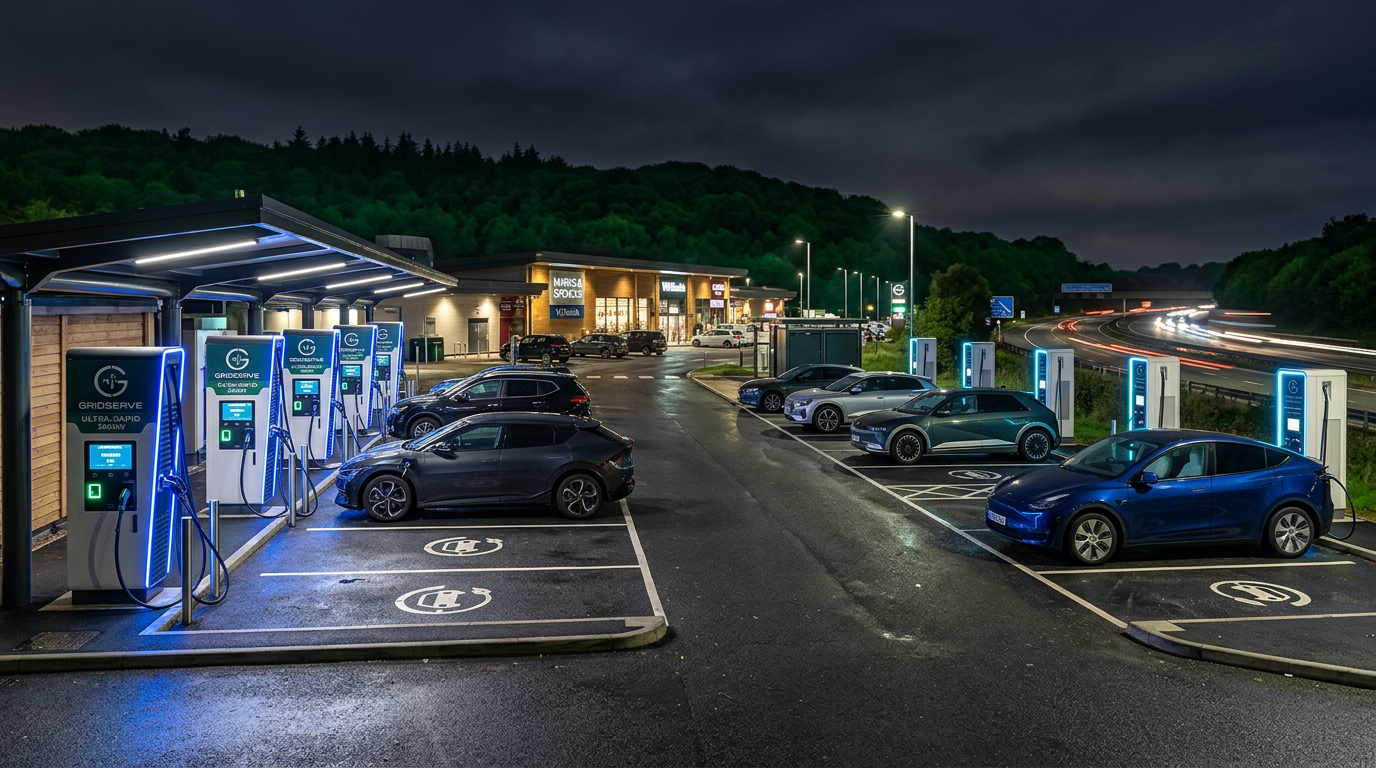
As of mid-2026, the UK’s automotive landscape has undergone a tectonic shift. With the 2030 deadline for the phase-out of new petrol and diesel cars drawing closer, electric vehicles (EVs) now represent nearly 40% of all used car transactions on platforms like CarsLink.ai. However, for years, the primary barrier to adoption wasn't the cars themselves, but the infrastructure supporting them.
In this update, we examine whether the UK’s public charging network has finally silenced the critics. Is "range anxiety" a relic of the past, or are we still queuing at motorway services for a glimpse of a working tethered cable?
The 2026 Numbers: A Rapid Expansion
The Department for Transport (DfT) and Zap-Map data from early 2026 suggest a massive acceleration in charger installations. Three years ago, the UK struggled to maintain a consistent growth rate; today, the story is different. Private investment from giants like InstaVolt, Gridserve, and IONITY, bolstered by government-backed schemes like the Rapid Charging Fund, has fundamentally changed the map.
| Metric | 2022 Statistics | 2024 Statistics | 2026 Current Data |
|---|---|---|---|
| Total Public Devices | ~37,000 | ~55,000 | 92,000+ |
| Ultra-Rapid Chargers (150kW+) | ~2,300 | ~4,800 | 11,500+ |
| On-Street Residential Points | ~12,000 | ~21,000 | 38,000+ |
| Average Queue Time (Peak) | 28 mins | 18 mins | 6 mins |
The standout figure is the 11,500+ ultra-rapid chargers. These units, capable of adding 100 miles of range in under 10 minutes for compatible vehicles, are the backbone of the "Keeping Up" argument.
Reliability: No More "Out of Order" Blues?
In 2023 and 2024, the biggest complaint among UK drivers wasn't the number of chargers, but their uptime. Finding a 50kW unit only to discover a "System Error" screen was a common frustration.
By 2026, the Public Charge Point Regulations (2023) have fully matured. These laws mandated a 99% reliability rate across the rapid charging network and 24/7 helplines. Network operators now face significant fines from the DVLA and the Office for Zero Emission Vehicles (OZEV) for sustained downtime.
The Rise of the Charging Hub
We have moved away from the "lone charger in a dark corner" model. In 2026, the trend is the Mega-Hub. These sites, often located just off the M1, M6, or A1, offer 12 to 24 bays, dedicated lounge areas, and reliable Wi-Fi. For traders and dealerships, this has made EVs a much easier sell; a buyer in Newcastle can now confidently purchase a car from a dealer in Bristol via CarsLink.ai, knowing the drive home is trivial.
Cost Breakdown: What are we paying in 2026?
Public charging remains more expensive than home charging, but the gap is stabilizing. VAT on public charging remains at 20%, despite industry lobbying to match the 5% residential rate. However, the introduction of Dynamic Pricing has helped savvy drivers save money.
| Charge Type | Speed | Average Cost per kWh (2026) |
|---|---|---|
| Ultra-Rapid (Hubs) | 150kW - 350kW | 78p - 85p |
| Rapid (Standard) | 50kW | 65p - 72p |
| Destination/On-Street | 7kW - 22kW | 45p - 55p |
| Domestic (Off-peak) | 7kW | 7p - 12p |
While 85p/kWh sounds steep compared to home charging, the efficiency of modern 2026-spec EVs means the "cost-per-mile" is still competitive with high-performance petrol equivalents, especially when considering the lack of VED (Road Tax) for older ZEVs (though newer models now contribute).
Local Disparities: North vs. South
While the national picture is bright, a geographical "charging divide" persists. London and the South East boast the highest density of chargers per 100,000 people. Conversely, parts of Wales, Northern Ireland, and the North East still lag behind, though the Local EV Infrastructure (LEVI) fund has started to bridge this gap by funding on-street solutions for those without driveways.
For dealers in rural areas, highlighting a vehicle’s high-speed DC charging curve is now a vital sales tactic. A car that can hold 100kW+ for longer is often more valuable than one with a slightly larger battery but slower charging.
Impact on the Used Market and Dealers
For traders, the "2026 UK Charging Update" is good news for stock turnover. In previous years, "electric car range anxiety" led to significant depreciation on used EVs. Today, as the network has caught up, we are seeing more stable residual values for models like the Tesla Model 3, Hyundai IONIQ 5, and even the newer MG4 and Volkswagen ID.3.
Advice for Dealers:
- Educate on Apps: Ensure every EV sale includes a walkthrough of essential 2026 apps like Octopus Electroverse or Bonnet, which aggregate multiple networks.
- Highlight Reliability: Mention the nearest Ultra-Rapid Hub to your showroom. It builds buyer confidence during the test drive.
- V5C Clarity: Ensure the V5C correctly identifies the car as "Electric" to ensure customers benefit from ULEZ/CAZ exemptions without manual registration.
Is Range Anxiety Dead?
Not quite, but it has evolved into "Charge Anxiety." Drivers no longer worry if their car will make it 200 miles; they worry if the charger they are heading to will be occupied or if the price has spiked during peak hours.
However, with the UK now boasting nearly 100,000 public points and vehicle ranges comfortably exceeding 250 miles for even budget models, the "fear of the unknown" is largely gone. The infrastructure is finally beginning to mirror the convenience of the traditional petrol station, albeit with better coffee.
Conclusion
The 2026 UK EV infrastructure is a testament to what happens when regulation meets aggressive private investment. We aren't fully at the "chargers on every corner" stage yet, but for the average UK motorist, the public network is now robust enough to support daily life without stress.
Whether you are a first-time buyer looking for your first electric city car or a dealer looking to refresh your forecourt with the latest long-range SUVs, the tools are there to make the switch successful.
Ready to find your next electric vehicle? Use the AI-powered search at CarsLink.ai to browse thousands of used EVs with verified range data and battery health reports today.