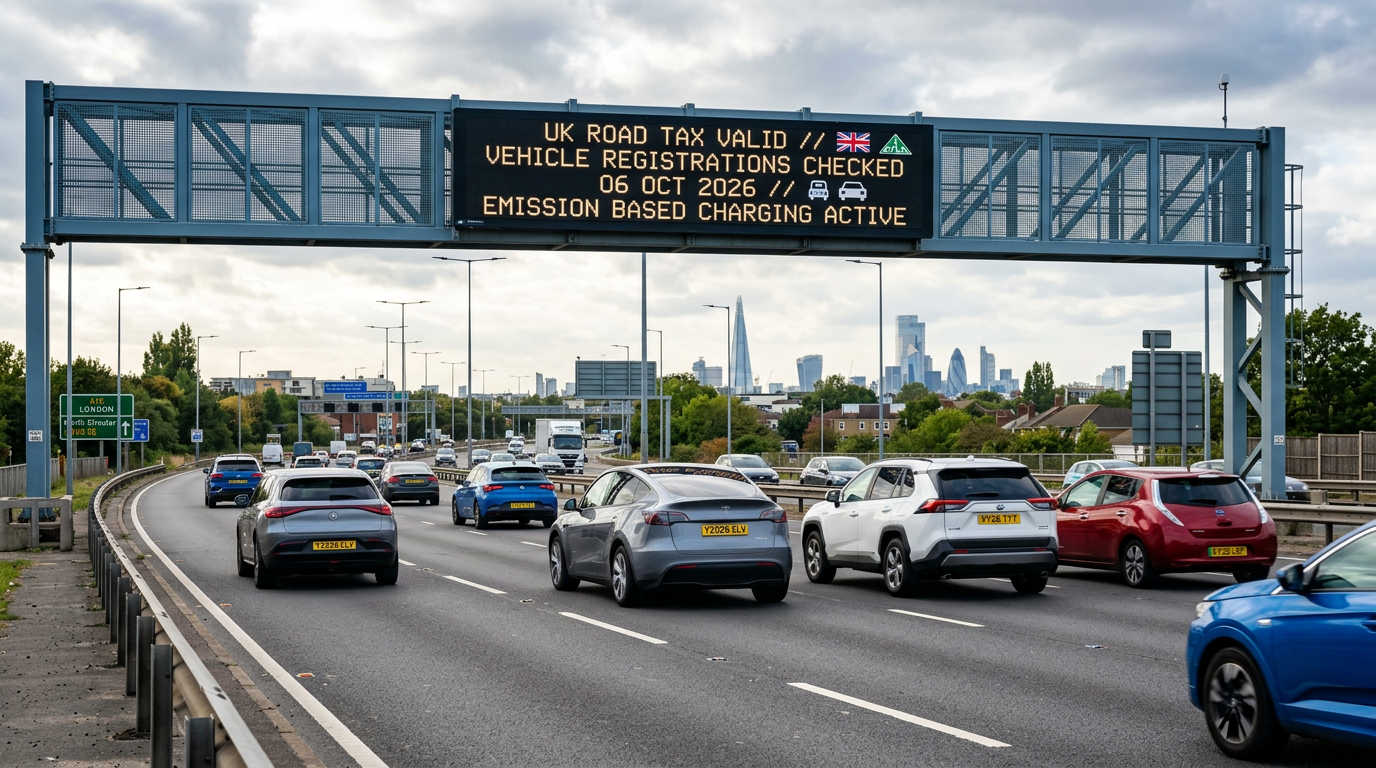
2026 UK Car Tax Update: New VED Rates for Petrol, Diesel & EVs
The UK automotive landscape has reached a historic turning point. As of April 2026, the era of "free" road tax for zero-emissions vehicles has officially ended. Following the legislative shifts first outlined in the 2022 Autumn Statement and refined through subsequent budgets, the Driver and Vehicle Licensing Agency (DVLA) has now fully implemented the harmonisation of Vehicle Excise Duty (VED) across almost all drivetrain types.
Navigating these changes is crucial whether you are a private buyer looking at a used hatchback or a motor trader balancing a forecourt of premium SUVs. At CarsLink.ai, we’ve analysed the latest 2026 data to help you understand exactly what you’ll be paying to keep your vehicle on the road this year.
The Big Shift: Electric Vehicles (EVs) No Longer Exempt
The most significant change for 2026 is the full integration of Electric Vehicles into the standard VED framework. For years, the £0 "tax disc" was a primary incentive for the EV transition. However, to fill the growing fiscal hole left by declining fuel duty and traditional VED receipts, the Treasury has levelled the playing field.
New EV Tax Rates
From April 2026, owners of electric cars and vans are required to pay VED. The rates are structured as follows:
- First-Year Rate: New EVs registered from April 2026 will pay the lowest first-year rate (currently £10), effectively a registration fee.
- Standard Rate: For the second year of registration onwards, EVs move to the standard annual rate. For the 2026/27 tax year, this sits at £190 per annum (subject to final RPI adjustments).
- Retrospective Charges: If you own an EV registered between April 1, 2017, and March 31, 2025, you are no longer exempt. You will now pay the standard annual rate of £190.
The 'Expensive Car Supplement' in 2026: A Sting for EV Owners
Historically, the Expensive Car Supplement (often called the 'Luxury Tax') was a burden primarily for owners of premium petrol and diesel cars. This is an additional surcharge for vehicles with a list price (not the price you paid used) of over £40,000.
In 2026, this supplement is more relevant than ever because EVs are no longer exempt from it. Given that many electric SUVs and long-range saloons easily exceed the £40k threshold, a significant portion of EV owners will now face an additional annual charge of £410 for five years (from the second year the vehicle is taxed).
Total Annual Cost Example: If you buy a used Audi Q4 e-tron or a Tesla Model Y that originally cost over £40,000, your annual VED bill in 2026 will be roughly £600 (£190 standard rate + £410 supplement).
Petrol and Diesel VED: What’s Changed?
For those sticking with internal combustion engines (ICE) or hybrids, the 2026 rates have been adjusted upward in line with the Retail Price Index (RPI).
Cars Registered After April 2017
These vehicles follow the standard flat-rate system. For 2026, the standard rate for petrol and diesel cars is approximately £190. Hybrids and "Alternative Fuel Vehicles" (AFVs) traditionally received a £10 discount, but this bridge is narrowing as the government moves towards a unified flat rate for all non-historic vehicles.
The First-Year "Polluter" Rates
If you are buying a brand-new ICE vehicle in 2026, the first-year VED remains heavily weighted based on CO2 emissions.
- 0 g/km (EVs): £10
- 1-50 g/km (PHEVs): £30
- Over 255 g/km (Performance/Luxury ICE): Over £2,700
Buying Used: Navigating the VED Minefield
When searching for your next vehicle on CarsLink.ai, it is essential to check the registration date, as it dictates which tax regime the car falls under.
- Pre-2001 Cars: Taxed based on engine size (Sorn/Under 1549cc or Over 1549cc).
- 2001 – March 2017: Taxed strictly on CO2 emissions. This remains a "sweet spot" for many used car buyers. A 2016 diesel that emits under 100g/km still enjoys £0 VED, making these models highly sought after on the second-hand market.
- Post-April 2017: These cars fall under the standard rate + expensive car supplement system detailed above.
Dealer Tip: Transparent Pricing
For traders, 2026 is the year to be hyper-transparent about tax costs. With many buyers still under the impression that EVs are "tax-free," clear communication on the £190 standard rate and the £40,000 supplement is vital to maintaining trust and avoiding post-sale complaints.
Regional Variations: ULEZ and Beyond
While VED (Road Tax) is a national UK charge handled by the DVLA, don't forget the regional "taxes" on driving. In 2026, London’s Ultra Low Emission Zone (ULEZ) and various Clean Air Zones (CAZ) in cities like Birmingham, Bristol, and Glasgow have stricter enforcement.
If you are buying a diesel car, ensure it is Euro 6 compliant (generally 2015 onwards) to avoid daily charges of £12.50 or more. Most petrol cars from 2006 onwards remain compliant.
Summary Table: VED Rates 2026/27 (Estimated)
| Vehicle Type | Registration Date | Annual Standard Rate | Expensive Car Supplement (>£40k) |
|---|---|---|---|
| Electric (EV) | Post-2017 | £190 | Yes (£410) |
| Petrol/Diesel | Post-2017 | £190 | Yes (£410) |
| Hybrid | Post-2017 | £180 | Yes (£410) |
| Low Emission | 2001 - March 2017 | Based on CO2 (£0 - £700+) | No |
| Classic | Over 40 Years Old | £0 (Exempt) | No |
Strategic Advice for 2026 Car Buyers
- The "Under 40k" Rule: To keep your running costs down, search for vehicles with an original list price of under £40,000. Use CarsLink.ai’s advanced filters to find "Value-Spec" premium models that bypassed the supplement.
- The 2016 Peak: If you want to avoid the £190 flat rate, look for high-efficiency 2015 or 2016 models. A 2016 BMW 320d or VW Golf BlueMotion can still cost £0 to £20 in annual tax.
- Check the V5C: Before purchasing, always verify the CO2 emissions and the date of first registration on the V5C logbook to calculate your exact liability.
Conclusion
The 2026 UK car tax update represents a "new normal." The distinction between "clean" and "dirty" cars for VED purposes has largely vanished for newer vehicles, replaced by a system designed to maintain Treasury revenue in an electric age. While the £190 annual charge is a new reality for EV drivers, EVs still offer significant savings in fuel (charging) costs and Benefit-in-Kind (BiK) rates for company car drivers.
Looking for a car that won't break the bank in tax? Start your search on CarsLink.ai. Our AI-powered search tool helps you compare thousands of used cars across the UK, filtering by emissions, age, and price to ensure you find the perfect balance of performance and affordability.