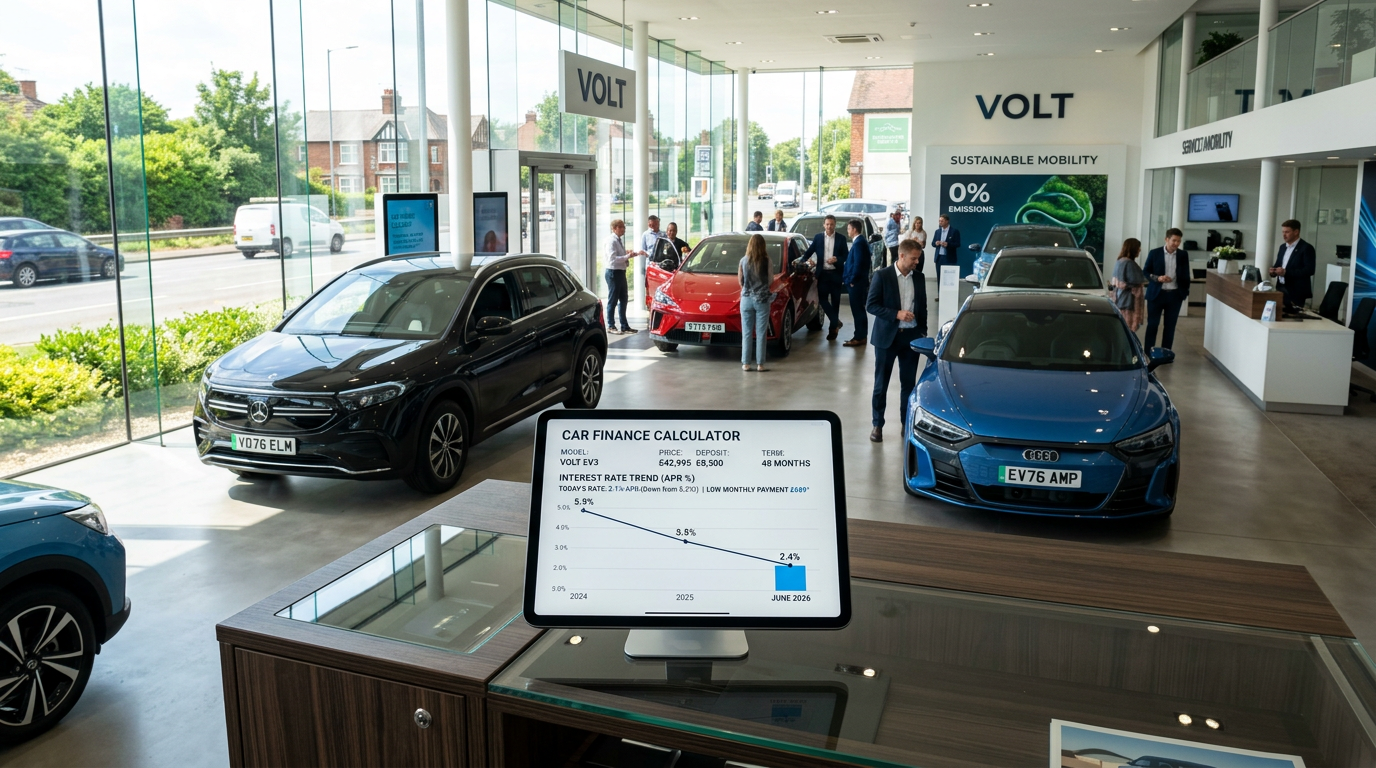
As we approach the midpoint of 2026, the question on every motorist's mind is no longer "Will I switch to electric?" but rather "Can I afford the monthly payments?" For those looking to upgrade their vehicle this summer, the UK car finance landscape remains the most critical factor in their purchasing decision.
After two years of economic volatility, the 2026 UK car finance outlook is reaching a turning point. With inflation finally stabilising near the Bank of England’s 2% target, millions of drivers are waiting to see if interest rates will finally drop in time for the summer "76" plate change.
The Bank of England and the Automotive Ripple Effect
The direct link between the Base Rate and your monthly PCP (Personal Contract Purchase) or HP (Hire Purchase) quote cannot be overstated. In early 2026, the Bank of England has maintained a cautious stance. However, City analysts and automotive experts are predicting a series of incremental cuts starting in June.
For the average consumer, a 0.5% drop in the base rate might sound negligible, but on a £30,000 car financed over four years, it can reduce total interest charges by hundreds of pounds. More importantly, it signals to lenders like Black Horse, Santander Consumer Finance, and Motonovo that they can begin competing more aggressively for your business.
PCP Deals in 2026: The Return of the 0% APR?
We are starting to see the tentative return of 0% APR deals, particularly on Battery Electric Vehicles (BEVs). As the UK government’s ZEV (Zero Emission Vehicle) mandate tightens—requiring 38% of a manufacturer's sales to be zero-emission in 2026—brands are under immense pressure to move electric stock.
| Finance Type | Average APR (Early 2026) | Projected Summer 2026 APR |
|---|---|---|
| New Car PCP (EV) | 4.9% - 6.9% | 0.0% - 3.9% |
| New Car PCP (ICE/Hybrid) | 7.9% - 10.9% | 6.9% - 8.9% |
| Used Car Finance | 11.9% - 14.9% | 9.9% - 12.9% |
| PCH (Leasing) | Fixed Monthly | Dropping by £15-£30/mo |
High interest rates have been the primary headwind for the UK car market. By using tools on CarsLink.ai, buyers can now compare how these shifting rates impact their specific budget across multiple lenders in real-time.
Factors Influencing Your 2026 Car Loan
While the Base Rate is the headline act, several other factors will dictate whether your car finance gets cheaper this summer:
1. Residual Value Stability
In 2026, the used car market has finally cooled after the post-pandemic "bubble." PCP deals rely heavily on the Guaranteed Future Minimum Value (GFMV). If lenders feel more confident about what a car will be worth in 2029, they can offer lower monthly repayments even if interest rates stay flat.
2. The FCA’s Evolving Oversight
Motor finance is under the microscope. Following the 2024/25 investigations into discretionary commission models, transparency is at an all-time high. In 2026, dealers are required to be clearer than ever about how much commission they earn from your loan, leading to more "flat-fee" structures that benefit the consumer.
3. Incentives on Hybrid and Petrol Models
While the push is towards electric, the "Sunderland-built" Qashqais and "Oxford-built" Minis of the world still offer petrol and hybrid variants. To keep these lines moving ahead of the 2030/2035 deadlines, some manufacturers are subsidising interest rates specifically for the summer holiday period.
Navigating the Costs: Tax, ULEZ, and VED
It’s not just the loan that impacts your wallet in 2026. Buyers must account for the Vehicle Excise Duty (VED) changes. Since April 2025, even electric vehicles pay road tax, and many popular premium EVs now fall into the "Expensive Car Supplement" (those with a list price over £40,000), adding £410 per year for five years.
Furthermore, with more UK cities adopting Clean Air Zones (CAZ) and London’s ULEZ standards becoming the benchmark for nationwide urban planning, financing a compliant vehicle isn't just a luxury—it's a necessity to avoid daily charges of £12.50 or more.
Should You Wait Until August to Sign?
If you are currently holding a V5C for a car you intend to part-exchange, timing is everything. Used car values typically soften slightly in late summer before the September plate change.
If the Bank of England does cut rates in June, it usually takes 4-6 weeks for those changes to filter down into the retail finance calculators on dealership floors. Therefore, late July or early August is shaping up to be the "sweet spot" for 2026 buyers—benefiting from potential rate cuts while securing a strong valuation for their current vehicle.
The CarsLink.ai Perspective
At CarsLink.ai, we recommend that buyers look beyond the monthly payment. Always check the Total Amount Payable. In a climate where rates are falling, avoid long-term 60-month agreements if possible; you might find yourself in a better position to refinance or trade-in earlier if the economy continues to improve through 2027.
Conclusion: A Sunnier Outlook for Borrowers
The 2026 UK car finance outlook is the most optimistic it has been in five years. While we may never return to the 1.9% APR glory days of the mid-2010s, the "Summer of '26" promises a much-needed cooling of the high-interest environment.
Whether you are looking for a sleek new EV or a reliable family SUV, staying informed about the UK car loan forecast will save you thousands over the life of your agreement. Keep a close eye on the June inflation reports—they will be the ultimate green light for your next upgrade.
Ready to find your next vehicle with the best available rates? Visit CarsLink.ai today to browse the latest inventory and compare finance options tailored for the 2026 market.