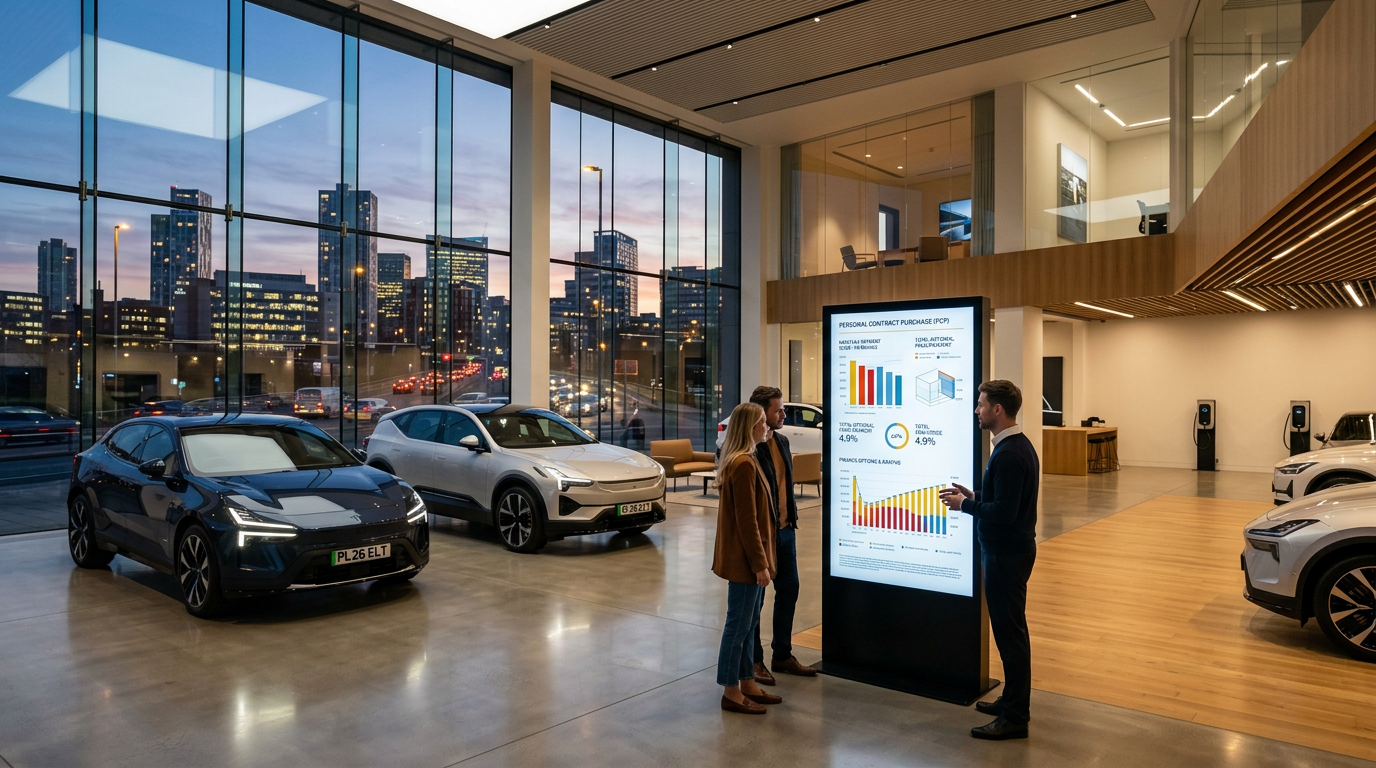
As we move through the second quarter of 2026, the question on every car buyer's mind—and every dealer’s whiteboard—is the same: when will the cost of borrowing finally return to the 'Goldilocks' zone? After the economic volatility of the mid-2020s, the UK automotive finance market is currently navigating a period of stabilization, but for those looking to sign a new Personal Contract Purchase (PCP) or Hire Purchase (HP) agreement, the timing of your application has never been more critical.
The landscape today is vastly different from the ultra-low rate environment of the early 2020s. However, the aggressive rate hikes used to combat inflation have largely done their job. As we look at the remainder of 2026, there are clear signals that the tide is turning, providing a glimmer of hope for both retail consumers and traders looking to shift inventory.
The Bank of England Influence: Where are we now?
To understand car finance interest rates in 2026, we must look at the Bank of England (BoE) base rate. Following the peak in 2024 and the slow tapering throughout 2025, the base rate has finally settled into a predictable, albeit higher, rhythm.
| Period | BoE Base Rate (Avg) | Typical PCP APR (Prime) |
|---|---|---|
| Q1 2024 | 5.25% | 10.9% - 13.9% |
| Q1 2025 | 4.25% | 8.9% - 11.9% |
| Q2 2026 (Current) | 3.50% | 6.4% - 8.9% |
| Q4 2026 (Forecast) | 3.00% | 5.9% - 7.9% |
Currently, the Monetary Policy Committee (MPC) is maintaining a cautious stance. While inflation has hovered near the 2% target for several months, wage growth in the UK continues to put upward pressure on services. For car buyers, this means that while the "crisis" rates of 14% APR are largely a thing of the past for prime customers, we aren't seeing a return to the 0% or 2.9% deals that were common five years ago.
Why 2026 is the Year of the "Refinance Wave"
One of the most significant trends we are seeing at CarsLink.ai this year is the 'Refinance Wave.' Thousands of motorists who took out high-interest car loans in 2023 and 2024—often at rates exceeding 12%—are now finding themselves in a position to voluntarily terminate or refinance their agreements.
For dealers, this represents a massive opportunity to reach out to existing customers. If a customer is two years into a four-year PCP deal signed at 11.9% APR, switching them into a 2026 model at 6.9% APR can often result in a lower monthly payment, even if the vehicle price has risen slightly.
Digital Evolution: How AI is Lowering Rates
It isn't just the Bank of England influencing your monthly payment in 2026. The integration of AI into credit risk modelling has allowed lenders to be more precise. In years past, "near-prime" borrowers were often lumped in with "sub-prime," resulting in punishing interest rates.
Today, platforms like CarsLink.ai use sophisticated algorithms to help buyers find vehicles that fit their specific financial profile more accurately. By matching the right borrower to the right lender more efficiently, the "middle-man" costs are being squeezed, allowing some of those savings to be passed on in the form of lower APRs.
EV Incentives vs. Internal Combustion Rates
In 2026, the ZEV (Zero Emission Vehicle) mandate is in full swing. UK manufacturers are under immense pressure to ensure 38% of their new car sales are electric. This has created a two-tier finance market:
- Electric Vehicle (EV) Finance: To meet their quotas, many brands are subsidising interest rates specifically for EVs. It is not uncommon to see 0% or 1.9% PCP deals on brand-new electric SUVs, even while the base rate sits at 3.5%.
- Internal Combustion Engine (ICE) Finance: Fossil-fuel cars are seeing much less subvention. Expect to pay a "premium" to finance a petrol or diesel car, with rates often 3-4% higher than their electric counterparts.
Tips for UK Car Buyers in late 2026
If you are planning to change your car in the coming months, here is how to play the 2026 market:
- Check your V5C and current settlement: Before visiting a forecourt, get an accurate settlement figure from your current lender. With used car values stabilising in early 2026, you might have more equity in your car than you think.
- Look for 'Deposit Contributions': Since base rates aren't falling as fast as some hoped, manufacturers are instead offering larger deposit contributions (often £2,000 - £5,000) to effectively lower the total cost of the loan.
- Mind the ULEZ and Clean Air Zones: As more UK cities implement restrictions, the "future value" (GFV) of older diesel cars is being hit. This can lead to higher monthly PCP costs for those vehicles, as the lender expects the car to be worth less at the end of the term.
- Utilise AI Search Tools: Use CarsLink.ai to compare not just the price of the car, but the total cost of ownership including estimated finance payments across different UK regions.
The Dealer Perspecitve: Navigating 2026
For motor traders, 2026 is a year of volume over margin. With consumers still feeling the "cost of living hangover," transparency is the most valuable currency. Dealers who are upfront about commission structures (following the FCA’s continued scrutiny of discretionary commission models) and who leverage AI to provide instant, personalised quotes are winning the market.
Stock turn is faster for those who can offer "Finance First" options. By helping a customer secure their lending limit before they even choose a car, you reduce the 'buyer's remorse' associated with high monthly payments.
Conclusion: When Will Rates Drop?
The "big drop" everyone was waiting for has become a "slow slide." While we don't expect the Bank of England to return to near-zero rates, the consensus for late 2026 is a stabilization of the base rate around 3.00%.
For the average UK motorist, this means that the window for finding a competitive deal is opening. You may not see the 0% deals of the past on every car, but the era of 13% "standard" APR is thankfully behind us. Whether you are a dealer looking to replenish your forecourt or a buyer looking for your next family hatchback, 2026 represents the most stable and predictable car finance market we have seen in over half a decade.
Ready to find your next car with the smartest tech in the UK? Start your search on CarsLink.ai today and see how our AI-powered platform can find the perfect vehicle at a price—and a rate—that works for you.