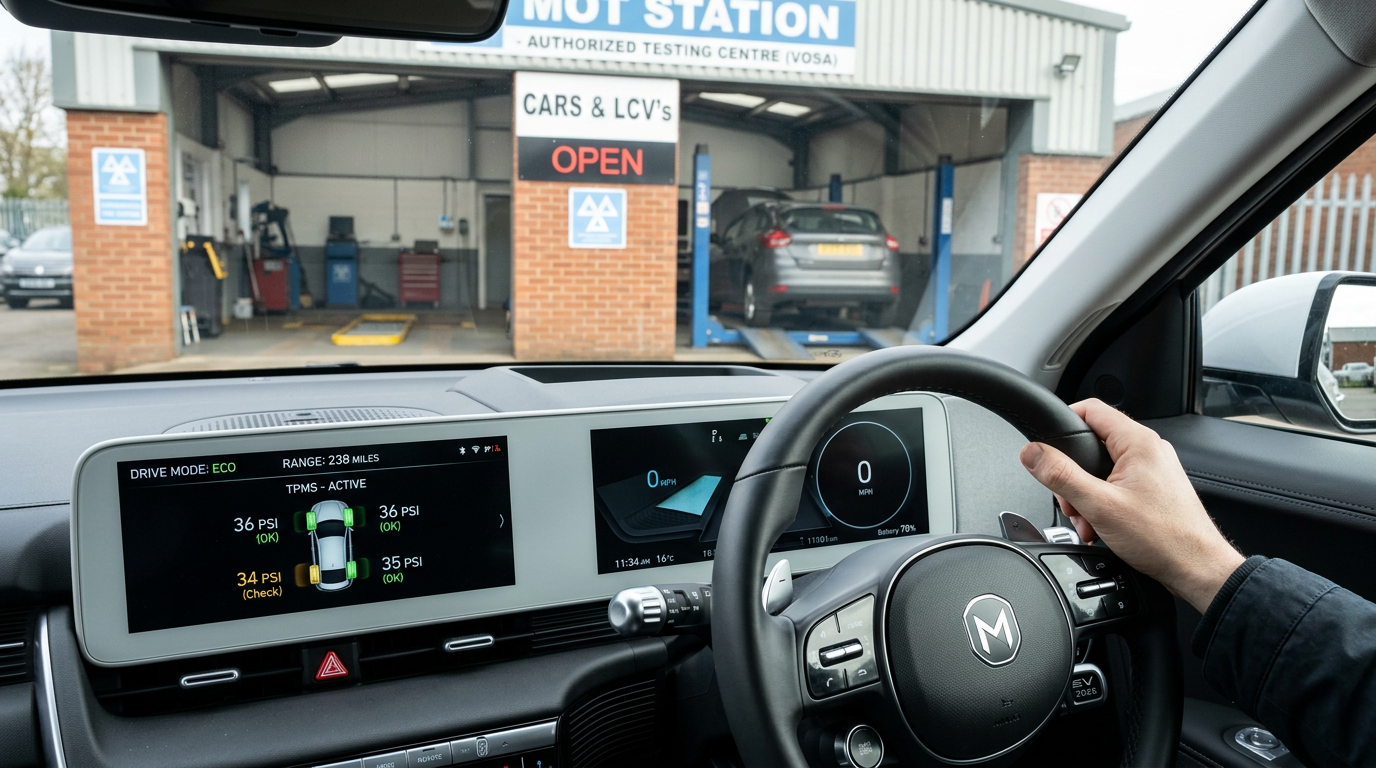
As we move further into 2026, the complexity of vehicle safety systems continues to evolve. While high-tech driver assistance and EV battery health often grab the headlines, one of the most common reasons for a modern vehicle to fail its annual MOT test remains stubbornly low-tech: the Tyre Pressure Monitoring System (TPMS).
Since 2015, a functioning TPMS has been a mandatory requirement for the MOT test on all passenger cars registered after 1st January 2012. However, in 2026, the DVLA and DVSA have noted a sharp rise in failures related to sensor battery depletion and corrosion.
In this guide, we’ll explore how to balance TPMS maintenance in 2026, the specific UK tyre safety rules currently in force, and how to ensure your dashboard stays clear of that dreaded orange warning light.
Why TPMS is More Critical in 2026
With the UK’s aging fleet of internal combustion vehicles mixing with a surge of early-generation EVs, we are seeing a "sensor cliff." Most TPMS sensor batteries are designed to last between 7 and 10 years. For millions of cars bought during the mid-to-late 2010s, those original batteries are now reaching the end of their life.
Unlike your smartphone, you cannot simply plug your tyre sensor into a charger. When the internal lithium-ion battery dies, the entire sensor unit usually requires replacement.
The MOT Ruling: Minor vs. Major
Under current DVSA guidelines, the rules regarding the TPMS warning lamp are clear:
- Cars first used before 1 January 2012: TPMS is not part of the MOT test.
- Cars first used on or after 1 January 2012: An illuminated TPMS warning lamp (indicating a system malfunction or low pressure) is an automatic Major Fail.
Maintaining your TPMS isn't just about passing the test; it’s about safety and efficiency. Correct tyre pressure is vital for the regenerative braking systems in EVs and for maintaining the fuel economy standards required to stay within lower road tax (VED) bands.
Digital Tyre Pressure Check: The 2026 Standard
Gone are the days of relying solely on the "squish test" with your foot. Modern digital tyre pressure checks are the only way to ensure your vehicle is compliant.
There are two types of systems you might encounter:
- Direct TPMS: Uses physical pressure sensors inside each wheel. These provide real-time PSI/Bar data to your dashboard and are highly accurate but prone to battery failure.
- Indirect TPMS: Uses the ABS (Anti-lock Braking System) sensors to calculate if a wheel is spinning faster (indicating a smaller diameter due to low pressure). These don't have batteries in the wheels but can be less precise.
| Feature | Direct TPMS | Indirect TPMS |
|---|---|---|
| Accuracy | High (exact PSI) | Moderate (relative change) |
| Maintenance | Sensor battery & seals | Periodic calibration via Infotainment |
| MOT Fail Risk | High (battery/sensor failure) | Low (software calibration only) |
| Typical Cost | £40 - £120 per sensor | Generally £0 (software based) |
Common Causes of an MOT Tyre Sensor Fail
Aside from a genuine puncture, several factors can trigger a MOT tyre sensor fail in 2026:
1. Battery Depletion
As mentioned, 2026 is a "peak year" for battery failure in cars sold between 2016 and 2019. If one sensor dies, the others are likely close behind. Proactive owners often use tools like CarsLink.ai to find reputable local garages capable of "cloning" universal sensors, which is often cheaper than buying OEM (Original Equipment Manufacturer) parts from a dealership.
2. Corrosion and Galvanic Reaction
Many UK roads are heavily salted during the winter. If you use cheap brass valve caps on aluminium TPMS valve stems, they can fuse together due to galvanic corrosion. When a technician tries to inflate the tyre, the stem can snap, requiring a total sensor replacement. Always use plastic or specifically coated valve caps.
3. DIY Tyre Sealants
If you have used an emergency "gunk" repair kit to fix a puncture, be aware that the liquid sealant can clog the sensor port. While it might get you home, it often ruins the TPMS sensor, leading to a warning light and a subsequent MOT failure.
Step-by-Step Guide to TPMS Maintenance
To keep your car road-legal and safe, follow this 2026 maintenance checklist:
- Monthly Calibrations: Even if your light isn't on, check your pressures manually using a digital gauge. Once adjusted to the manufacturer's spec (found on the B-pillar or inside the fuel flap), reset the system via your car's touchscreen.
- Service the Valves: Every time you change your tyres, ask the fitter for a "TPMS Service Kit." This replaces the rubber "O" rings, the valve core, and the nut, preventing slow leaks and corrosion.
- Check Before the MOT: If your TPMS light illuminates for a few seconds when you start the car and then stays on, it is a failure. If it flashes and then stays on, it usually indicates a system fault (like a dead battery). Get this diagnosed at least two weeks before your MOT date.
The Cost of Neglect
Ignoring a TPMS light can lead to more than just a "Refusal of an MOT Certificate." Low tyre pressure increases rolling resistance. In a petrol or diesel car, this raises CO2 emissions and fuel consumption. For EV owners, under-inflated tyres can reduce your range by up to 10%, a significant margin during long-distance UK commutes.
Furthermore, if you are involved in an accident and it is proven that you were driving with a known TPMS fault, it could complicate insurance claims. The UK tyre safety rules are designed to prevent heat build-up and blowouts; bypassing these systems is viewed unfavourably by insurers and the police.
How CarsLink.ai Can Help
Navigating the technicalities of modern vehicle sensors can be daunting. At CarsLink.ai, we provide the tools to help you stay ahead of your car's maintenance schedule. Whether you're looking for the latest MOT regulations or searching for a vehicle with a proven reliability record, our platform connects you with the data and services you need.
Before you book your next MOT, use a digital pressure gauge to verify your readings and ensure your TPMS system is communicating correctly. A ten-minute check today could save you the hassle of a "Major Fail" and an expensive retest tomorrow.
Summary
In 2026, TPMS care is no longer an optional luxury—it's a core component of UK roadworthiness. By understanding the lifespan of your sensors and avoiding common pitfalls like valve corrosion, you can ensure your car remains safe, efficient, and ready to pass its MOT on the first attempt.
Ensure your vehicle is MOT-ready and discover more expert maintenance tips at CarsLink.ai – your partner in smarter UK car ownership.