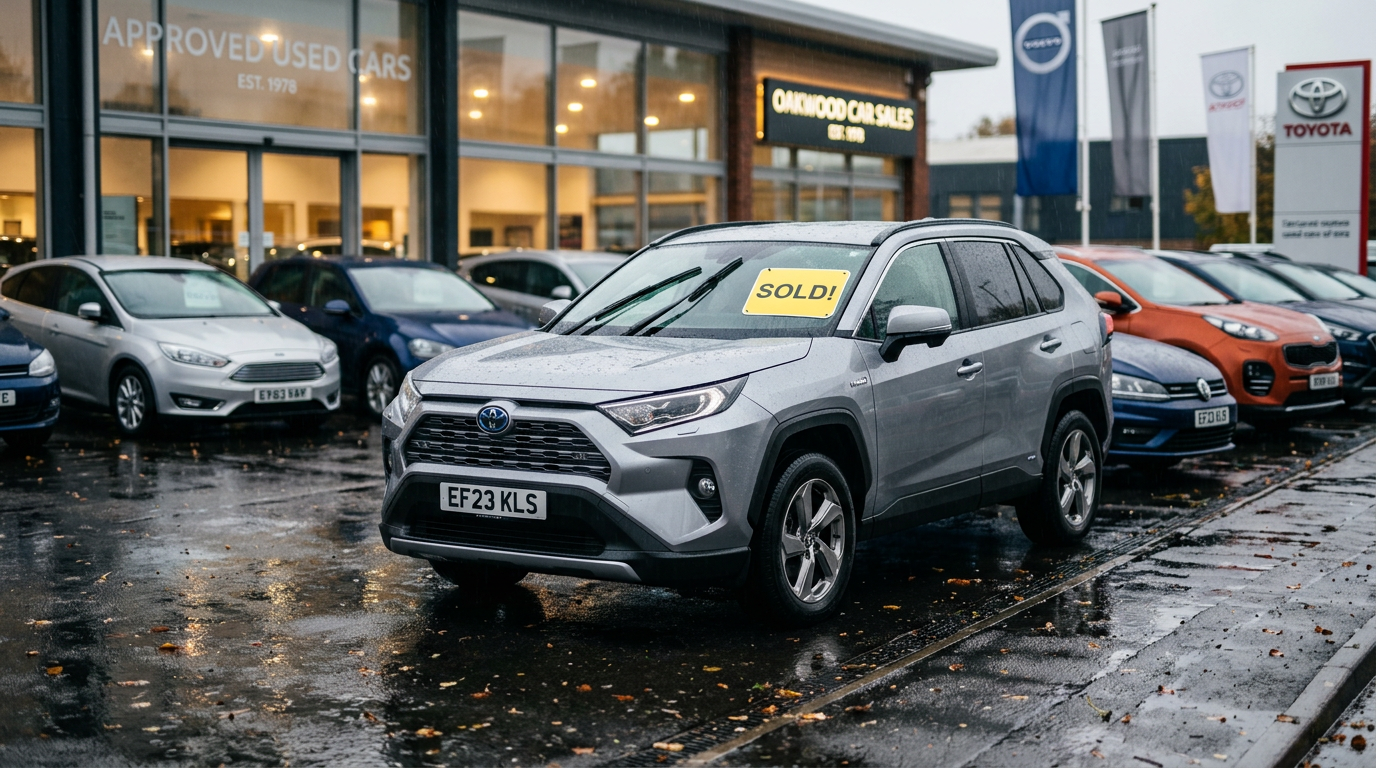
The UK used car market in 2026 is facing a unique and challenging phenomenon. If you’ve stepped onto a forecourt or browsed online recently, you’ll have noticed that 3-year-old vehicles—the traditional "sweet spot" for many buyers—are not only harder to find but are commanding record-high prices. This isn't just a seasonal fluctuation; it is the culmination of a supply chain ripple effect that started years ago.
For both private buyers looking for a reliable family SUV and dealers trying to maintain healthy inventory levels, understanding the mechanics of the 2026 stock squeeze is essential. At CarsLink.ai, we are seeing search volumes for these specific models spike even as the available "digital shelf space" for them narrows.
The Logic of the Three-Year Cycle
To understand why 2026 is so difficult, we have to look back to 2023. In the UK, the majority of new cars are registered via Personal Contract Purchase (PCP) or Business Contract Hire (BCH) agreements, typically on three-year terms.
Cars registered in 2023 should be hitting the used market right now in 2026. However, 2023 was a year of recovery, not a year of abundance. While manufacturing began to stabilise post-pandemic, the volume of new registrations remained significantly below the pre-2020 "normal." This has created a "missing generation" of vehicles.
The Impact of the 2023 Registration Deficit
The following table illustrates the registration trends that have led to the current shortage:
| Year | Approx. New Registrations | Market Impact in 2026 |
|---|---|---|
| 2019 | 2.3 Million | High-mileage, aging stock |
| 2023 | 1.9 Million | The 2026 "3-Year-Old" Gap |
| 2024 | 2.0 Million | Improving, but still constrained |
| 2025 | 2.1 Million | Emerging stock for 2028 |
Because there were roughly 400,000 fewer cars registered in 2023 compared to the long-term average, there are 400,000 fewer cars entering the used market today as ex-fleet or ex-PCP stock.
Ex-Fleet and Business Contract Hire: The Vanishing Feed
The lifeblood of the UK used car market is the fleet sector. Large corporations and leasing giants typically refresh their fleets every 36 months. In 2023, many fleet managers extended their existing contracts because new car lead times were still unpredictable and interest rates were high.
Consequently, the "de-fleeting" process—where thousands of 3-year-old BMW 3 Series, Volkswagen Golfs, and Nissan Qashqais are sold into the wholesale market—is stuttering. When these cars do reach auction houses like BCA or Manheim, the competition among dealers is fierce. This drove wholesale car prices in 2026 to levels that would have been unthinkable five years ago.
The "Price Floor" Phenomenon
Typically, a car loses a significant chunk of its value the moment it leaves the showroom, with another big drop at the three-year mark when the manufacturer's warranty expires and the first MOT is due.
In 2026, we are seeing a "Price Floor." Because demand so heavily outweighs supply, 2023-registered cars are retaining up to 65-70% of their original list price. For buyers, the financial gap between a three-year-old car and a brand-new one has narrowed. This is pushing many consumers toward CarsLink.ai to find the outliers—those rare deals where a dealer hasn't yet adjusted to the newest market peak.
The ULEZ and Clean Air Zone Effect
The stock shortage is being compounded by regional legislation. With London’s expanded ULEZ and similar Clean Air Zones (CAZ) in Birmingham, Bristol, and Glasgow now fully bedded in, the demand for Euro 6 diesel and petrol cars is concentrated on younger stock.
Buyers in these zones are desperate for 2023/2024 models to ensure long-term compliance. This creates a "perfect storm":
- Low Supply: Fewer 2023 cars were built.
- High Retention: Current owners are holding onto cars longer to avoid high finance rates.
- High Demand: Legislative pressure forces buyers into this specific age bracket.
Advice for UK Car Dealers/Traders
If you are a dealer, the 2026 stock squeeze requires a shift in strategy. Relying solely on physical auctions is no longer viable for maintaining margins.
- Diversify Sourcing: Look toward private purchase schemes. Many consumers are sitting on equity in their 2023 PCP deals. Offering to buy these cars outright before they go back to the finance house can bypass auction fees.
- Focus on Condition, Not Just Age: With 3-year-old stock at a premium, well-maintained 5-year-old cars (2021/22) are becoming the new "value" entry point for many families.
- Leverage AI Tools: Use platforms like CarsLink.ai to monitor real-time price fluctuations across the UK. Knowing exactly when a specific model’s price dips in a different region can allow for opportunistic buying.
Advice for Private Buyers
For the average UK motorist, navigating the 2026 market requires patience and a "ready-to-act" mindset.
- Check the MOT History: 2023 cars are hitting their first MOT this year. Always use the DVLA MOT check service to see if a car passed its first test. A "clean" first MOT is a good indicator of how the car was treated during its lease.
- Consider "Almost New": Sometimes, a car that is 12-18 months old (2025 registration) might only be a few thousand pounds more than a 3-year-old car due to the supply squeeze. With better finance rates often available on younger stock, the monthly PCP payment might actually be lower.
- Be Prepared to Travel: The stock shortage isn't uniform. A car in Leeds might be £1,500 cheaper than an identical model in London.
The Future: Will the Squeeze Ease?
Hope is on the horizon, but it’s a distant one. New car registrations showed a healthier uptick in late 2024 and throughout 2025 as supply chains fully healed and EV adoption accelerated. We expect the used market to return to a more "normal" supply-demand balance by 2028.
Until then, the 2023-vintage car remains a rare commodity. Whether you are a dealer looking to protect your margins or a buyer looking for your next upgrade, the 2026 market demands a data-driven approach.
The volatility of the current market means that traditional pricing guides are often out of date by the time they are published. To stay ahead, use CarsLink.ai to browse the most current listings and find the best value 3-year-old cars before they disappear from the forecourts.
Looking for a 2023-registered car that hasn't hit premium pricing yet? Use CarsLink.ai today to search nationwide stock and find the best deals in your area.