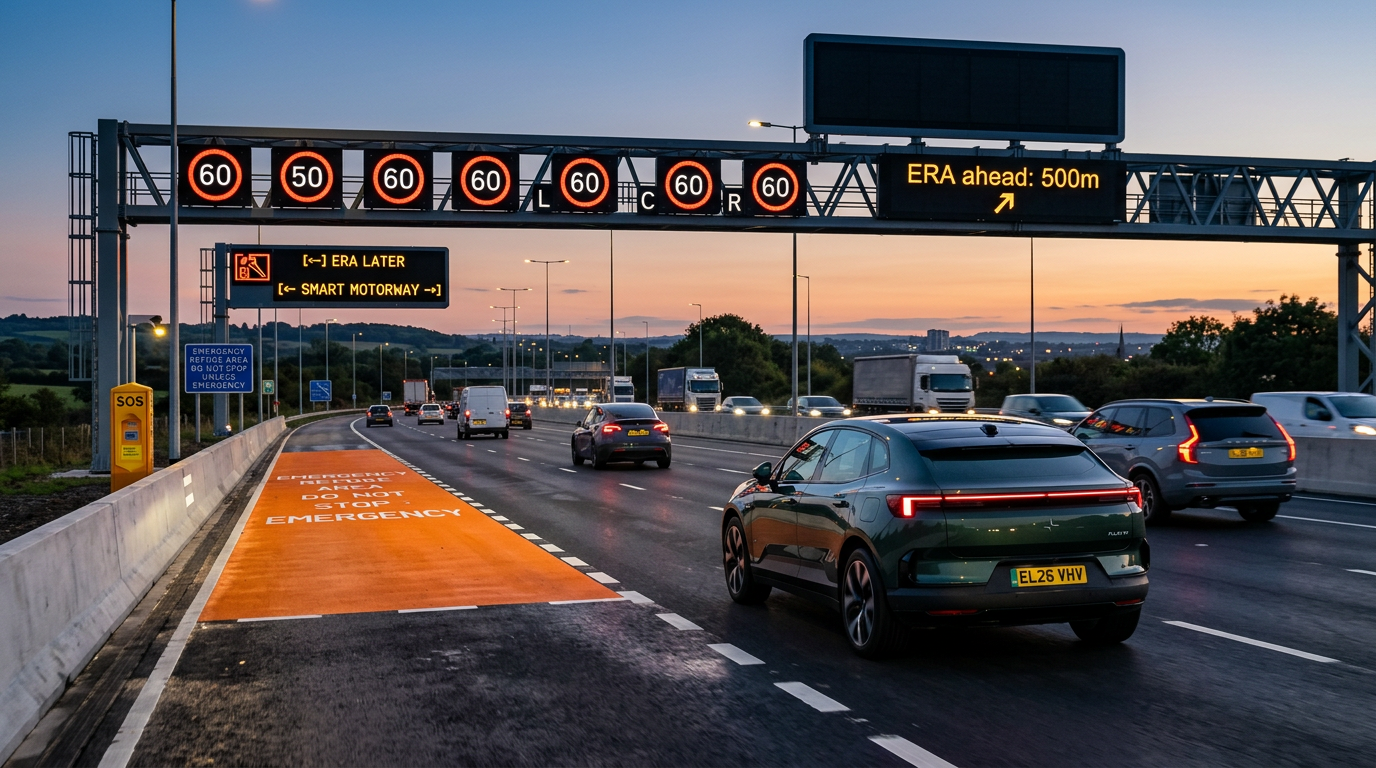
As we move further into 2026, the landscape of the UK’s strategic road network has undergone significant scrutiny. While the government cancelled all new 'All Lane Running' (ALR) smart motorways back in 2023, the existing network of roughly 400 miles remains a core component of our infrastructure. For drivers today, the tech-heavy environment of a smart motorway demands more than just vigilant driving; it requires a proactive approach to vehicle maintenance.
The stakes are higher than ever. With the national roll-out of Next-Generation Stopped Vehicle Detection (SVD) radar and an increase in Emergency Refuge Areas (ERAs), your car needs to be as technologically sound as the road it’s travelling on. Here is how to ensure your vehicle is fit for high-speed tech in 2026.
The Maintenance Checklist for Smart Motorway Safety
On a smart motorway, the hard shoulder is often used as a live running lane. If your vehicle suffers a mechanical failure, you may not have a traditional safety net. Regular maintenance is no longer just about passing your MOT; it's about preventative survival.
1. Tyres: Your First Line of Defence
Tyre blowouts are a leading cause of motorway breakdowns. In 2026, with heavier electric vehicles (EVs) becoming the norm, tyre stress is at an all-time high.
- Pressure Checks: Ensure your tyres are at the manufacturer's recommended PSI. Under-inflated tyres overheat faster at 70mph, increasing blowout risks.
- Tread Depth: While the legal limit is 1.6mm, we recommend a minimum of 3mm for motorway driving to ensure adequate water displacement during UK downpours.
- EV-Specific Tyres: If you drive an EV, ensure you use 'HL' (High Load) rated tyres. Using standard tyres on a heavy battery-electric vehicle can lead to premature structural failure.
2. Battery Health and EV State of Charge (SoC)
Whether you drive an Internal Combustion Engine (ICE) car or an EV, battery health is paramount.
- 12V Batteries: In 2026, many motorway breakdowns are still caused by failing 12V batteries in both petrol and electric cars, which power the ECUs and hazard lights. If your car is over three years old, have the 12V battery health-checked.
- Range Management: Running out of 'fuel' (electric or liquid) on a smart motorway is now a fineable offence under updated DVLA guidance if it leads to a preventable obstruction. Always ensure you have at least 20% charge/fuel before entering a long stretch of ALR motorway.
3. Fluids and Cooling Systems
High-speed driving puts immense pressure on cooling systems. Check your coolant levels and oil regularly. A car overheating in a live lane is a high-risk scenario that the SVD radar will pick up, but by then, you are already in a vulnerable position.
Understanding Smart Motorway Rules in 2026
The rules have evolved to reflect the increased use of technology. At CarsLink.ai, we monitor these shifts to keep our users informed.
| Feature | 2026 Status/Rule | Action Required |
|---|---|---|
| Red X Signals | Strictly enforced by overhead cameras | Move lanes immediately. Automatics fines and points apply. |
| Emergency Refuge Areas (ERAs) | Spaced every 0.75 to 1 mile | Use only in emergencies. Pull as far left as possible. |
| SVD Radar | Fully operational nationwide | If stopped, stay in your car with seatbelts on unless there is a clear path to safety. |
| Variable Speed Limits | Mandatory and camera-enforced | Linked to pollution levels and congestion. |
EV Breakdown Safety: A New Priority
With the 2030 ban on new petrol/diesel cars approaching, the 2026 second-hand EV market is booming. However, EV breakdowns on smart motorways present unique challenges.
- The 'Neutral' Problem: Many EVs require power to engage 'Neutral' or 'Tow Mode'. If your high-voltage system fails, the wheels may lock. Ensure you know the manual override for your specific model.
- Thermal Management: If your EV warns of a battery temperature issue, do not ignore it. Pull into the next Emergency Refuge Area immediately.
- Visible Safety: In the event of a total power loss, EVs can go 'dark'. Keep a high-visibility vest and a portable LED emergency beacon in your glovebox, as your hazard lights may only last 10-20 minutes on a failing 12V battery.
What to do if You Break Down
Even with the best maintenance, failures happen. If your car loses power on a smart motorway in 2026:
- Try to exit: Aim for the next junction or a service station.
- ERAs: If you can't exit, head for an Emergency Refuge Area 2026 standard. They are painted bright orange and equipped with an emergency telephone.
- The Left Lane: If you cannot reach an ERA, pull as close to the left-hand verge or barrier as possible.
- Bail or Stay? If you can safely get out via the passenger door and get behind a crash barrier, do so. If you are in a live lane and cannot safely exit the vehicle, stay buckled in and call 999.
Modern Tech for Modern Safety
Modern cars available on CarsLink.ai often come equipped with eCall—an SOS button that connects you directly to emergency services and provides your GPS coordinates. Familiarise yourself with this button's location. Additionally, ensure your V5C contact details are up to date with the DVLA so that any safety recalls regarding your vehicle's software or mechanicals reach you promptly.
Conclusion
Smart motorways are a feat of engineering, but they rely on the "Smart Driver" to function safely. By maintaining your vehicle—specifically your tyres, battery, and cooling systems—you significantly reduce the risk of becoming a "stopped vehicle" statistic. High-speed tech works best when the vehicles using it are in peak condition.
Are you looking for a vehicle with the latest safety assist tech to tackle the UK's motorway network? Browse the latest stock and check vehicle history reports at CarsLink.ai today.