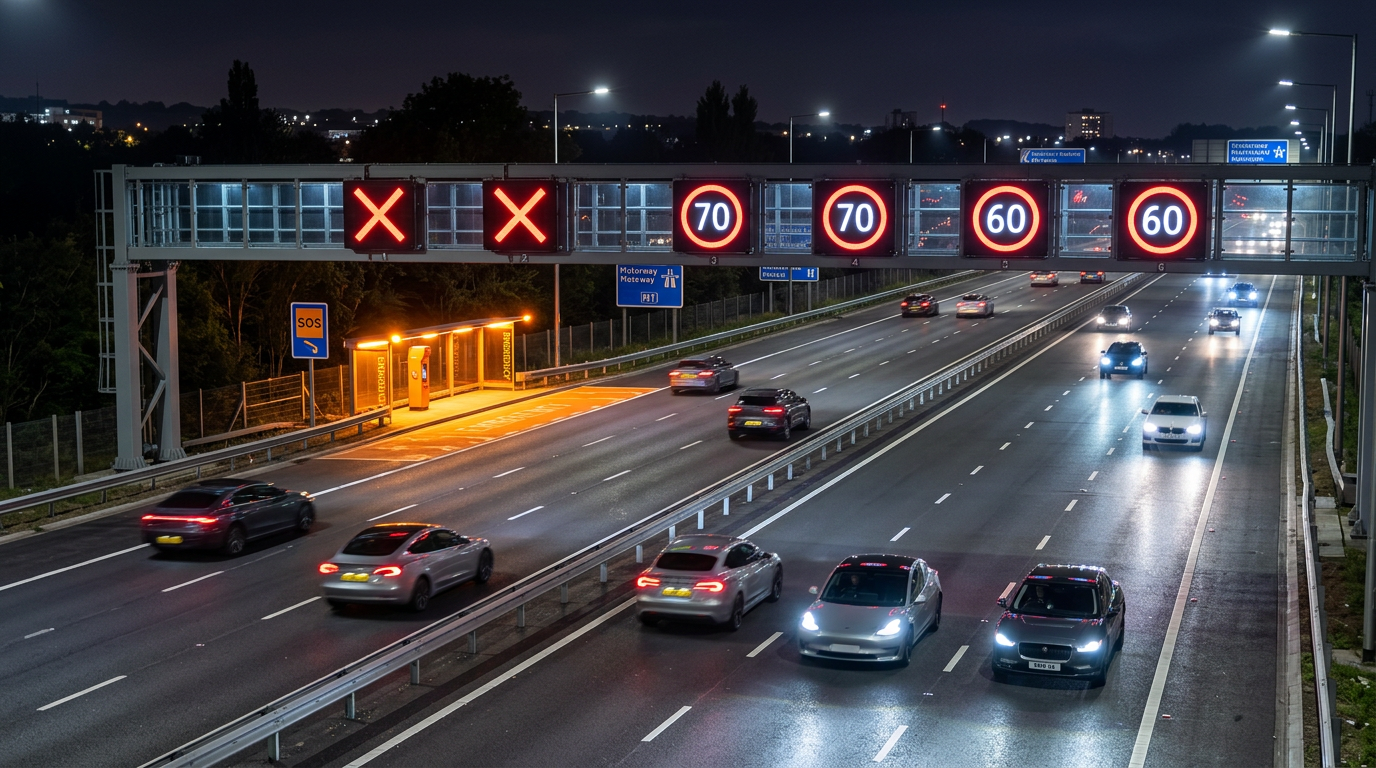
As we move further into 2026, the landscape of British motorways has undergone its most significant transformation in a generation. Following years of public debate and government reviews, the strategy for Smart Motorways has shifted from expansion to intense technological refinement. Whether you are a daily commuter or an occasional long-distance driver, understanding the 2026 regulations is essential to staying safe and avoiding heavy fines.
At CarsLink.ai, we track these changes closely to ensure our users are informed when buying, selling, or driving the latest tech-enabled vehicles.
The 2026 Context: No More New ALR Motorways
It is important to recap that since the government's 2023 announcement, all new "All Lane Running" (ALR) projects—where the hard shoulder is permanently used as a live lane—were cancelled. However, for the existing 250+ miles of ALR motorways, 2026 marks the deadline for the "Safety Retrofit Programme."
By now, every mile of existing Smart Motorway in the UK has been equipped with Radar-based Stopped Vehicle Detection (SVD). This tech is designed to identify a stationary vehicle within 20 seconds and alert control rooms instantly.
New Safety Tech: What’s Under the Tarmac in 2026?
The 2026 safety suite isn't just about cameras. It’s an integrated ecosystem designed to bridge the gap between human error and infrastructure.
1. Next-Gen Stopped Vehicle Detection (SVD)
The radar systems have seen a significant software overhaul for 2026. Previous iterations faced criticism for false positives caused by heavy rain or debris. The current "Phase 3" radar uses AI to filter environmental noise, providing a 98% accuracy rate in detecting stranded vehicles even in zero-visibility conditions.
2. Enhanced Emergency Area (EA) Spacing
National Highways has completed the retrofit of additional Emergency Areas. Your chances of finding a safe haven have improved drastically:
- 2020 Standard: EAs could be up to 1.5 miles apart.
- 2026 Standard: EAs are now positioned every 0.75 miles where physically possible.
- Visual Enhancements: All EAs now feature signature bright orange surfacing and ultra-reflective "SOS" signage that is visible even if your headlamps fail.
3. V2X (Vehicle-to-Everything) Integration
If you are driving a 2024–2026 model year vehicle, your car is likely communicating with the motorway. National Highways now broadcasts Red X closures directly to the infotainment screens of compatible vehicles. If a lane is closed 2 miles ahead, your dashboard will warn you before you even see the overhead gantry.
Penalties: The High Cost of Ignoring the Red X
The DVLA and National Highways have tightened enforcement in 2026. The "grace period" for lane transitions has been shortened thanks to more precise gantry cameras.
| Offence | 2026 Penalty | Licence Points |
|---|---|---|
| Driving in a closed lane (Red X) | £100 + | 3 Points |
| Stopping in a live lane (Avoidable) | Up to £2,500 | 3-6 Points |
| Using EA for non-emergencies | £100 | N/A (Fine only) |
| Tailgating (tracked by SVD) | £100 | 3 Points |
Note on Red X Enforcement: In 2026, the HADECS3 camera systems are fully integrated. If you pass under a Red X, the shutter triggers automatically. There is no longer a requirement for a police officer to witness the event; the digital evidence from the gantry is sufficient for an automated Fixed Penalty Notice (FPN).
What Constitutes an 'Emergency' in 2026?
One of the most frequent queries we receive at CarsLink.ai involves the legal use of Emergency Areas. National Highways and the police have clarified the 2026 stance:
- Legitimate Use: Mechanical breakdown, puncture, medical emergency, or fire.
- Illegal Use: Checking a map, making a non-emergency phone call, driver fatigue (use a service station), or "re-arranging luggage."
If you stop in an EA, you must use the roadside emergency telephone. This notifies the control room that you are there, so they can monitor your vehicle via CCTV and, if necessary, close Lane 1 to help you rejoin the motorway safely.
Driving Tips for the 2026 Smart Motorway Network
- Check Your Vehicle: With ULEZ-compliant EVs and modern hybrids dominating the roads, "running out of charge" is now a common cause of live-lane breakdowns. Ensure your range is sufficient; stopping because you ran out of fuel or charge can be deemed "careless driving."
- The 10-Second Rule: On ALR stretches, keep a 10-second mental tally of the next Emergency Area. If your car starts to lose power, get to the leftmost lane immediately.
- V5C and Breakdown Cover: Ensure your breakdown provider covers "Smart Motorway Recovery." Some lower-tier policies have exclusions for certain types of recovery on the strategic road network.
- Keep the Red X in Sight: Never "lane hop" to get past a Red X. The cameras are often positioned several hundred yards after the gantry to catch those who think they can squeeze out an extra few seconds of travel.
The Future: Connectivity and Safety
As we move toward the end of the decade, the goal of National Highways is a "Zero Harm" network. The 2026 updates represent the most robust version of the Smart Motorway concept yet, moving away from just "adding capacity" toward "intelligent management."
By integrating real-time data with automated enforcement, the UK aims to make its motorways some of the safest in the world, despite the absence of a permanent hard shoulder in many areas.
Stay Informed with CarsLink.ai
Keeping pace with UK driving laws is a full-time job. Whether you’re looking for a vehicle with the latest V2X safety features or need to check the ULEZ status of your next purchase, CarsLink.ai is your digital partner on the road. Stay safe, stay legal, and drive smart.
Looking for a tech-ready car that keeps you safe on Smart Motorways? Browse our latest listings at CarsLink.ai today.