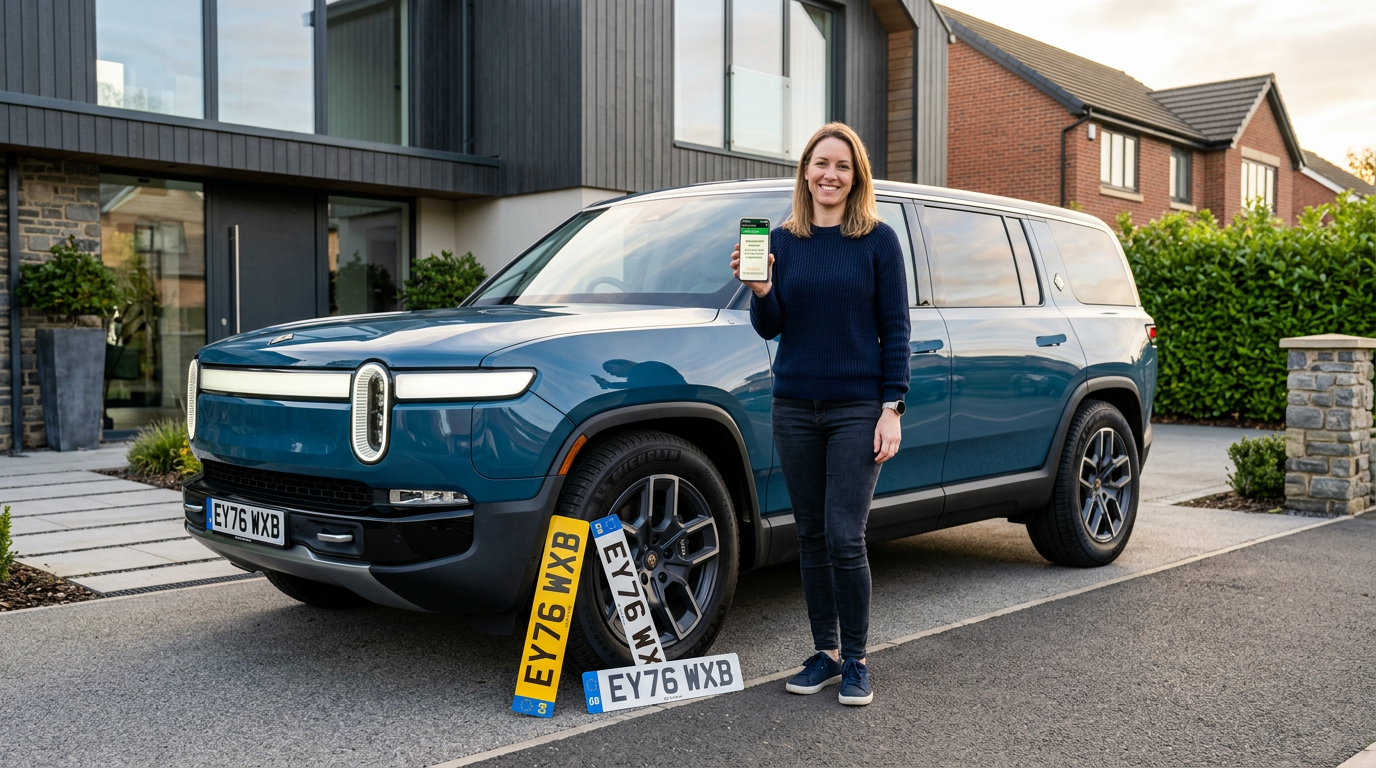
Why You Must Act Before Signing the V5C
Selling your car in 2026 is faster than ever, thanks to instant online valuations and digital logbook transfers. However, there is one critical area where many UK motorists still get caught out: private registration marks.
If you sell your vehicle or trade it in at a dealership before officially retaining the plate, you legally lose the rights to that registration. It stays with the vehicle, and the new owner becomes the legal keeper of your cherished number. To keep your plate for your next car—or to sell it separately—you must follow the DVLA retention process first.
In this guide, we’ll walk you through the 2026 digital requirements for transferring a private plate and how to ensure your sale goes smoothly on CarsLink.ai.
The 2026 Retention Process: Step-by-Step
The DVLA has fully streamlined its digital services for 2026. While the paper-based V317 form still exists for complex cases, 98% of transfers are now handled via the DVLA’s real-time portal.
1. Check Your Vehicle’s Eligibility
Before you start, the vehicle must:
- Be registered with the DVLA in the UK.
- Be of a type that needs an MOT certificate (or be a HGV).
- Have been taxed (or SORN’d) continuously for the last five years.
- Be available for inspection (the DVLA occasionally requests this, though it is rare in 2026).
2. Apply to Retain the Number Plate
You no longer need to wait for a physical letter. Log onto the DVLA "Take a registration number off a vehicle" service between 7 am and 7 pm.
- The Cost: The fee remains £80. This covers the retention and the eventual assignment to a new vehicle.
- The Result: If successful, the plate is removed immediately. The DVLA website will tell you the replacement registration number (usually the car’s original age-related plate).
3. Update Your Physical Plates
Once the online system confirms the retention, the vehicle’s current registration is no longer valid. You must:
- Print/Buy New Plates: Affix the replacement plates (e.g., the original '74' or '25' reg) to the car immediately.
- Inform Your Insurance: This is a vital 2026 compliance step. If you drive with the wrong plates or fail to notify your insurer of the change, your cover could be voided.
4. Wait for the New V5C
The DVLA will automatically issue a new V5C (logbook) showing the replacement registration. In 2026, these typically arrive within 3-5 working days. Crucially, do not complete your sale on CarsLink.ai until you have the new V5C in your hand, as the new owner will need the multi-digit reference number from the updated document.
Retaining via the V317 Form (Offline)
While most motorists use the online portal to transfer a private plate in 2026, there are specific scenarios where you must use the postal V317 form:
- If the vehicle is not in your name (e.g., a deceased relative's estate).
- If you are transferring the plate directly from one vehicle to another without a retention period.
- If your vehicle is a classic car that does not have "Type Approval."
| Method | Processing Time | Cost | Use Case |
|---|---|---|---|
| DVLA Online Portal | Instant | £80 | Most cars 2001-2026 |
| V317 Postal Form | 2-4 Weeks | £80 | Ownership disputes/Classics |
Selling Your Car with a Private Plate: The Pitfalls
If you decide you actually want to sell the car with the plate included to increase its value, the process is different. However, we generally advise against this unless the plate is specific to that model (e.g., 'V8 BMW').
The "Ghost Plate" Risk: Some sellers list their cars on marketplaces with their private plates visible. This invites "cloning," where criminals copy your registration for their own vehicles to bypass ULEZ cameras or speeding fines. When listing on CarsLink.ai, we recommend using our "Plate Hide" feature or taking photos with the replacement plates already fitted.
Road Tax and MOT Requirements
A common question in 2026 is whether a car needs a valid MOT to retain a plate.
- Current Rules: The car must have a valid MOT. If the MOT has expired, you can still retain the plate if the MOT expired less than 6 months ago AND the car has been taxed/SORN'd continuously.
- Road Tax: Your road tax status carries over to the replacement registration automatically. You do not need to "re-tax" the car after retaining your plate.
What Happens to the £80 Fee?
The £80 fee is a "Transfer Fee." When you pay to retain the plate, the DVLA issues a V778 Retention Document (valid for 10 years). This document proves you own the rights to the mark. When you eventually buy your next car, there is no further fee to "put the plate on"—the £80 you paid during the removal covers the future assignment.
Summary Checklist for 2026
- Verify the vehicle has been taxed for the last 5 years.
- Log in to the DVLA portal (07:00–19:00).
- Pay the £80 and receive your electronic retention confirmation.
- Install the replacement physical plates.
- Update your insurance provider immediately.
- Secure your new V5C before finalizing your sale.
Sell Your Car Stress-Free
Once your private registration is safely stored on a V778 certificate, you are ready to get the best price for your vehicle. At CarsLink.ai, we connect you with verified dealers who understand the nuances of cherished transfers and ensure a secure, transparent transaction.
Ready to see what your car is worth on its new (old) plates? Get an instant valuation on CarsLink.ai today.