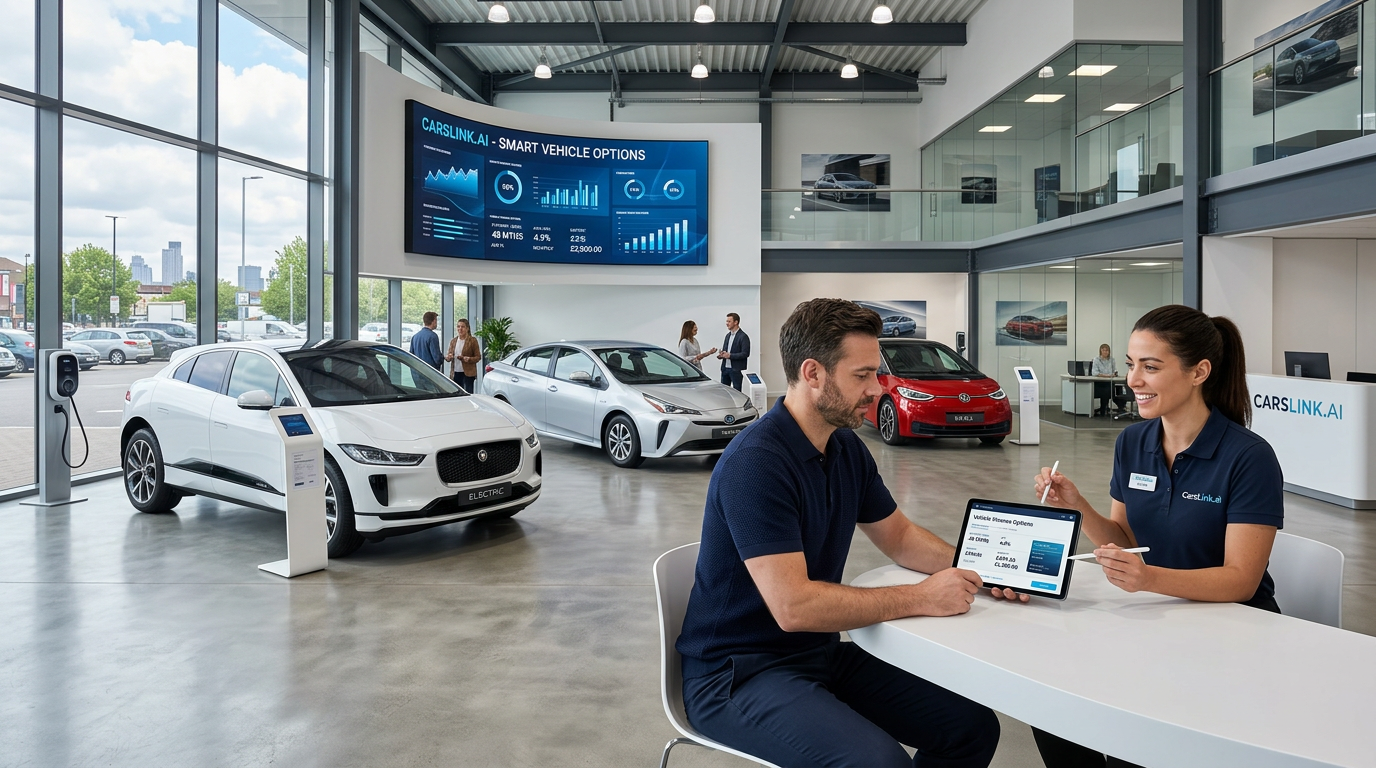
As we move through 2026, the Personal Contract Purchase (PCP) landscape has evolved significantly. While PCP remains the most popular way for UK motorists to get behind the wheel of a new or nearly-new car, many drivers are currently facing a "moment of truth."
If your three- or four-year agreement is coming to an end, you are likely staring at a substantial balloon payment (formally known as the Guaranteed Minimum Future Value, or GMFV). In a market where vehicle supply has finally stabilised but residual values are seeing more volatility due to the rapid shift toward EVs, making the right choice is crucial for your bank balance.
Here is your comprehensive guide to navigating 2026 PCP options: Pay, Refinance, or Part-Exchange.
Understanding the 2026 Balloon Payment Landscape
The balloon payment is the final lump sum required to own the vehicle outright. Historically, these were set conservatively by lenders. However, with the used car value fluctuations seen over the last 24 months, many drivers are finding themselves in one of two camps:
- Equity Rich: Your car is worth more than the balloon payment.
- Negative Equity: Your car is worth less than the balloon payment (a rare but increasing occurrence in certain EV segments).
Before making a decision, you must check your current V5C logbook details and get an accurate valuation. You can find real-time market data on CarsLink.ai to see exactly what similar models are retailing for today.
Option 1: Paying the Balloon (The "Keep It" Strategy)
If you love your car and it has been reliable, paying the balloon payment is often the most cost-effective long-term move.
Why you should pay:
- Total Ownership: Once paid, the car is yours. No more monthly payments, mileage restrictions, or "fair wear and tear" inspections.
- No Interest: By paying cash, you stop accruing interest on the remaining balance.
- Known History: You know exactly how the car has been driven and maintained (crucial for passing future MOTs).
The 2026 Reality:
With the 2030 ban on new pure petrol and diesel cars approaching, high-quality Euro 6 diesel and petrol hybrids are holding their value remarkably well. If you have a well-maintained internal combustion engine (ICE) vehicle, paying the balloon now might secure you a reliable asset before the market tilts entirely toward electric.
Option 2: Refinancing the Balloon Payment
If you want to keep the car but don't have £10,000 to £20,000 sitting in a savings account, you can "re-finance" the balloon.
How it works:
You take out a new loan (usually a Hire Purchase agreement) to cover the cost of the balloon payment. This spreads the remaining cost over another 2–4 years.
Comparison of Finance Types in 2026:
| Feature | PCP (Original) | Refinancing (HP) |
|---|---|---|
| Ownership | Lancer owns car until final payment | You own car after final payment |
| Monthly Cost | Usually lower (deferring the balloon) | Higher (paying off full balance) |
| Mileage Limits | Yes | No |
| Interest Rates | Often subsidised (0-7% APR) | Market rates (typically 8-12% APR) |
Pro Tip: Always check if the interest on a personal loan from a bank is lower than the dealer’s re-finance offer.
Option 3: Part-Exchanging (The "Upgrade" Strategy)
This is the most popular route for UK drivers who want to move into the latest technology—specifically the 2026/27 plate electric vehicles with improved range and solid-state battery tech.
Leveraging Equity:
If your car is worth £18,000 and your balloon payment is £15,000, you have £3,000 in equity. You can use this as a deposit for your next PCP deal.
Wait! Don't just settle for the dealer's trade-in price. Use CarsLink.ai to compare what various dealers are willing to pay. Sometimes, selling the car independently or to a specialist car-buying service can net you an extra £1,000 compared to a standard part-exchange.
Option 4: Handing Back the Keys
If the car is worth less than the GMFV (Negative Equity), this is your "get out of jail free" card.
- How it works: You simply return the car to the finance company. You walk away with nothing, but you also don't lose money on a depreciating asset.
- The Catch: You must be within your mileage limit and the car must meet "British Vehicle Rental and Leasing Association" (BVRLA) standards. If there are dents, scratched alloys, or a missed service, the finance house will send you a bill.
Critical Factors for 2026
1. The EV "Cliff"
In 2026, we are seeing a massive influx of used EVs entering the market. If you are on an EV PCP deal, check your valuation early. Rapidly advancing battery technology can cause older EV models to depreciate faster than expected. If your EV is worth less than the balloon, handing it back is usually the smartest financial move.
2. ULEZ and Clean Air Zones
Ensure your vehicle remains compliant with evolving regional emissions zones. If your current car is attracting daily charges, it doesn’t make sense to pay the balloon. Part-exchange for a compliant model instead.
3. Road Tax Changes
Remember that from April 2025, EVs began paying Vehicle Excise Duty (Road Tax). When calculating your monthly budget for a refined loan or a new PCP, factor in these updated running costs.
Checklist: Before Your PCP Ends
- Request a Settlement Figure: Contact your lender 3–4 months before the end of the term.
- Get a Real-World Valuation: Use CarsLink.ai to see the current market value.
- Inspect Your Car: Check for damage that might trigger "excess wear" charges.
- Confirm Your Mileage: Check the odometer against your contract. Excess mileage charges in 2026 can range from 8p to 30p per mile.
Summary
Deciding whether to pay, refinance, or part-ex your PCP balloon payment in 2026 requires a cold, hard look at the numbers. If the car has equity, don't leave it on the dealer's desk—use it towards your next vehicle or pocket it by selling the car. If the market has dipped and the car is worth less than the balloon, let the finance company take the hit and hand back the keys.
Need help deciding? Visit CarsLink.ai to value your current vehicle and browse the latest 2026 PCP deals tailored to your budget. Our AI-driven insights help you stay ahead of used car value fluctuations.