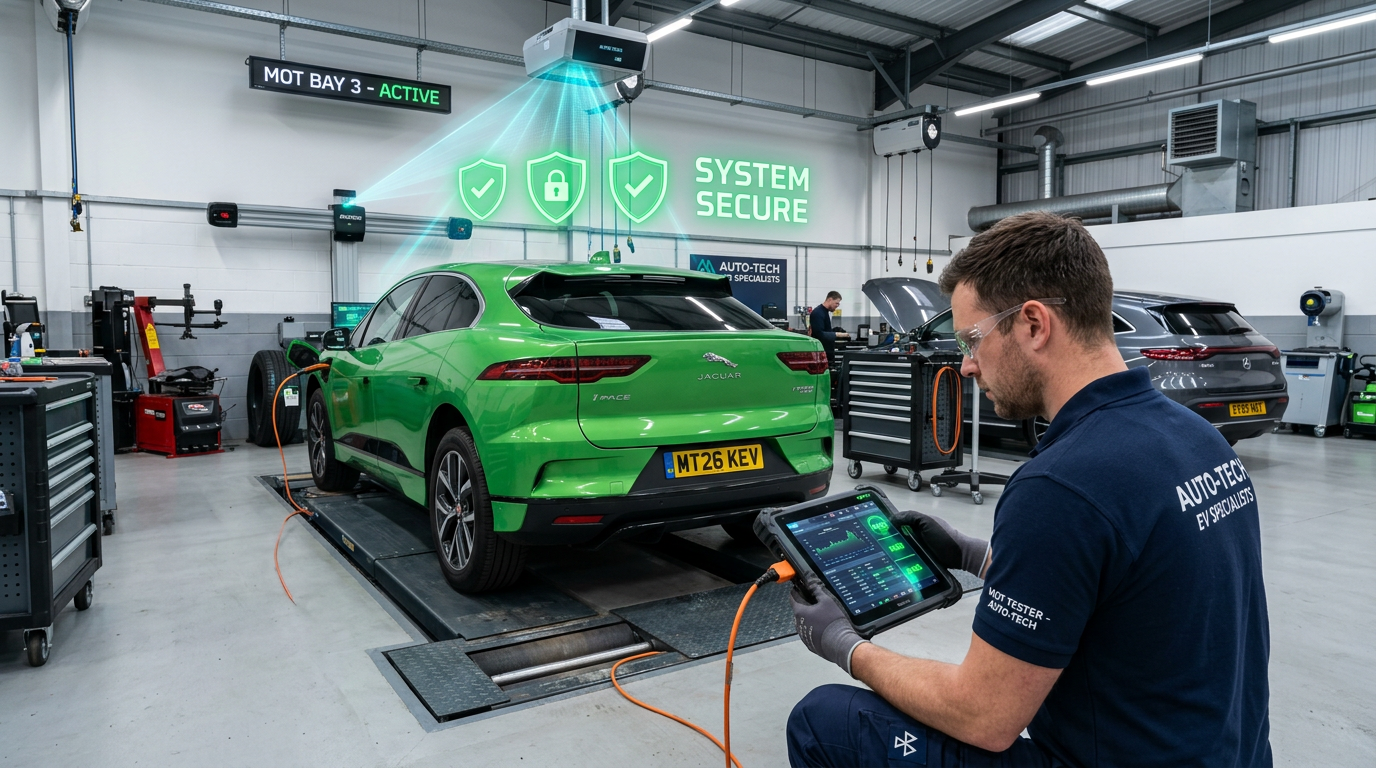
For decades, the MOT test was a predictable ritual of checking brake pads, exhaust emissions, and tyre treads. However, as we move through 2026, the definition of 'roadworthy' has undergone its most significant transformation since the introduction of emissions testing.
With the average car now containing over 100 million lines of code, the Driver and Vehicle Standards Agency (DVSA) has officially introduced Cybersecurity Compliance into the annual inspection. If you are driving a vehicle manufactured after 2022, your next MOT might depend as much on your software version as your suspension.
Why the 2026 MOT Rules Have Changed
As vehicles have become 'smartphones on wheels', the risks have shifted from purely mechanical failure to digital interference. 'Connected Car safety' is no longer a buzzword; it is a legal requirement.
The 2026 MOT updates address three primary concerns:
- Remote Hijacking: Ensuring the vehicle’s communication modules (V2X) haven't been compromised.
- Data Privacy: Confirming that diagnostic ports haven't been fitted with 'skimming' devices.
- Software Integrity: Ensuring safety-critical systems like Autonomous Emergency Braking (AEB) are running officially sanctioned firmware.
The 'Digital Logbook': Your New V5C Companion
One of the biggest shifts this year is the integration of the Vehicle Software Version Management (VSVM) system. When you take your car to a testing centre, the technician will now plug a specialized diagnostic tool into your OBD-II port that syncs with the manufacturer’s database via the DVSA portal.
If your car is flagged as having 'Outstanding Critical Security Updates', it will result in an automatic Major Fail.
Key Cybersecurity Checkpoints in the 2026 Test
| Feature | What is Checked? | Result of Failure |
|---|---|---|
| Firmware Signature | Checks if the ECU software is genuine and untampered. | Major Fail (Security Risk) |
| OTA Update Status | Ensures 'Critical' safety patches have been installed. | Major Fail |
| Hardware Integrity | Inspects for illicit 'chips' or hardware bypasses on the CAN bus. | Dangerous Fail |
| Connectivity Module | Checks for integrity in the eCall and GPS systems. | Advisory or Fail |
Connected Car Safety: Is Your Data at Risk?
A common concern for UK motorists in 2026 is how much personal data the MOT tester can see. The DVSA has been clear: the Cybersecurity MOT UK protocols are designed to check the integrity of the system, not the content of your data.
The tester doesn't see your sat-nav history or your phone contacts. They are looking for 'Digital Malformations'—essentially, code that shouldn't be there or missing security handshakes that leave the vehicle vulnerable to hackers.
How to Prepare Your Car for the 'Cyber MOT'
To avoid a frustrating failure, owners of modern connected vehicles should follow these steps before heading to the garage:
- Check for Over-the-Air (OTA) Updates: Ensure your car has been connected to Wi-Fi or has a strong cellular signal to download any pending manufacturer patches.
- Remove Unofficial Plugins: If you use third-party insurance trackers or 'performance chips' that plug into the OBD port, ensure they are UKCA-approved and professionally installed. Non-compliant hardware is a top cause for failure in early 2026 statistics.
- Verify your 'Digital Service Record': High-end manufacturers now log security patches in a digital cloud. Tools on CarsLink.ai can help you track your vehicle's history and ensure you're up to date before your test date.
The Impact on Used Car Prices
This shift in MOT regulations has sent ripples through the used car market. A car with a 'Clean Digital History' is now significantly more valuable than one with a string of software advisories.
At CarsLink.ai, we have observed a 15% price premium on vehicles that can demonstrate a seamless history of Cybersecurity Compliance. Conversely, older 'connected' cars from the 2018-2020 era that lack modern encryption are seeing faster depreciation as they become ‘legacy’ tech that is harder to pass through the new MOT standards.
Dealing with a 'Software Fail'
If your car fails on software integrity, the solution isn't as simple as swapping a bulb. Usually, it requires a 'Manufacturer Reset' or a forced update at a main dealer.
- Cost: While some updates are free under warranty, 'Category 2' security patches on out-of-warranty cars can cost between £80 and £200.
- Road Tax & Insurance: Remember, an MOT fail for cybersecurity is legally the same as a mechanical fail. Your insurance is void, and you cannot renew your road tax until the digital fault is rectified.
Summary: A Safer Digital Future
The 2026 MOT rules might feel like another layer of bureaucracy, but they are essential for the era of autonomous and semi-autonomous driving. By ensuring every car on UK roads has a 'digital shield,' the DVSA is preventing large-scale vulnerabilities that could disrupt traffic or endanger lives.
Planning to sell or upgrade your car this year? Use CarsLink.ai to check your vehicle's market value and ensure your digital paperwork is in order before your next MOT. Stay safe, stay connected, and stay compliant.