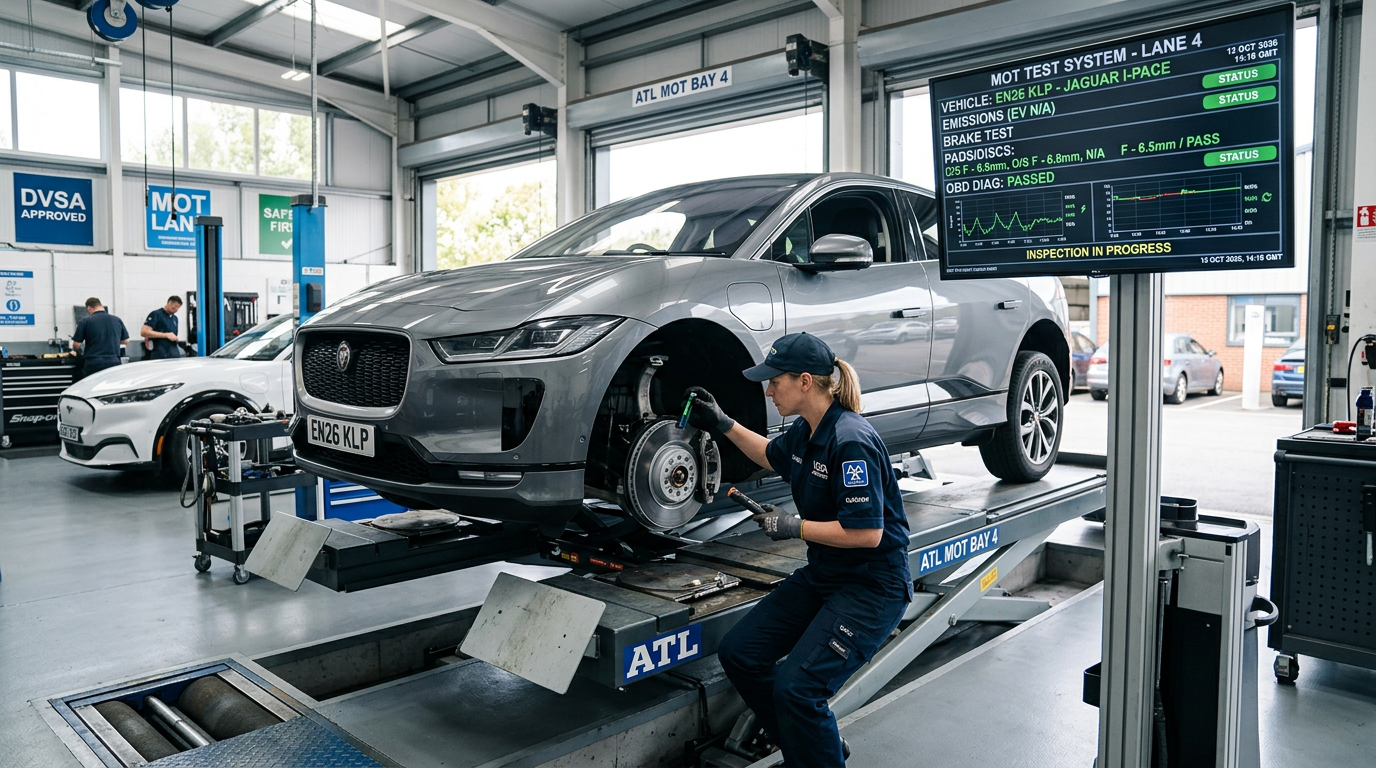
As we move through 2026, the UK’s automotive landscape has shifted significantly. With the Driver and Vehicle Standards Agency (DVSA) reporting record numbers of vehicles on the road over ten years old, and the electric vehicle (EV) market reaching its greatest ever market share, the annual MOT test remains the ultimate gatekeeper of road safety.
However, a concerning trend has emerged in the latest DVSA data: brake pad wear has overtaken lighting and suspension as a primary cause for MOT failure. In this guide, we explore why brakes are failing more than ever, how EVs are changing the maintenance game, and what you can do to ensure your vehicle passes its 2026 MOT.
The 2026 Shift: Why Brakes are Under Fire
Historically, "lamps, reflectors and electrical equipment" held the top spot for MOT failures. Today, a combination of heavier vehicles (SUVs and EVs) and more stringent inspection criteria regarding brake pad wear indicators has shifted the balance.
In 2026, the MOT inspection manual places a heavier emphasis on the physical condition of the friction material. If a brake pad is worn below the legal threshold (usually 1.5mm) or if a dashboard warning light is present, it is an automatic Major Failure.
Why failure rates are rising:
- Vehicle Weight: Modern cars are heavier than their 2016 counterparts. The average family SUV now weighs close to 1.8 tonnes, putting immense thermal stress on brake components.
- Increased Mileage post-2024: Following the economic stabilization of the mid-2020s, average annual mileage in the UK has risen, leading to faster component degradation.
- The "EV Paradox": Many EV owners assume that because they use regenerative braking, their mechanical brakes will last forever. As we shall see, the opposite can often be true.
EV Brake Maintenance UK: The Corrosive Threat
One of the biggest 2026 MOT failure reasons in the UK is ironically linked to the rise of green motoring. Electric Vehicles and Plug-in Hybrids (PHEVs) use regenerative braking to charge the battery, meaning the physical brake pads are used less frequently.
While this preserves the friction material, it leads to surface oxidation (rust) on the brake discs and seized calipers. An MOT tester must see a clean, consistent braking surface; if 20% or more of the disc surface is pitted or rusted, it is a failure. For EV owners, "using them or losing them" has become the mantra of 2026.
Understanding Brake Pad Wear Indicators
By 2026, almost every car registered in the last decade is equipped with some form of wear indicator. Understanding these is vital for MOT preparation.
| Type of Indicator | How it Works | MOT Status |
|---|---|---|
| Electronic Sensor | Triggers a message on the dashboard when pads are thin. | Failure if light is illuminated. |
| Acoustic (Squeal) | A metal tab scrapes the disc to create a high-pitched noise. | Advisory or Failure if friction material is too low. |
| Visual Inspection | Manual check by the technician through the wheel spokes. | Failure if below 1.5mm. |
At CarsLink.ai, we recommend checking your dashboard daily. A "Brake Wear" light isn't a suggestion; in the eyes of the DVSA, it is a definitive sign that the vehicle is unroadworthy.
The Cost of Failure in 2026
The cost of road-side repairs and MOT "re-tests" has risen alongside inflation. Failing an MOT on brake components can lead to:
- Automatic Retest Fees: If the vehicle stays at the garage, you might avoid this, but taking it away often incurs a partial fee.
- V5C Implications: Persistent failures on safety-critical items can affect your vehicle’s valuation and history.
- Road Tax & ULEZ: You cannot renew your road tax without a valid MOT. Furthermore, if you are caught driving a vehicle with a "Dangerous" failure in a ULEZ zone, ANPR cameras may flag the vehicle for both emissions and roadworthiness violations.
MOT Preparation Checklist 2026: Avoiding the Brake Trap
To avoid becoming part of the failure statistics, follow this 2026 MOT preparation checklist.
1. The Visual Disc Check
Look through your alloy wheels. Are the discs shiny and smooth? If you see deep grooves or a "lip" around the edge of the disc, they likely need replacing alongside the pads.
2. The "Hands-Off" Veer
On a flat, quiet, and safe road, lightly loosen your grip on the steering wheel while braking gently. If the car pulls to one side, it indicates a sticking caliper or uneven pad wear—a guaranteed MOT fail.
3. Listen for the Squeal
Modern pads often use a "wear shim." If you hear a metallic screeching when not applying the brakes that disappears when you press the pedal, your pads are at their limit.
4. Fluid Levels
Check your brake fluid reservoir. If the level is low, it could indicate a leak (Major Failure) or simply that the pads are so worn the fluid has moved down into the calipers to compensate.
5. Check the Handbrake
In 2026, electronic parking brakes (EPBs) are standard. Ensure the "P" light engages quickly and the car doesn't "creep" on a gradient.
How CarsLink.ai Can Help
Navigating the complexities of vehicle maintenance in 2026 doesn't have to be a headache. Whether you are looking to sell a car with a fresh MOT or are in the market for a high-quality used EV, CarsLink.ai provides the data-driven insights you need. Our platform helps users track service histories and understand the common failure points of specific models, ensuring you never buy a "lemon" with hidden braking issues.
Summary: Don't Ignore the Warning Signs
Brake pad wear is no longer just a "minor" advisory. In the current UK MOT climate, testers are stricter than ever. The move toward heavier vehicles and the specific maintenance needs of EVs means that brakes require proactive attention.
Replacing your pads six months early is significantly cheaper than a failed MOT, a retest fee, and the potential for a "Dangerous" mark on your vehicle's permanent digital record.
Are you worried about your next MOT? Visit CarsLink.ai today to find local certified garages or to check the MOT history of your next potential car investment.