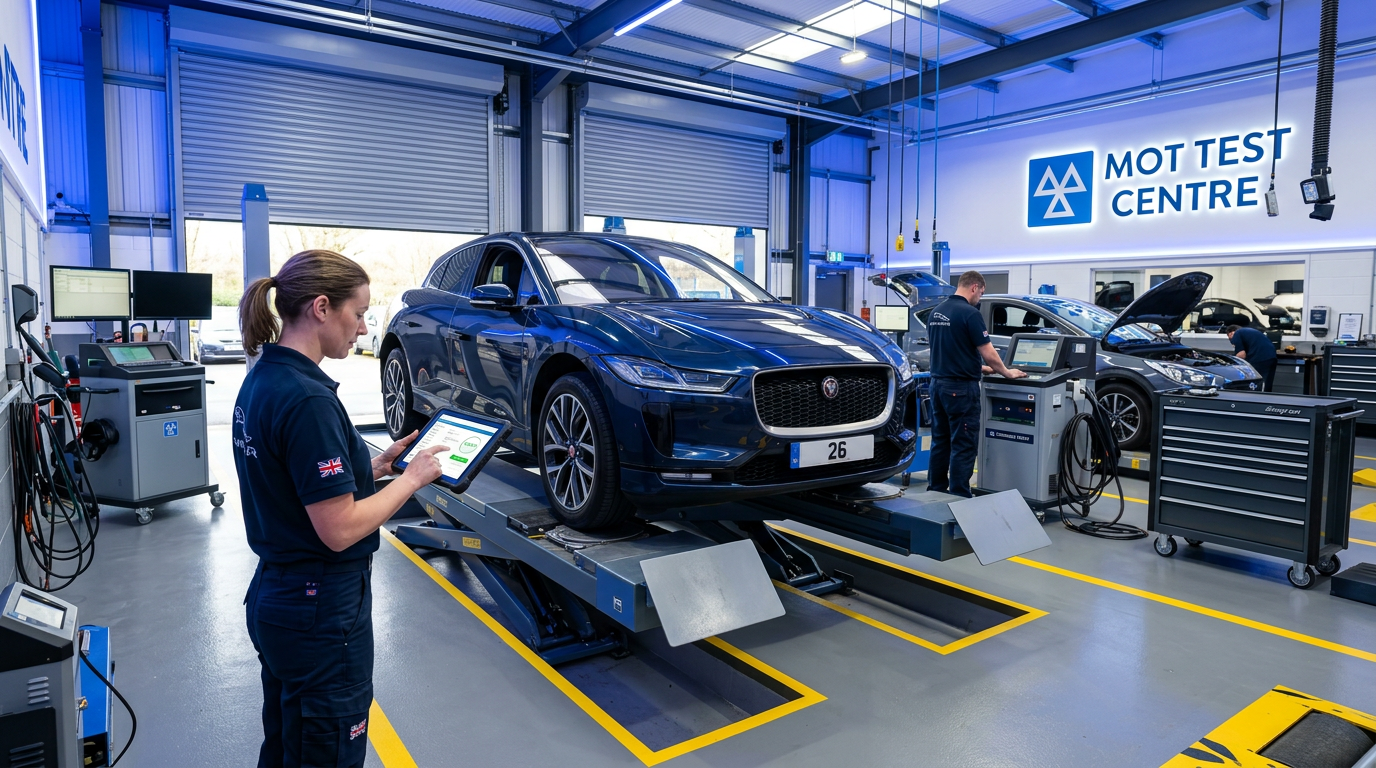
The annual Ministry of Transport (MOT) test has been the bedrock of UK road safety since 1960. However, as we move through 2026, the test is undergoing its most significant transformation in a generation. With the rise of electric vehicles (EVs), Advanced Driver Assistance Systems (ADAS), and the DVLA’s push toward a "Digital First" strategy, the 2026 MOT changes are now officially in force.
Whether you are a private motorist or a motor trader managing a fleet of used cars, understanding these shifts is crucial for staying road-legal and protecting your vehicle’s resale value. In this guide, we break down exactly what has changed, why it matters, and how you can prepare for your next test.
1. The Death of the Paper Certificate: DVLA Digital Certs
As of early 2026, the DVLA has officially phased out the physical VT20 MOT pass certificate. While garages have been moving toward digital records for years, the new "Digital Cert" system is now the sole legal record of a vehicle's roadworthiness.
What this means for you:
- Real-time updates: Your MOT result is now updated instantly on the DVLA database the moment the tester hits 'submit'.
- V5C Integration: The digital certificate is now linked directly to your digital V5C logbook. When selling a car, buyers can instantly verify the MOT history via a QR code provided in the seller’s digital dashboard.
- No more "lost" paperwork: You can still request a printout for your personal records, but it no longer holds legal weight at the roadside; police and insurance providers now rely exclusively on the live digital feed.
2. Connected Vehicle MOT: The Rise of the OBD II Test
The biggest technical shift in 2026 is the implementation of Connected Vehicle MOT protocols. As vehicles become "computers on wheels," a visual inspection of brakes and tyres is no longer sufficient.
For any car manufactured after 2021, the MOT now requires a mandatory "Health Telemetry Sync." The testing equipment at the garage must now plug into the car's OBD II port to communicate directly with the manufacturer's safety logs.
| Feature Tested | Old Method (2020) | 2026 Standard |
|---|---|---|
| ADAS Systems | Visual dashboard light check | Full diagnostic sensor calibration check |
| Brake Wear | Physical measurement | Electronic sensor data analysis |
| Battery Health (EV/PHEV) | Not tested | State of Health (SoH) minimum threshold check |
| Emissions | Tailpipe probe | Real-world 'On-Board Monitoring' (OBM) data |
This change ensures that "hidden" faults—such as a misaligned Lane Assist camera or a failing Autonomous Emergency Braking (AEB) sensor—are caught. These are critical for safety, especially as UK insurers now heavily weight premiums based on the functionality of these systems.
3. New Focus on ADAS and Semi-Autonomous Safety
By 2026, the majority of cars on UK roads feature some level of Advanced Driver Assistance Systems (ADAS). Under the new rules, a failure in any "Primary Safety System" results in an automatic MOT fail.
Key systems now under the microscope include:
- Lane Keep Assist (LKA): If the sensors are obstructed or misaligned, the vehicle will fail.
- Driver Monitoring Systems (DMS): These cameras, which detect driver fatigue, must be fully operational in cars where they are fitted as standard.
- Dynamic Lighting: Matrix LED headlights, common on modern Audis and Land Rovers, are now checked for individual diode failure, which can cause dangerous glare for oncoming traffic.
4. Electric Vehicles: The Battery Integrity Check
With the UK’s 2035 ban on new petrol and diesel cars approaching, the used EV market is booming. To protect consumers, the 2026 MOT rules have introduced a mandatory EV Battery Safety and Integrity Check.
Testers now inspect the casing of the high-voltage battery for any signs of impact damage or corrosion. Furthermore, if the vehicle’s internal management system reports a "Critical Cell Imbalance," it will be marked as a Major Failure. This is a game-changer for car buyers using platforms like CarsLink.ai, as it provides a new layer of transparency regarding the battery longevity of used EVs.
5. ULEZ Compliance and Real-World Emissions
While London’s ULEZ and other Clean Air Zones across the UK (like Birmingham, Bristol, and Glasgow) have been in place for years, the 2026 MOT is more aggressive toward emissions tampering.
The DVLA has introduced "Particulate Matter (PM) Counting" for all Euro 6 diesel engines. Older smoke opacity tests were often easy to bypass; the new PM counters can detect if a Diesel Particulate Filter (DPF) has been cleaned, bypassed, or modified. If your car is found to have had its DPF removed or "gutted," it is an immediate "Do Not Drive" failure, and the vehicle may be flagged to the DVLA for a permanent tax class review.
6. Advice for Dealers and Traders
For those in the motor trade, the 2026 changes present both a challenge and an opportunity.
- Inventory Audits: Ensure your stock—especially imports—meets the new ADAS calibration standards. A car that "looks" fine might fail the new connected diagnostic test.
- Digital Transparency: Use the new DVLA digital API to showcase "Clean Health Reports" to prospective buyers. Transparency is the best way to maintain margins in a competitive market.
- Sourcing tip: When looking for high-quality used stock that meets these stringent new safety standards, modern AI search tools like CarsLink.ai allow you to filter for vehicles with verified digital MOT histories, saving you time at the auction or on the forecourt.
7. Preparing for Your Next MOT
To avoid a surprise failure under the new 2026 rules, follow this checklist:
- Check your dashboard: Any warning light—even a minor one related to sensors—is now an automatic failure.
- Clean your sensors: Ensure your car’s radar (usually in the front grille) and cameras (behind the rearview mirror) are free of dirt and stone-chip cracks.
- Check tyre pressure and tread: Though the test has gone digital, physical components still matter. The minimum UK legal limit remains 1.6mm, but for EV heavy-weights, experts recommend 3mm for safety.
- Verify your digital record: Log into the GOV.UK MOT status portal to ensure your email and phone number are linked for automated "expiry reminder" alerts.
Conclusion
The 2026 MOT changes represent a pivot toward a safer, more tech-driven UK car market. While the "Connected MOT" might seem daunting, it ultimately ensures that the high-tech safety features we pay for are actually protecting us.
If you’re looking to buy a vehicle that is guaranteed to pass these new, tougher standards, start your search at CarsLink.ai. Our AI-powered search tool identifies the best value, safest, and most compliant vehicles on the UK market today. High-quality data is the key to a stress-free MOT; make sure your next car has it.
Keep your digital V5C ready, keep your sensors clean, and drive safe in 2026!