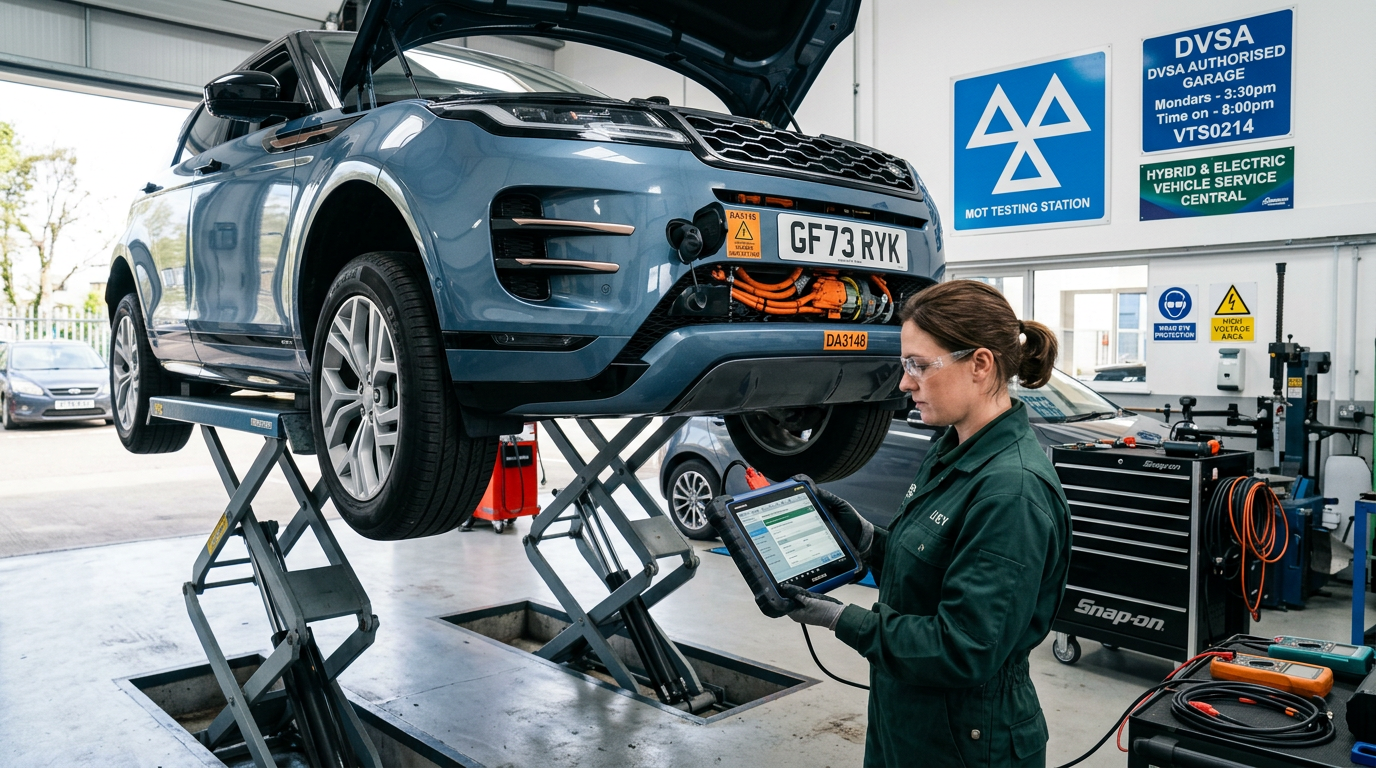
As we move further into 2026, the UK’s automotive landscape has shifted dramatically. With a record number of high-voltage vehicles now reaching their third birthday, the Driver and Vehicle Standards Agency (DVSA) has implemented significant updates to the MOT testing framework. For owners of Hybrid (HEV) and Plug-in Hybrid Electric Vehicles (PHEV), the 2026 MOT changes represent the most substantial overhaul in a decade.
Navigating these new regulations is essential to avoid an MOT failure in 2026. At CarsLink.ai, we’ve analyzed the updated DVSA manuals to bring you this definitive guide to keeping your hybrid road-legal and efficient.
Why the MOT Rules Changed for 2026
Since the initial surge of hybrid sales in 2022-2023, the government has gathered extensive data on real-world emissions. The primary driver for the 2026 updates is the "Real World Usage" gap. Many PHEVs, if not charged regularly, emit significantly more CO2 than their lab-tested figures suggest. Consequently, the 2026 MOT rules have pivoted from simple visual checks to more integrated diagnostic assessments.
Key Changes for Hybrid and PHEV Owners
1. The OBD-II Emissions "Deep Dive"
Previously, hybrids often bypassed the smoke or gas analyzer test if the engine didn't kick in during the session. In 2026, this "loophole" is closed. Testers now use advanced On-Board Diagnostic (OBD) scanning to retrieve historical emissions data. If your vehicle’s engine control unit (ECU) shows persistent faults in the exhaust gas recirculation (EGR) system or particulate filter (now common on modern petrol hybrids), it will trigger an immediate failure, even if the car is currently running in EV mode.
2. High-Voltage (HV) Cable Integrity
Safety checks have been tightened. Any sign of "orange cable" degradation—the high-voltage lines powering your motor—is now a Major Failure. Testers are looking for:
- Chafing or fraying of the outer insulation.
- Insecure mounting of HV components.
- Corrosion on the battery casing or inverter heat sinks.
3. Battery Health and Warning Lights
While a slightly degraded battery capacity won't fail an MOT, a Battery Management System (BMS) warning light is now treated with the same severity as an Engine Management Light (EML). If your dashboard displays a "Hybrid System Fault," your vehicle is considered unroadworthy.
The 2026 MOT Checklist for Hybrids vs. PHEVs
| Component | Hybrid (HEV) Check | Plug-in Hybrid (PHEV) Check |
|---|---|---|
| Emissions | OBD data + tailpipe (if engine runs) | OBD data + OBFCM data check |
| Charging Port | N/A | Physical damage & locking mechanism |
| HV Cables | Visual inspection (Orange) | Visual inspection (Orange) |
| Braking | Regenerative braking balance | Regenerative braking balance |
| Acoustic Alert | Mandatory AVAS check | Mandatory AVAS check |
Understanding the "OBFCM" Data Collection
A major addition to the 2026 MOT rules is the mandatory recording of On-Board Fuel Consumption Monitoring (OBFCM) data for PHEVs. While this won't currently cause an MOT failure, the DVSA now collects this data during the test to monitor the gap between official fuel economy figures and real-world usage. Keeping your PHEV charged helps ensure your engine components aren't overworked, which reduces the risk of mechanical wear that could lead to a failure.
Common Reasons for MOT Failure in 2026
Beyond the standard tyres and wipers, hybrids are seeing specific trends in failure rates:
- Brake Seizure: Because hybrids use regenerative braking, the physical pads and discs are used less frequently. This often leads to corrosion and "pitting" of the brake discs. A common MOT failure in 2026 is insufficient braking force or uneven wear due to seized calipers.
- AVAS Malfunction: Since 2021, all "quiet" vehicles must have an Acoustic Vehicle Alerting System (AVAS). In 2026, if your external speaker is broken and your car is silent at low speeds, it is an automatic failure.
- Modified Exhausts: With the introduction of Petrol Particulate Filters (PPF) on most hybrids since 2020, any "delete" kits or modifications to the exhaust system are now strictly caught via the OBD scan.
PHEV Maintenance: Beyond the MOT
To ensure your vehicle passes the 2026 requirements, maintenance should be proactive.
The CarsLink.ai Tip: Ensure your hybrid is serviced by a technician qualified in IMI Level 3 or 4 Electric/Hybrid Vehicle System Repair. Standard mechanics may not have the diagnostic tools required to clear non-critical "handshake" errors between the battery and the engine that might cause a nervous MOT tester to fail the vehicle.
Road Tax and ULEZ Considerations
While you're checking your MOT status, don't forget that the VED (Road Tax) landscape has changed. From April 2025, even Zero Emission Vehicles began paying road tax, and for 2026, many older hybrids have seen their "Alternative Fuel Discount" disappear. Always check your V5C to ensure your tax class is correct, as an untaxed vehicle can lead to an MOT refusal.
How to Prepare Your Hybrid for the Test
- Warm the Engine: Before arriving at the test centre, ensure the internal combustion engine has run for at least 10 minutes. This ensures the catalytic converter is at operating temperature for the emissions test.
- Check the Charge: Arrive with at least 50% battery. This allows the tester to check transition modes without the car forcing a "charge mode" which can spike emissions readings.
- Clean the Charging Port: For PHEVs, ensure the port is free of debris and the flap closes securely.
- Exercise the Brakes: Perform a few firm stops (where safe to do so) in the week leading up to the MOT to clear surface rust from the discs.
Summary
The 2026 MOT changes reflect a UK automotive market that is more electrified than ever. By focusing on high-voltage safety, software-driven emissions checking, and the functional integrity of hybrid systems, the DVSA is ensuring that the "green" credentials of these vehicles remain true throughout their lifespan.
Are you looking to upgrade your current hybrid before its next test, or perhaps you're worried about potential repair costs? Visit CarsLink.ai to value your current car and explore our AI-driven insights on the most reliable 2026-compliant models on the market today.
Don't wait for your MOT date—stay ahead of the regulations and keep your hybrid running at peak performance.