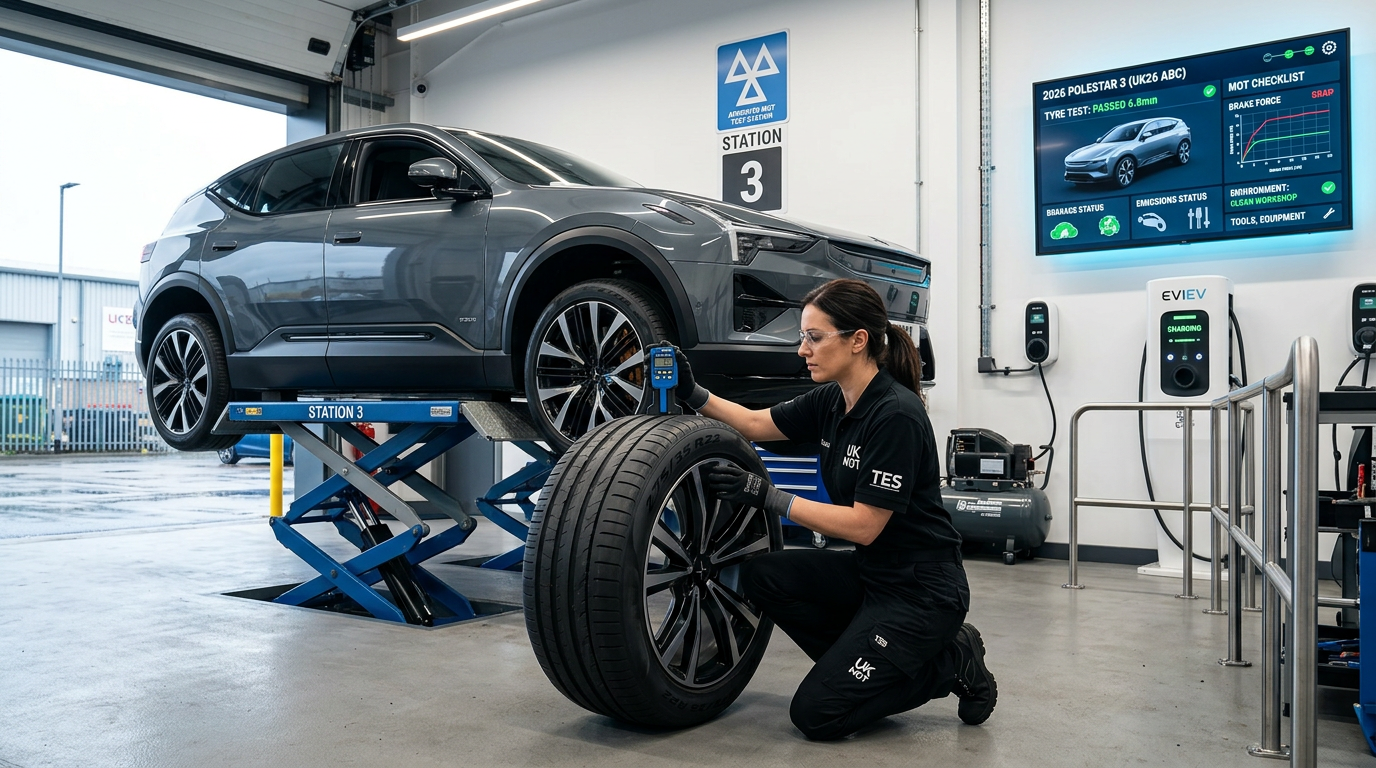
As the UK reaches its 2026 milestones for electrification, the MOT testing landscape is shifting. While electric vehicles (EVs) have fewer moving parts than their internal combustion engine (ICE) predecessors, they are facing a specific challenge at the testing stations: tyre wear.
In 2026, the DVLA and DVSA data suggests a rising trend in initial MOT failures for three-year-old EVs, with tyres being the primary culprit. If you are a first-time EV owner approaching your vehicle’s first MOT, or a seasoned electric driver managing a fleet, understanding the interplay between battery weight and road contact is crucial for passing your inspection.
Why 2026 is a Turning Point for MOT Trends
By 2026, the volume of mass-market EVs—like the Tesla Model 3, Hyundai IONIQ 5, and MG4—hitting their first three-year MOT milestone has reached an all-time high. Unlike traditional petrol hatchbacks, these vehicles carry a significant "weight penalty" due to their high-density lithium-ion battery packs.
A standard mid-sized EV often weighs 400kg to 600kg more than a comparable petrol car. This constant load, combined with the instant torque delivery characteristic of electric motors, is fundamentally changing UK MOT failure trends.
The Heavy Battery Problem: Physics vs. Rubber
The 1.6mm legal minimum tread depth is the same for every passenger car in the UK, but how quickly you reach that limit depends on your vehicle’s mass.
Increased Vertical Load
The sheer weight of an EV battery puts more vertical pressure on the tyre carcass. This leads to faster heat buildup during driving, which softens the rubber compounds and speeds up the rate of abrasion against the road surface.
Instant Torque and Longitudinal Stress
EVs deliver 100% of their torque instantly. Even if you aren't "racing" away from the lights, the micro-slips that occur every time you accelerate put immense stress on the tyre's tread blocks. In 2026, MOT testers are reporting "inner edge wear" as a frequent reason for failure, often caused by the heavy weight of the battery straining the suspension geometry under load.
2026 MOT Rules and Your Tyres
While there haven't been specific "EV-only" laws introduced this year, the scrutiny during a 2026 MOT has intensified. Testers are paying closer attention to:
- Load Ratings: It is an automatic MOT failure if your EV is fitted with tyres that do not meet the manufacturer’s specified load index. Many owners accidentally fit standard tyres instead of 'HL' (High Load) or 'XL' (Extra Load) variants, which cannot safely support the battery weight.
- Sidewall Integrity: The increased weight makes EVs more susceptible to sidewall bulges when hitting potholes—a common sight on UK roads in 2026.
- The 1.6mm Limit: While 1.6mm is the legal pass, most safety experts and CarsLink.ai recommend changing EV tyres at 3mm to maintain wet-weather braking performance, which is compromised by the vehicle's higher momentum.
Comparing Wear: EV vs. ICE (Typical 3-Year Cycle)
| Feature | Typical Petrol Hatchback | Typical Battery Electric Vehicle (BEV) |
|---|---|---|
| Average Weight | 1,300kg - 1,500kg | 1,800kg - 2,200kg |
| Tyre Lifespan | 25,000 - 40,000 miles | 15,000 - 25,000 miles |
| Common Failure Point | General even wear | Accelerated inner-edge wear / Sidewall damage |
| Required Tyre Type | Standard | HL (High Load) or EV-Specific |
How to Ensure an MOT Pass: The EV Checklist
To avoid the inconvenience of a "Refusal to Issue a Certificate" and the potential for a fine of up to £2,500 for "dangerous" tyres, follow these steps before your 2026 MOT date:
1. Check the "EV" Markings
Ensure your tyres are specifically designed for electric cars. Look for markings like 'Elect' (Pirelli), 'iON' (Hankook), or the 'EV' symbol. These tyres feature reinforced sidewalls and specialized carcasses to handle the battery mass.
2. Monitor Tyre Pressure Weekly
Weight is the enemy of an under-inflated tyre. Even a 10% drop in pressure on a heavy EV can lead to "shouldering," where the edges of the tyre wear down rapidly while the centre remains deep. This is a fast track to an MOT fail.
3. Professional Alignment
Because of the heavy load, EV suspension components can settle or move more than in lighter cars. If you notice your steering wheel isn't perfectly straight, get a digitised 4-wheel alignment. Misalignment on a heavy vehicle will destroy a set of front tyres in mere months.
4. Use CarsLink.ai for Maintenance Records
Keeping a digital history of your tyre changes and tread depth readings can help you predict when your next set is due. At CarsLink.ai, we help drivers stay ahead of their MOT deadlines by providing insights into vehicle health and market trends.
The Cost of Failure: Road Tax and ULEZ
Remember, if your vehicle fails its MOT, it is illegal to drive it on a public road (except to a pre-booked repair appointment). In 2026, ANPR cameras are more integrated than ever. Driving without a valid MOT can automatically trigger alerts regarding your Road Tax (VED) validity and insurance coverage.
Furthermore, with more UK cities adopting ULEZ and Clean Air Zone standards in 2026, ensuring your EV is roadworthy is the only way to maintain the low-cost motoring benefits you bought the car for in the first place.
Summary: Don't Let Weight Deflate Your MOT Dreams
The transition to electric motoring is a net positive for the environment and your wallet, but the "heavy vehicle" reality cannot be ignored. In 2026, EV tyre depth is the new frontline of vehicle safety. By choosing the correct load-rated tyres and monitoring wear patterns, you can ensure your heavy battery doesn't result in a light wallet at the MOT station.
Planning to upgrade your EV or need to check its valuation before the next MOT? Visit CarsLink.ai today for the UK's most comprehensive automotive data and buying guides.