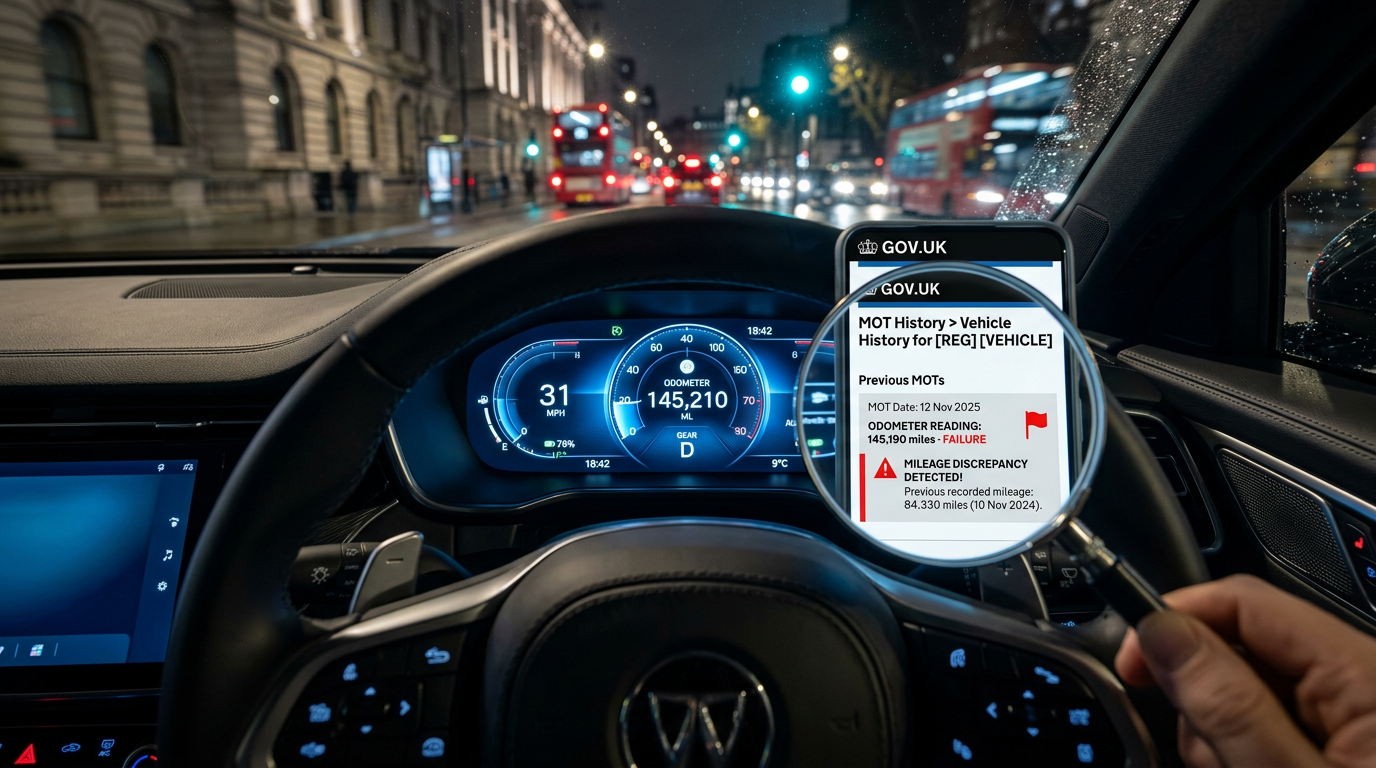
Vehicle clocking—the illegal practice of wound-back odometers—has reached a record high in 2026. Despite the shift towards digital instrument clusters and sophisticated ECUs, rogue sellers have found new ways to manipulate software to bypass digital security. For buyers in the UK second-hand market, understanding how to use DVLA mileage records and HPI check discrepancies is no longer optional; it is a vital safeguard for your finances and safety.
The State of Mileage Fraud in 2026
As of May 2026, industry data suggests that 1 in 12 vehicles on UK roads may have an altered odometer. With the average cost of a used electric vehicle (EV) or a high-spec petrol hybrid still substantial, 'clocking' a car by just 20,000 miles can artificially inflate its value by thousands of pounds.
Clocking doesn't just hurt your wallet. It masks the true wear and tear on critical components. A car showing 40,000 miles but actually having covered 80,000 might be overdue for an expensive high-voltage battery health check or a cambelt replacement, leading to catastrophic mechanical failure.
How to Spot a Clocked Car: The Three Pillars of Verification
To protect yourself, you must cross-reference three primary data sources before handing over any money. At CarsLink.ai, we recommend a "Data First, Inspect Second" approach.
1. Digging Into MOT Mileage History
The most powerful tool at your disposal is the free UK government MOT history service. Since 2005, every MOT test result, including the recorded mileage, has been digitised.
- The Trend Line: Look for a consistent upward trajectory. If a car did 10,000 miles a year for four years and then suddenly dropped to 1,000 miles in year five, ask why.
- Failures and Advisories: Check the mileage recorded on 'Failure' certificates. Sometimes a seller will clock a car after a failure to make the 'Pass' look more attractive.
- Date Anomalies: Ensure the mileage increases logically between the test dates.
2. Identifying HPI Check Discrepancies
While basic MOT data is free, a comprehensive HPI check (or similar premium provenance check) is essential for 2026 buyers. These reports aggregate data from the National Mileage Register (NMR), which contains over 200 million carvings from auctions, dealers, and insurers.
An HPI check will flag a 'Mileage Discrepancy' if the recorded mileage at any point in the car's history is lower than a previous record. Even a 50-mile decrease is a major red flag that suggests the odometer has been tampered with or replaced without being recalibrated.
3. Cross-Referencing Service Records and V5C
The physical service book (or digital service record printout) should mirror the DVLA mileage records.
- Check the stamps: Do the dates and mileages align with the MOT history?
- The V5C (Logbook): While the V5C doesn't list mileage, it tells you the number of previous keepers. A high number of owners in a short period can sometimes be a sign of a "problem car" that has been repeatedly clocked and moved on.
Comparing Data: A Red Flag Example
Below is a hypothetical example of what a suspicious mileage history looks like when compared across sources:
| Source | Date | Recorded Mileage | Status |
|---|---|---|---|
| MOT Test | 12/05/2023 | 24,102 | Pass |
| Service Centre | 15/05/2024 | 36,500 | Record |
| MOT Test | 14/05/2025 | 48,200 | Pass |
| Sales Listing | 22/05/2026 | 31,000 | ALERT |
In this scenario, the car has clearly been "clocked" back by over 17,000 miles before being put up for sale in 2026.
The Rise of 'Digital Clocking' in 2026
Modern cars are essentially computers on wheels. While this makes physical tampering harder, "mileage correction" software has become more prevalent. Fraudsters now plug into the OBD-II port to overwrite data not just in the speedometer, but in the keys, the lighting module, and the ABS controller.
Pro Tip: If you are buying a premium brand like BMW, Audi, or Mercedes, a main dealer can often perform a "Key Read." The car's key fob often stores the true mileage independently of the dashboard. If the key says 60,000 and the dash says 30,000, walk away.
Physical Signs of High Mileage
Even the best software hackers can't hide physical wear. If a car shows 20,000 miles on the clock, keep an eye out for:
- Worn Pedal Rubbers: Excessively worn brake or clutch pedals are rare at low mileages.
- Steering Wheel Shine: A "shiny" or smooth leather steering wheel usually indicates 50,000+ miles of use.
- Seat Bolster Wear: Fragile leather or fabric on the driver's side bolster often points to frequent entry and exit over a long period.
- Heavy Stone Chipping: A peppered bonnet usually suggests a life spent on the motorway, which is inconsistent with "low city mileage" claims.
Legal Recourse: What if You Buy a Clocked Car?
If you discover a discrepancy after purchase, your rights depend on who you bought it from:
- Registered Dealer: Under the Consumer Rights Act 2015, the car must be "as described." A clocked car is a clear breach, and you are entitled to a full refund within the first 30 days.
- Private Sale: This is much harder. The principle of Caveat Emptor (Buyer Beware) applies. However, it is still illegal for a private seller to misrepresent the vehicle. You would likely need to pursue them through the Small Claims Court.
Final Checklist for 2026 Buyers
Before signing a PCP or HP agreement, ensure you have ticked these boxes:
- Run a full provenance check to identify HPI check discrepancies.
- Verify the MOT mileage history on the GOV.UK website.
- Check that the mileage increments are consistent with the service history dates.
- Inspect the physical condition of the interior for "hidden" wear.
- Use CarsLink.ai to research fair market values—if a deal looks too good to be true, it's often because the mileage isn't what it seems.
Conclusion
Vehicle clocking is a sophisticated crime in 2026, but the digital trail left by MOTs and dealer servicing is harder to erase than ever. By being diligent with DVLA mileage records and professional data checks, you can ensure your next car is a genuine investment rather than a costly mistake.
Looking for a transparent way to buy or sell? Visit CarsLink.ai to browse verified listings and access the latest UK automotive market insights.