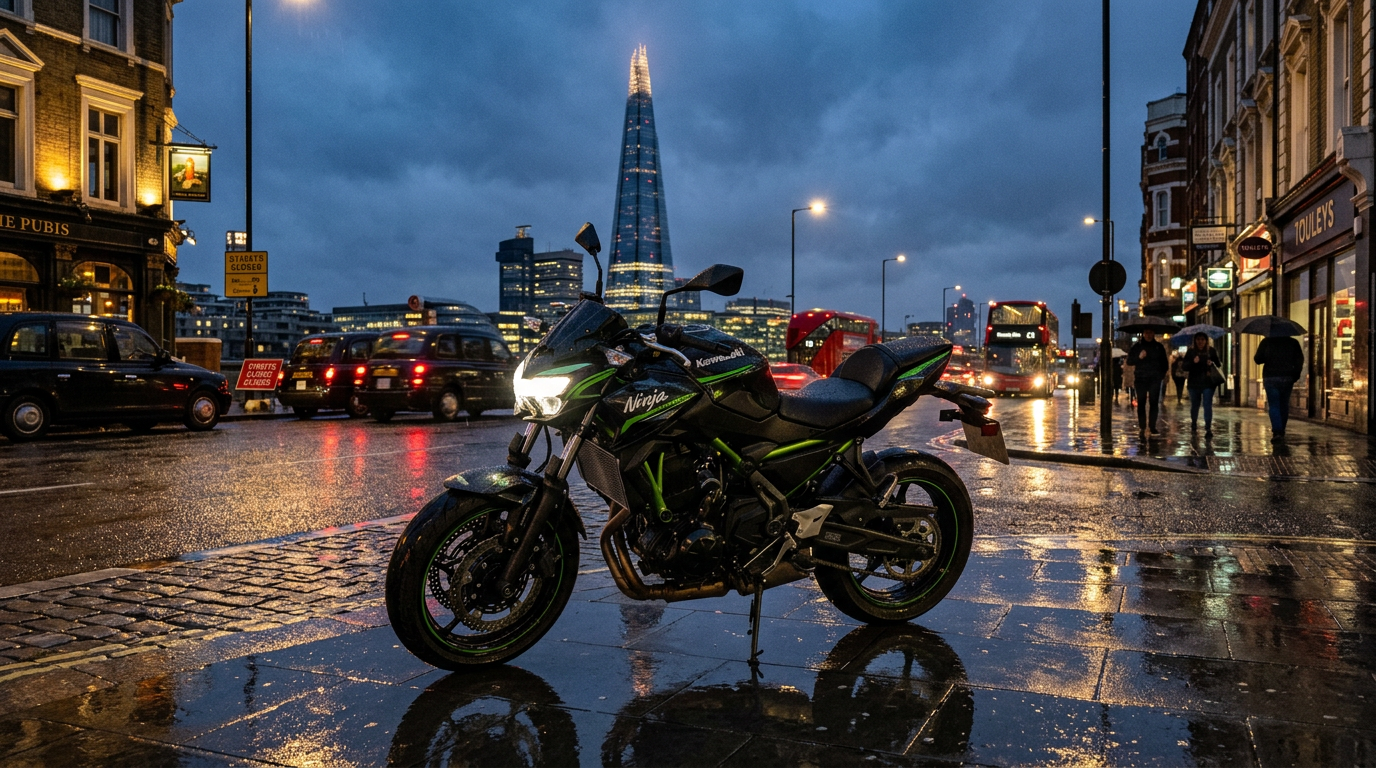
Since its debut, the Kawasaki Ninja 7 Hybrid (HEV) has been a polarising machine. In 2024, it was a technological curiosity; by 2026, it has become a staple of the UK used market for riders seeking the ultimate balance between inner-city efficiency and weekend performance. As London’s Ultra Low Emission Zone (ULEZ) and similar schemes in Birmingham and Bristol continue to tighten, the appeal of a bike that can whisper through city centres on electric power before opening up on the A-roads has never been higher.
In this review, we look at how the 2026 Kawasaki Ninja 7 Hybrid holds up as a used purchase, exploring its real-world MPG, reliability, and whether it truly is the best commuter bike for the modern UK landscape.
The Hybrid Concept: How It Works in 2026
The Ninja 7 Hybrid isn't just a gimmick. It pairs a 451cc parallel-twin internal combustion engine (ICE)—similar to that found in the Z500—with a 7kW traction motor and a 48V battery pack. The "7" in the name suggests it offers the performance of a 700cc-class machine while maintaining the fuel economy of a 250cc commuter.
For the UK rider, the standout feature is the e-boost function. When engaged, it provides a 5-second burst of power that allows this mid-sized bike to out-accelerate a 1,000cc superbike from a standing start—perfect for filtering to the front of the lights at a busy UK junction.
Three Distinct Riding Modes
- EV Mode: Full electric power. Maximum speed is roughly 40mph. Crucial for zero-emission zones and residential streets early in the morning.
- Eco-Hybrid Mode: The bike manages both power sources. The engine cuts out when you stop and restarts seamlessly. It features "Walk Mode" for easy parking.
- Sport-Hybrid Mode: Full power from both systems. This is where the Ninja 7 feels like a true sports-tourer.
Used Market Performance and Pricing
As we move through 2026, the first wave of PCP deals on 2024 and 2025 models are coming to an end. This has created a healthy supply of used Ninja 7 Hybrids on platforms like CarsLink.ai, where savvy riders are snapping them up to avoid the initial depreciation hit.
| Model Year | Est. Used Price (2026) | Typical Mileage | Insurance Group |
|---|---|---|---|
| 2024 (Gen 1) | £6,800 - £7,500 | 8,000 - 12,000 | 12 |
| 2025 | £8,000 - £8,800 | 4,000 - 7,000 | 12 |
| 2026 (New) | £11,500+ | 0 | 13 |
Real-World Range and Ninja 7 Hybrid MPG
One of the most common questions from UK commuters relates to fuel economy. In 2026, with fuel prices remaining a significant part of a rider's monthly budget, the Ninja 7 Hybrid offers a compelling argument.
In our 2026 range test across a mix of London commuting and M4 motorway stints, we observed the following:
- Urban (Stop-start traffic): Up to 95 MPG when utilising EV mode in queues.
- Mixed Commuting: A consistent 78-82 MPG.
- Sporting/Motorway: Drops to roughly 55 MPG if you’re heavy on the e-boost.
Compared to a traditional 650cc twin (like the Z650) which averages around 55-60 MPG, the Hybrid offers a 30-40% improvement for the daily rider.
Living with the Tech: Maintenance and Reliability
Prospective buyers often worry about the complexity of a hybrid system. However, by 2026, Kawasaki’s HEV platform has proven remarkably robust.
Battery Health: The 48V lithium-ion battery is designed for the life of the bike. Used buyers should check the service history to ensure firmware updates were performed by an authorised Kawasaki dealer. Unlike full EVs, the battery is relatively small and doesn't suffer the same range-anxiety issues in cold UK winters.
The Automated Manual Transmission: The bike features a button-shift manual gearbox with an automatic mode. There is no clutch lever. For traditionalists, this takes an hour to get used to, but for a UK rain-soaked commute through traffic, it is a revelation.
Maintenance Checklist for Used Buyers:
- Chain Maintenance: The bike is heavier than a standard 500cc (approx. 227kg), meaning chain wear can be accelerated if not lubed correctly.
- Software Updates: Ensure the "Automatic Return to First Gear" function is updated to the latest 2026 spec.
- Tyre Wear: The instant torque from the electric motor can be hard on the rear tyre. Check for squaring off.
Biking License and Insurance in the UK
The Ninja 7 Hybrid is an A2-compliant machine in its base form, but its performance in Sport-Hybrid mode punches well above that. For young riders or those on a restricted A2 license, this is arguably the fastest "legal" bike you can own.
Insurance groups are slightly higher than a standard Ninja 400 or 500 due to the cost of the hybrid components and the 48V battery. We recommend using a specialist broker if you live in high-theft areas like London or Manchester, as "Tech-heavy" bikes can sometimes carry a premium.
Is it the Best UK Commuter?
The competition in 2026 is fierce. You have the efficiency of the Yamaha TMAX 560 or the pure electric convenience of the BMW CE 04. However, the Ninja 7 Hybrid wins for two reasons: Verstaility and Vibe.
It is a "real" motorcycle. It handles like a Kawasaki. It looks like a Ninja. You can ride it from Brighton to London on electric power, and then take the long way home through the South Downs using the petrol engine to its fullest.
Pros:
- ULEZ Exemption: Future-proofed against inner-city bans.
- Fuel Economy: Class-leading for a bike with this much performance.
- E-Boost: Genuinely useful for safe overtaking and light-to-light sprints.
- No Clutch: Reduces fatigue in stop-start UK traffic.
Cons:
- Weight: at 227kg, it's heavier than a Ninja 650.
- Storage: Unlike a scooter, you’ll still need a top box or backpack.
- Used Price: Still commands a premium over traditional petrol rivals.
Conclusion: The Verdict
The 2026 Kawasaki Ninja 7 Hybrid represents the "Goldilocks" zone of modern biking. It isn't as limited as a pure EV, yet it is far more advanced than a standard ICE bike. For the UK rider who needs one machine to handle a 30-mile commute during the week and a blast through the twisties on Sunday, it is a masterclass in compromise.
Finding a quality used Ninja 7 Hybrid is now easier than ever. If you're ready to make the switch to hybrid power, start your search on CarsLink.ai. Our AI-driven platform helps you compare the latest listings from dealers and private sellers across the UK, ensuring you find a bike with the right service history and battery health for your budget.
Ready to find your next ride? Search Kawasaki Ninja 7 Hybrid models on CarsLink.ai today.