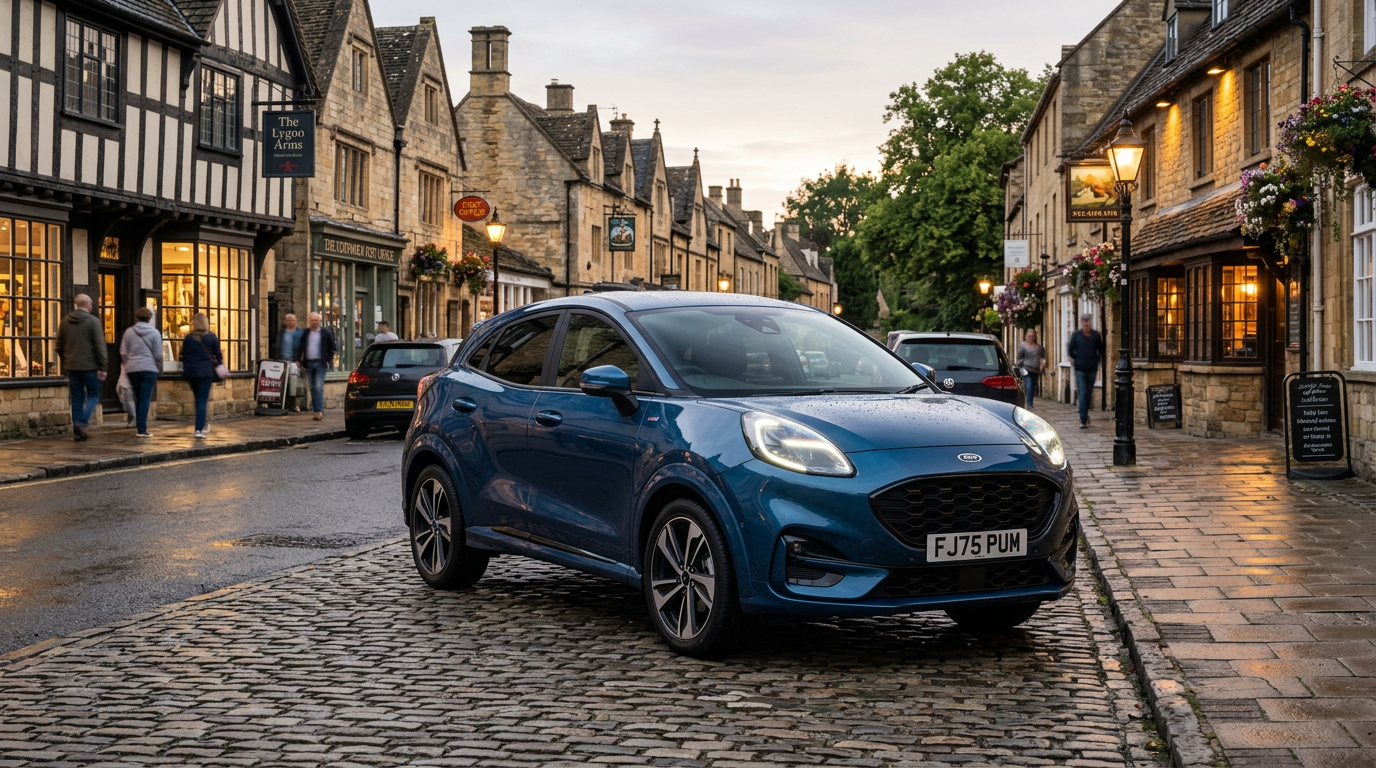
Entering 2026, the UK automotive landscape is undergoing its most significant shift since the invention of the internal combustion engine. With the ZEV mandate accelerating and fuel prices remaining stubbornly high, British buyers are more discerning than ever. Yet, one nameplate continues to tower over the sales charts: the Ford Puma. Since overtaking the Fiesta as the nation's sweetheart, the Puma has evolved from a quirky crossover into a sophisticated, hybrid-first powerhouse.
In this comprehensive review, we look at how the 2026 Ford Puma has refined its formula to remain the UK’s best-selling vehicle, balancing the demands of ULEZ compliance with the practical needs of the British family.
The 2026 Evolution: Styling and Tech
The 2026 model year represents a significant mid-cycle refresh for the Puma. While the silhouette remains familiar, Ford has sharpened the LED signature lighting (now Matrix LEDs as standard on ST-Line and above) and integrated the 'Blue Oval' badge more prominently into the grille.
Inside, the cabin has seen a major digital overhaul. The 12.8-inch digital instrument cluster is now standard across the range, complemented by the latest SYNC 4 infotainment system on a 12-inch central touchscreen. For UK drivers navigating narrow city streets or tight multi-storey car parks in Manchester or London, the improved 360-degree camera system is a welcome upgrade.
Mild Hybrid vs. Full Hybrid: Which should you choose in 2026?
The biggest talking point for 2026 is the refined powertrain line-up. Ford has effectively phased out pure petrol engines in favour of a two-pronged hybrid strategy.
1.0L EcoBoost Mild Hybrid (mHEV)
The entry point remains the 1.0-litre three-cylinder mHEV, available in 125PS and 155PS outputs. This system uses a belt-driven integrated starter/generator (BISG) to capture energy during deceleration and provide a boost during acceleration.
- Best for: Buyers focused on a lower purchase price and those who do plenty of motorway miles.
1.5L Full Hybrid (FHEV) - The New Standard
New for the 2026 refresh is the expanded availability of the Full Hybrid powertrain. Unlike the mHEV, this can propel the car on electricity alone for short distances, particularly in heavy urban traffic.
- Best for: City dwellers and commuters in ULEZ-regulated zones who aren't ready for a full EV.
| Feature | 1.0mHEV (125PS) | 1.0mHEV (155PS) | 1.5 FHEV (Full Hybrid) |
|---|---|---|---|
| 0-62 mph | 9.6 Seconds | 8.7 Seconds | 8.2 Seconds |
| WLTP Combined MPG | 52.3 mpg | 49.6 mpg | 61.4 mpg |
| CO2 Emissions | 121 g/km | 128 g/km | 104 g/km |
| VED (Year 1) | £210 | £210 | £165 |
Puma Hybrid Real-World MPG: What to Expect
While official WLTP figures offer a baseline, UK roads—from the hilly Peak District to the stop-start traffic of the M25—demand real-world interrogation.
In our testing, the 1.0mHEV 125PS consistently delivers 46–48 mpg in mixed driving. However, the 1.5 FHEV is the star for 2026. In urban environments, we've seen it hover around 58 mpg, dipping only slightly to 52 mpg on long motorway hauls. For traders and dealers, these figures are a primary selling point, as fuel economy remains the number one priority for used car buyers on platforms like CarsLink.ai.
Practicality: The Megabox Advantage
One reason the Puma keeps its crown is the 'Megabox'. In a market saturated with compact SUVs, the Puma’s 80-litre underfloor storage compartment remains a stroke of genius. It features a drainage plug, meaning you can wash out mud after a rainy walk in the Cotswolds or store wet sports gear without ruining the carpets.
With the rear seats up, you get 456 litres of space, which rivals cars in the class above. For small families, it comfortably manages a buggy and the weekly shop—a feat many of its rivals, like the Nissan Juke or Vauxhall Mokka, struggle to match with as much ease.
Ownership Costs: Insurance and Tax
The 2026 Puma is designed to be affordable to run.
- Insurance Groups: Most models fall between groups 12 and 19, making it accessible for younger families.
- Road Tax (VED): As all models are now electrified, they qualify for the alternative fuel discount, though the £10 saving is modest.
- Maintenance: Ford’s vast dealer network in the UK ensures that parts are readily available and servicing costs are predictable—a vital factor for both private owners and fleet managers.
The Dealer Perspective: Why Pumas Fly Off the Forecourt
For traders and dealerships using CarsLink.ai, the Ford Puma is "forecourt gold." Its high residual value means PCP (Personal Contract Purchase) deals remain competitive. In 2026, a three-year-old Puma is expected to retain approximately 55-60% of its value, significantly higher than many French or Korean competitors.
Brokers are seeing high demand for the 'ST-Line X' trim, which strikes the perfect balance between sporty aesthetics and luxury features like the B&O sound system and powered tailgate.
Verdict: Is it still the King?
The 2026 Ford Puma isn't trying to reinvent the wheel; it’s just perfecting it. By leaning harder into full hybrid technology while keeping the driver-focused chassis that Ford is famous for, it manages to feel both sensible and fun.
It handles more like a nimble hatchback than an upright SUV, yet offers the elevated driving position that UK buyers crave. While the competition from the likes of the Kia Stonic and Toyota Yaris Cross is fiercer than ever, the Puma’s blend of British-favoured styling, clever practicality, and updated tech keeps it at the top.
Looking for a 2026 Ford Puma? Whether you are a dealer looking to refresh your stock or a buyer searching for the best hybrid deals, use the AI-powered search at CarsLink.ai to find the perfect match across the UK market today.