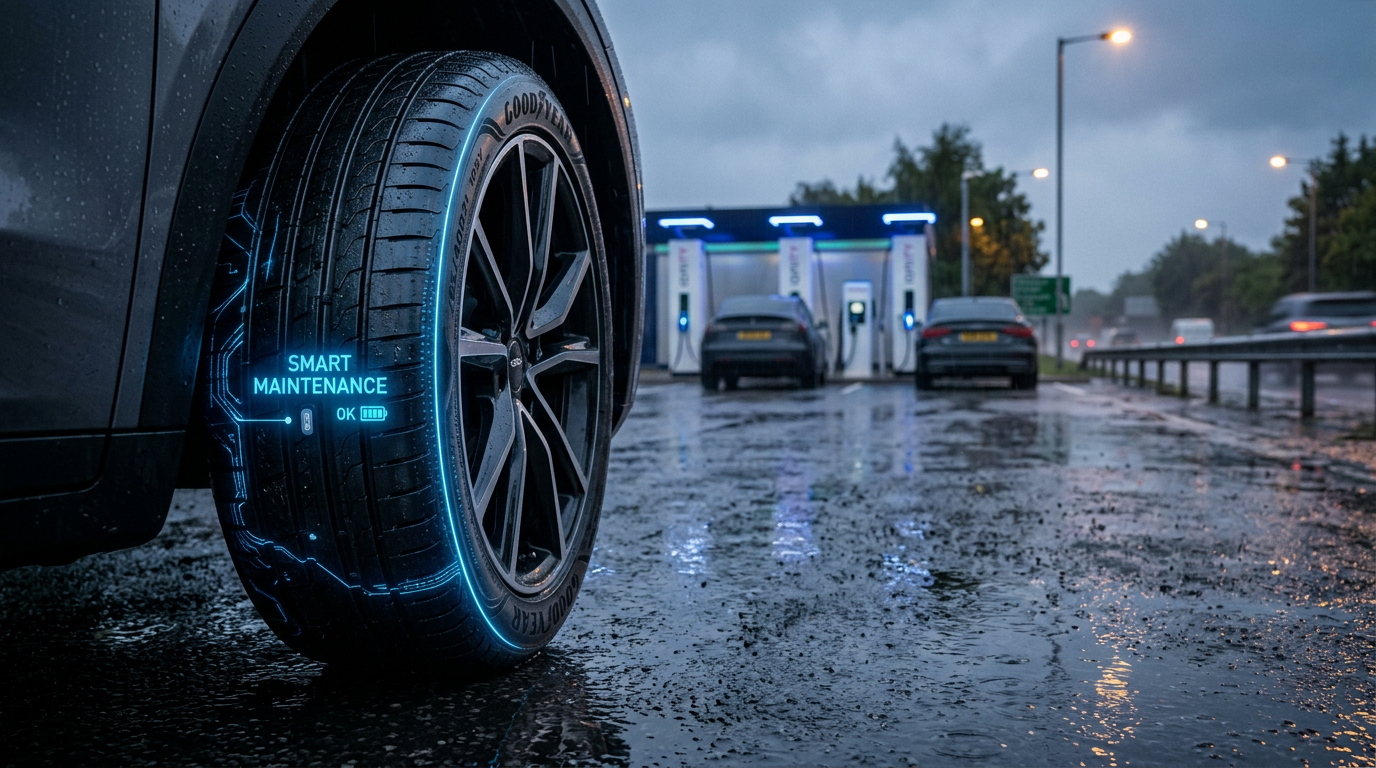
For years, the narrative surrounding electric vehicles (EVs) focused on lower running costs: no petrol bills, fewer moving parts, and lower servicing requirements. However, as we move through 2026, a new reality has set in for UK motorists. While you might be saving on spark plugs and oil changes, your tyres are working harder than ever.
Recent industry data suggests that EV owners in 2026 are experiencing up to 30% faster tyre wear compared to traditional internal combustion engine (ICE) vehicles. With the average cost of high-performance EV tyres rising, understanding why this happens and how to mitigate it is essential for protecting your wallet and your safety.
The Science: Why Do EVs Shred Tyres Faster?
It isn't a design flaw; it’s physics. Even the most efficient EVs on the UK market today face three primary challenges that accelerate rubber degradation.
1. The Weight Penalty
Batteries are heavy. A typical family electric SUV, such as a 2026 Hyundai Ioniq 5 or Tesla Model Y, can weigh between 400kg and 600kg more than a comparable petrol crossover. This constant downward force increases the 'contact patch' friction every time the wheel turns.
2. Instant Torque and Regenerative Braking
Unlike a petrol engine that builds power gradually, an electric motor delivers 100% of its torque instantly. Even if you aren't 'flooring it' at every green light, the micro-slips occurring during standard acceleration wear away the tread. Similarly, aggressive regenerative braking puts reverse stress on the tyre carcass, doubling the workload compared to a car that simply coasts.
3. Tyre Composition
To maximise range, manufacturers often use 'Low Rolling Resistance' (LRR) tyres. While these help you squeeze more miles out of a single charge, the stiffer sidewalls and specific rubber compounds can sometimes lead to faster wear if not perfectly maintained.
Comparing Tyre Lifespans: 2026 Market Data
To put the heavy EV tyre wear into perspective, let’s look at the average mileage expectations for a mid-range tyre in 2026.
| Vehicle Type | Average Front Tyre Life (Miles) | Average Rear Tyre Life (Miles) | Estimated Replacement Cost (Set of 4) |
|---|---|---|---|
| Petrol Hatchback (e.g., VW Golf) | 25,000 - 30,000 | 35,000+ | £450 - £600 |
| Electric Hatchback (e.g., MG4) | 18,000 - 22,000 | 22,000 - 25,000 | £650 - £850 |
| Luxury Electric SUV (e.g., BMW iX) | 12,000 - 16,000 | 15,000 - 18,000 | £1,100 - £1,500 |
Note: Prices include VAT and fitting at 2026 UK market rates.
Essential Car Tyre Maintenance 2026: 5 Expert Tips
If you want to beat the 30% wear statistic, you need a proactive maintenance strategy. At CarsLink.ai, we help users track their total cost of ownership, and tyre longevity is a massive part of that equation.
1. Mastering EV Tyre Pressure Tips
The most common cause of premature wear is incorrect inflation. Because EVs are heavy, a drop of just 3-5 PSI can cause the sidewalls to flex excessively, leading to 'shoulder wear' and overheating.
- Check monthly: Do not rely solely on the Tyre Pressure Monitoring System (TPMS) dashboard light; by the time it illuminates, damage may already have occurred.
- Load adjustment: If you are taking the family on a road trip with a full boot, refer to your door pillar sticker to adjust pressures for the extra weight.
2. The 'Rotate and Balance' Rule
Given that EVs often wear front or rear tyres at different rates (depending on whether they are FWD, RWD, or AWD), we recommend rotating your tyres every 5,000 to 7,000 miles. This ensures even tread depth across all four corners, potentially extending the life of the set by an extra year.
3. Wheel Alignment is Non-Negotiable
The UK’s pothole-ridden roads are particularly cruel to heavy EVs. A slight misalignment in your tracking can scrub off 2mm of tread in a single cross-country trip. If you notice your steering wheel isn't perfectly centred, get a laser alignment immediately.
4. Choose EV-Specific Rubber
It is tempting to fit cheaper, standard tyres during an MOT or service. However, standard tyres aren't built for the load index of an EV. Look for the 'HL' (High Load) marking or specific manufacturer stamps (like Michelin's 'E-Primacy' or Continental's 'EcoContact 6'). These are engineered with reinforced sidewalls to handle the battery weight.
5. Review Your Driving Mode
Using 'Sport' mode daily is the fastest way to increase your electric car tyre cost in the UK. Switching to 'Eco' or 'Normal' dampens the initial torque delivery, which protects the rubber during pull-offs.
The Legal and Financial Stakes: MOTs and V5C
As of 2026, the DVLA and DVSA have increased scrutiny on tyre condition during MOT tests. With the heavier weight of EVs, 'cord exposure' and 'sidewall bulging' are becoming more frequent failure points.
Failing to maintain your tyres doesn't just risk a £2,500 fine and 3 pins on your licence per tyre; it can also void your insurance in the event of an accident. Furthermore, if you are returning a car at the end of a PCP or PCH agreement, excessive tyre wear will result in hefty end-of-contract charges.
How CarsLink.ai Can Help
Maintaining an EV in 2026 requires more than just plugging it in. At CarsLink.ai, we provide owners with real-time insights into vehicle health and depreciation. By monitoring your mileage and service intervals through our platform, you can stay ahead of maintenance needs, ensuring your EV remains as cost-effective as promised.
Summary
The 30% faster wear rate is a significant hurdle for EV adoption, but it isn't unavoidable. By choosing the right compounds, maintaining strict pressure regimes, and adjusting your driving style, you can bring your tyre lifespan back in line with traditional vehicles.
Are you looking to upgrade to a newer EV with better efficiency, or perhaps sell your current car before the next tyre change is due? Visit CarsLink.ai today for an instant valuation and to explore the best deals on the 2026 UK market.