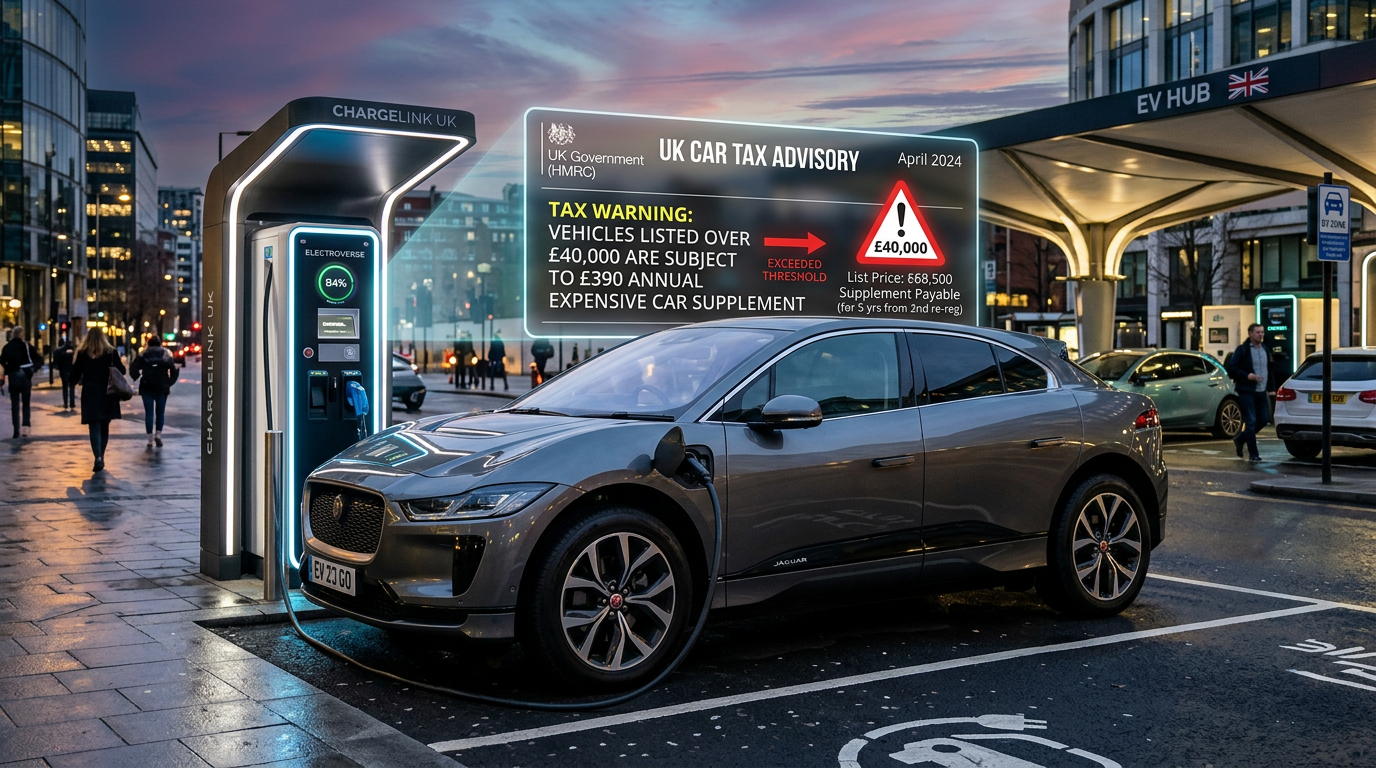
As we move further into 2026, the landscape for electric vehicle (EV) ownership in the UK has shifted dramatically. Gone are the days of zero-rated Vehicle Excise Duty (VED) as a reward for going green. While most EV drivers have now adjusted to paying the standard annual rate, a secondary, more expensive hurdle is catching out thousands of premium car buyers: the 'Expensive Car Supplement'.
If you are browsing CarsLink.ai for a high-end electric SUV or a performance saloon, understanding how the £40,000 threshold affects your wallet is essential. This isn't just a first-year cost; it’s a five-year financial commitment that can add thousands to your total cost of ownership.
What is the 'Luxury' Road Tax Trap?
Historically, electric vehicles were exempt from both the standard rate of VED and the Additional Rate (the 'Expensive Car Supplement'). However, following the Chancellor's previous Autumn Statement, the rules aligned for all fuel types in April 2025.
In 2026, if you register a new EV with a list price of more than £40,000, you are liable for the Expensive Car Supplement.
How the Costs Break Down in 2026
For the first year of registration, EVs currently pay a nominal rate based on emissions (which remain 0g/km). However, from the second time a vehicle is taxed (the second year) until the end of the sixth year, owners of premium EVs must pay:
- ** The Standard Rate:** £190 (subject to annual RPI adjustment).
- The Expensive Car Supplement: £410 (fixed additional fee).
- Total Annual Cost: Approximately £600 per year.
Compare this to a car priced at £39,999, which only incurs the £190 standard rate, and the 'trap' becomes clear. Over the five-year surcharge period, owning a car that tips just over the limit will cost you an extra £2,050 in road tax.
The 'List Price' Warning: It’s Not What You Paid
One of the most common mistakes buyers make is assuming the tax is based on the negotiated price or the 'on-the-road' (OTR) price after discounts. This is incorrect.
The DVLA calculates the supplement based on the official list price (Published Price) on the day before the car is first registered.
- Options Count: If the base car is £38,000 but you add £2,500 worth of alloy wheels, a premium metallic paint, and a panoramic sunroof, your car is now a "Luxury" vehicle in the eyes of the taxman.
- Delivery Charges: The list price includes VAT, any factory-fitted options, and delivery charges.
- Dealer Discounts: Even if you use CarsLink.ai to find a brilliant deal that brings the price you pay down to £37,000, if the manufacturer's list price was £41,000, you are still liable for the supplement.
EV Road Tax 2026: Comparison Table
| Vehicle List Price | Standard VED (Years 2-6) | Expensive Car Supplement | Total Annual VED | Total Paid Over 5 Years |
|---|---|---|---|---|
| £39,500 | £190 | £0 | £190 | £950 |
| £40,500 | £190 | £410 | £600 | £3,000 |
Used EVs: Does the Trap Apply or Does it Reset?
If you are buying a used EV in 2026, you must check the V5C logbook or use the government's online tax checker. The supplement follows the vehicle, not the owner.
If the car was originally registered with a list price over £40,000, every subsequent owner must pay the £410 supplement until the car is six years old. When browsing used stock on CarsLink.ai, always verify the original list price to ensure you haven't inherited a £600-a-year tax bill.
Pro Tip: Look for "Ex-Demo" cars that were registered just under the limit. If a car is 6 years and 1 day old, the supplement disappears, and the tax drops back down to the standard rate.
Strategic Electric Car Buying Tips for 2026
To avoid the luxury tax trap without sacrificing the EV experience, consider these strategies:
1. The 'Trim Level' Tactic
Many manufacturers are now aware of this threshold and price their 'mid-range' trims at exactly £39,995. Be extremely careful when adding optional extras at the dealership. If the option is factory-fitted, it adds to the list price. If it is dealer-fitted (like a dashcam or different floor mats fitted after registration), it usually doesn't.
2. Focus on Efficiency Over 'Bolted-on' Luxury
Since range and charging speeds are the most important metrics for EVs in 2026, look for models that offer high-density battery tech in a lighter, lower-trim chassis. You might find a Long Range model that sits under £40k, whereas a 'Performance' model with larger wheels and leather seats might push you into the £600-a-year bracket.
3. Salary Sacrifice and BIK
While VED is a personal cost, if you are a company car driver, the £40,000 threshold is less of a concern than the Benefit-in-Kind (BIK) rates. For 2026/27, BIK for EVs has risen to 4%. While this is still incredibly low compared to petrol (often 30%+), it's a reminder that the "free ride" for EVs is narrowing.
4. Check the "6-Year Rule"
If you are looking at a high-end EV from 2021 or 2022, check its registration date. We are approaching the point where the first wave of premium EVs will see their supplement expire, making them significantly cheaper to tax for their second or third owners.
Summary: Is the Premium Worth It?
The £40,000 threshold hasn't moved in years, despite significant inflation in car prices. In 2026, £40k no longer buys a "luxury" car; it buys a standard family EV. This 'fiscal drag' means more buyers than ever are falling into the supplement trap.
When you're ready to make the switch or upgrade your current electric ride, use CarsLink.ai to compare specs and prices. Just remember: that £500 metallic paint option could actually cost you £2,500 over the next five years.
Ready to find your next EV? Browse thousands of verified listings and stay ahead of the latest UK motoring regulations at CarsLink.ai. Whether you're looking for a tax-efficient commuter or a high-performance flagship, we help you drive smarter.