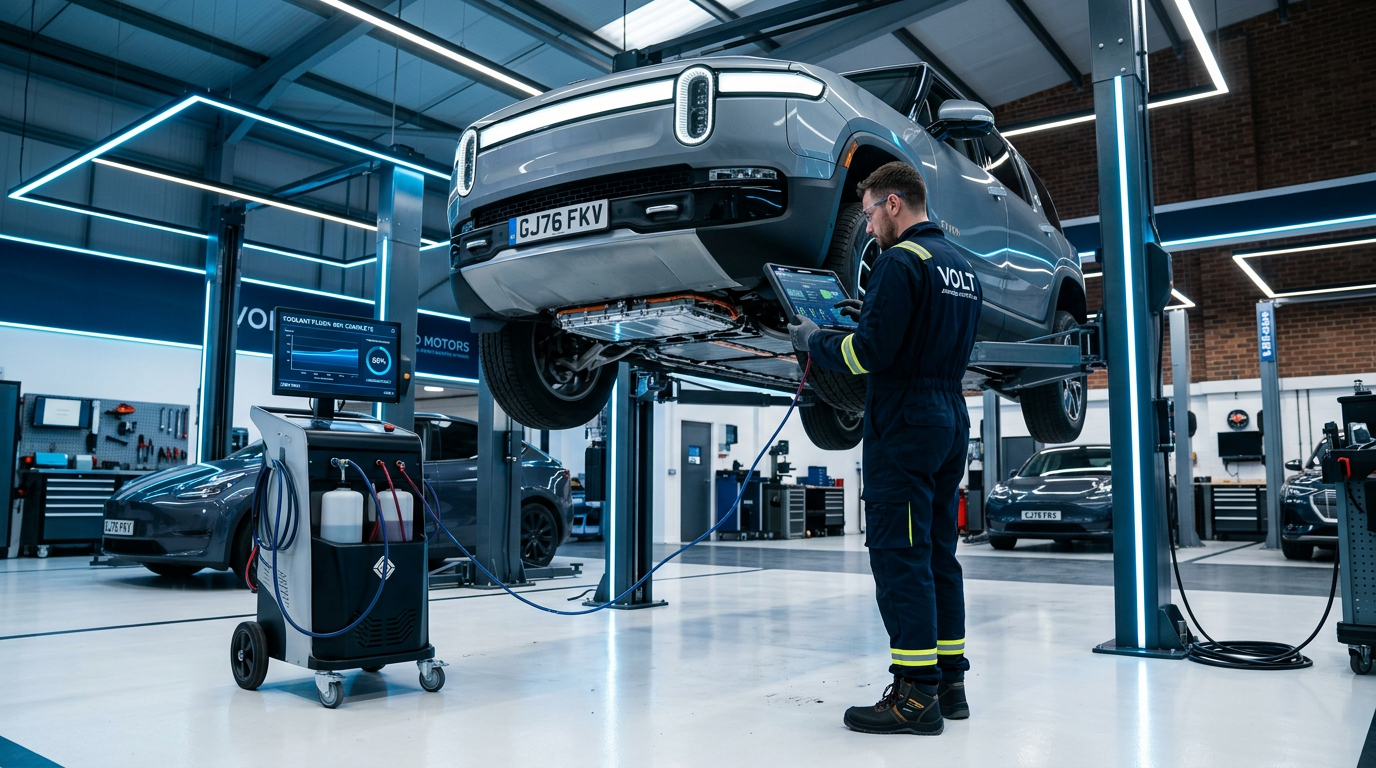
As we move through 2026, the UK’s electric vehicle (EV) landscape has matured significantly. With hundreds of thousands of EVs now entering their fourth or fifth year on the road, many owners are facing maintenance requirements that go beyond the usual tyre checks and cabin filters.
One of the most critical, yet frequently overlooked, aspects of long-term EV health is thermal management. While internal combustion engine (ICE) cars need oil changes to survive, electric cars rely on their cooling systems to protect the most expensive component in the vehicle: the high-voltage battery.
In this guide, we explore everything you need to know about the EV coolant flush, why it's vital for your car's longevity, and how requirements differ across the UK's most popular models in 2026.
Why Do EVs Need Coolant?
In a petrol or diesel car, coolant prevents the engine from melting. In an EV, the liquid cooling system has a more complex job. It must maintain the battery pack within a "Goldilocks zone"—typically between 15°C and 35°C—regardless of whether you are stuck in a February frost in the Highlands or rapid charging at a motorway service station during a summer heatwave.
The coolant, often a specialised low-conductivity dielectric fluid, circulates through plates beneath or between the battery cells. It also manages heat for the power electronics (inverters) and the electric motors.
Why flushing matters in 2026
Over time, the chemical inhibitors in the coolant break down. This can lead to:
- Sediment build-up: Debris can clog the narrow cooling channels within the battery pack.
- Reduced efficiency: Degraded coolant is less effective at transferring heat, leading to slower rapid-charging speeds.
- Corrosion: Failing inhibitors can allow the fluid to become acidic, potentially damaging internal seals or pump components.
When Does Your Battery Coolant Need Flushing?
Unlike an oil change, which is usually annual or every 10,000 miles, EV coolant intervals vary wildly between manufacturers. By 2026, we have a clearer picture of these schedules as more vehicles undergo their first major cooling services.
| Manufacturer | Typical Coolant Flush Interval | Estimated Cost (2026) |
|---|---|---|
| Tesla (Model 3/Y) | "Life-time" (Inspected every 2-4 years) | £250 - £400 |
| Hyundai / Kia | Every 40,000 miles or 4 years | £180 - £300 |
| Nissan (Leaf) | Every 60,000 miles or 5 years | £150 - £250 |
| Volkswagen (ID Series) | Every 2 years (Inspection), Flush as required | £200 - £350 |
| BMW (i4 / iX) | Condition-based (typically 4-6 years) | £300+ |
Note: Always refer to your vehicle’s digital service record or the manufacturer’s app for your specific VIN requirements.
The 2026 "Blue vs. Pink" Dilemma
One of the biggest pitfalls for used EV buyers in 2026 is the use of incorrect fluids. Many modern EVs, particularly those from Hyundai and Kia, use a highly specialised Low Conductivity Coolant.
If a non-specialist garage tops up your system with standard "off-the-shelf" pink or blue antifreeze meant for a Ford Fiesta, it can trigger a dashboard warning or, in extreme cases, increase the risk of a short circuit if there is a minor internal leak. When booking an EV maintenance 2026 service, ensure the workshop uses the specific fluid grade required for your battery type.
Signs Your Thermal Management System Needs Attention
In many cases, your car won't wait for the service interval to tell you something is wrong. Watch out for these red flags:
- Reduced Rapid Charging Speeds: If your car usually peaks at 150kW but is now struggling to hit 50kW on a clear day, the thermal management system may be struggling to keep the battery cool during the high-current intake.
- Loud Fan Noise: While some noise during charging is normal, if the cooling fans are running at maximum speed during gentle driving, the system may be inefficient due to old fluid.
- Warning Lights: Any alert regarding the "Electrical System" or "Cooling System" should be investigated immediately by an IMI-certified technician.
How a Coolant Flush Affects Your MOT and Warranty
While the MOT test does not technically check the chemical composition of your battery coolant (it focuses on leaks and hose security), neglecting the manufacturer's cooling schedule can have dire financial consequences.
In 2026, battery warranties—typically 8 years or 100,000 miles—remain the single most important safety net for EV owners. If a battery module fails and the manufacturer discovers that the coolant was never changed according to the schedule, they may have grounds to void your warranty. Using a platform like CarsLink.ai can help you track your service history and find dealers who specialise in certified EV maintenance, ensuring your warranty remains airtight.
The Cost of Neglect vs. Maintenance
An EV coolant flush in 2026 typically costs between £150 and £450, depending on the volume of fluid and the complexity of the "bleeding" process (which often requires a diagnostic computer to run the pumps in a specific sequence).
Compare this to the cost of a modern battery pack replacement, which can still range from £8,000 to £15,000. Ensuring your battery cooling system service is performed on time is essentially an insurance policy for your car’s most vital organ.
Professional Servicing is Non-Negotiable
Early DIY pioneers might have topped up their own radiators, but 2026 EVs are high-voltage machines. Flushing the coolant often involves:
- De-energising the high-voltage system (in some models).
- Using vacuum filling tools to ensure zero air bubbles are trapped in the battery plate.
- Software resets to recalibrate the thermal sensors.
For these reasons, always choose a garage with technicians qualified to IMI Level 3 or 4 in Electric/Hybrid Vehicle System Repair.
Conclusion
As the UK moves closer to the 2030s, the "maintenance-free" myth of the electric car is being replaced by a more nuanced understanding of electric car thermal management. While you’ll never have to worry about oil filters or spark plugs, the health of your battery is directly tied to the quality of its coolant.
Keeping your records updated and choosing the right fluids will not only protect your range but also preserve the resale value of your vehicle.
Are you looking to upgrade to a newer EV with a fresh service history? Or perhaps you're a dealer looking for the latest market insights? Visit CarsLink.ai for the most up-to-date tools and listings in the UK automotive digital space.
Summary for Owners:
- Check your manual for the 4-year or 40k-mile mark.
- Only use manufacturer-approved low-conductivity fluids.
- Ensure your service provider is EV-qualified to protect your 8-year battery warranty.