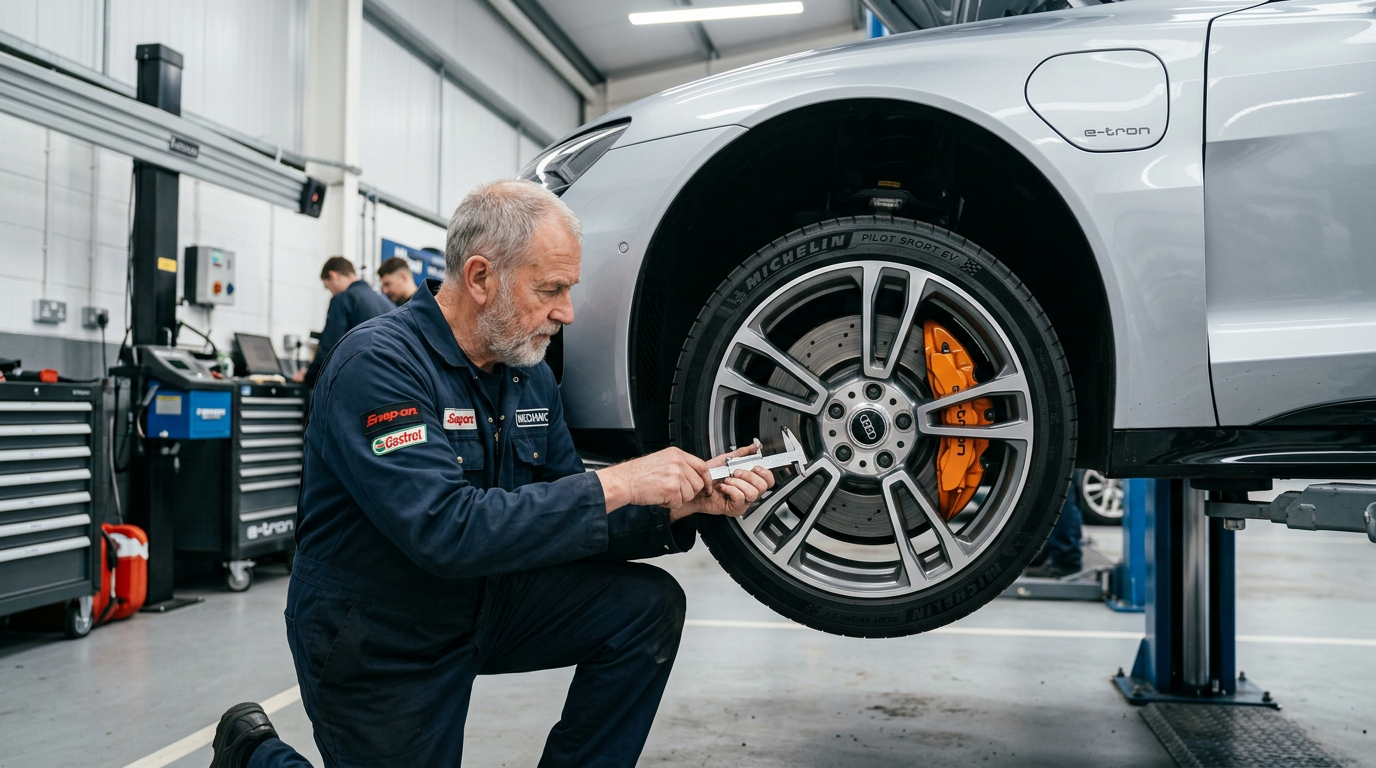
As we move further into 2026, the UK used car market is increasingly dominated by second-hand electric vehicles (EVs). While early adopters touted the "maintenance-free" nature of electric drivetrains, a hard truth has emerged for the thousands of drivers transitioning from petrol to plug-in: your brakes need more attention, not less.
In 2026, the DVLA and road safety organisations have noted a rising trend in MOT failures related to brake seizing and corrosion in EVs. This guide explains why the unique way an EV stops—and the weight it carries—makes a yearly brake check a non-negotiable part of your ownership routine.
The Regenerative Braking Paradox
The primary reason EV owners neglect their brakes is regenerative braking. In 2026, modern EVs like the Tesla Model 3, Hyundai Ioniq 6, and Volkswagen ID.4 offer sophisticated "one-pedal driving" modes.
When you lift off the accelerator, the electric motor reverses its function, acting as a generator to put energy back into the battery. This slows the car down significantly without you ever touching the brake pedal. While great for efficiency, it creates a hidden problem.
1. Corrosion and Seizing
In a standard internal combustion engine (ICE) car, every stop involves the brake pads clamping onto the discs. This friction clears away surface rust, road salt, and grime. Because an EV uses its friction brakes so sparingly, moisture accumulates on the discs. In the damp UK climate, this leads to pitted discs and seized calipers. By the time you actually need to slam on the brakes in an emergency, they may not perform at 100% efficiency.
2. Brake Fluid Degradation
Even if the pads look brand new, the brake fluid is working just as hard. Brake fluid is hygroscopic (it absorbs water). Even in 2026, the standard recommendation remains to flush the system every two years. On an EV, where the friction system is a "backup," ensuring that fluid hasn't degraded is critical for safety.
EV Weight: The Silent Killer of Tyres and Discs
The average EV in 2026 weighs roughly 25-30% more than its petrol equivalent due to the heavy battery pack. This mass creates immense kinetic energy.
| Feature | Typical Petrol Hatchback | Typical EV Hatchback (2026) |
|---|---|---|
| Average Weight | 1,350kg | 1,850kg |
| Brake Usage | Frequent | Low (High Regen) |
| Risk Factor | Wear and Tear | Corrosion & Seizing |
| Tyre Wear | Standard | High (Instant Torque) |
When you do use the friction brakes (under heavy braking or when the battery is at 100% and cannot accept more energy), the load on the pads and discs is significantly higher. If those components have been weakened by corrosion, the risk of "brake fade" increases.
EV Technician Costs UK: What to Expect in 2026
Maintenance costs for EVs have stabilised as more independent garages invest in high-voltage training and specialist tools. However, you should still budget for a professional inspection.
- Standard Brake Inspection: £50 - £80
- Full Brake Service (Cleaning & Lubrication): £120 - £180
- Brake Fluid Flush: £70 - £100
- Replacement Pads & Discs (Axle): £350 - £600 (depending on model)
While EV technician costs UK have become more competitive, it is vital to ensure your mechanic is IMI (Institute of the Motor Industry) certified to work on electric vehicles. Checking your vehicle’s history on CarsLink.ai can help you see if previous owners kept up with these specialist services.
The 2026 Electric Car MOT: A Stricter Landscape
The Department for Transport (DfT) has tightened MOT regulations for 2026. With the "Vision Zero" safety goals in mind, MOT testers are now paying closer attention to "non-use" defects.
A common reason for an electric car MOT 2026 failure is unbalanced braking force. If one caliper has seized slightly due to lack of use, your car will pull to one side under heavy braking. This is an automatic fail. A yearly check-up ensures that moving parts are lubricated and sliding freely, saving you the headache of a "Major" defect on your V5C record.
Steps for the Savvy Used EV Owner
If you have recently purchased a used EV, or are looking at listings on CarsLink.ai, here is your 2026 brake maintenance checklist:
- The "Mechanical Clean": Once a week, find a safe, clear stretch of road. Ensure no one is behind you, put the car in 'Neutral' (which usually disables regen), and apply the brakes firmly. This forces the friction brakes to engage and clears off surface oxidation.
- Visual Check: Look through your alloy wheels. Are the discs shiny, or do they look like a rusted antique? If they are heavily grooved or orange with rust, get them checked.
- Listen: Squealing isn't just for old bangers. In an EV, a high-pitched metallic sound often means a caliper is sticking.
- Annual Professional Service: Do not wait for the MOT. Ask your technician for a "brake strip and clean." They will take the pads out, clean the carrier brackets, and grease the slider pins.
Summary
In 2026, the transition to electric mobility is well underway, but the laws of physics haven't changed. While EVs save you money on road tax and fuel, the "set it and forget it" mentality can be dangerous when it comes to stopping power.
A yearly brake service is the cheapest insurance policy you can buy for your electric car. It ensures that when you need to stop, your 1.8-tonne vehicle does exactly what it's told.
Looking for a well-maintained used EV? Browse the latest verified listings and check service histories at CarsLink.ai today. Ensure your next move into the electric era is a safe one.