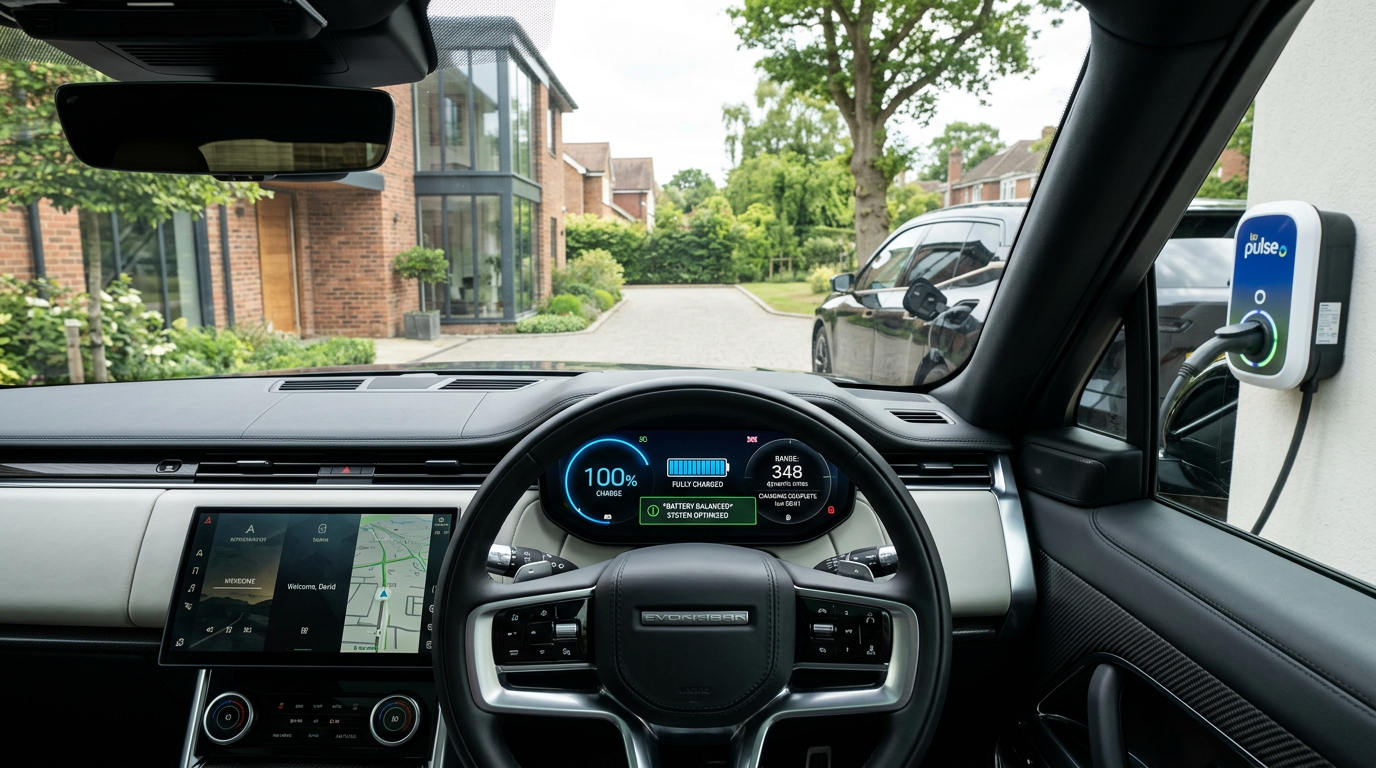
As we midway through 2026, the UK’s transition to electric mobility is in full swing. With the 2030 deadline for the end of new petrol and diesel car sales approaching, millions of UK drivers are now navigating the world of lithium-ion maintenance. While most owners know about the '20-80%' rule, there is a technical process happening behind the scenes that is crucial for your car’s longevity: EV battery balancing.
If you've noticed your range slightly decreasing or your state-of-charge (SoC) percentage jumping unexpectedly, your battery cells might be out of sync. In this guide, we’ll explain how to master battery balancing to ensure your EV remains a high-value asset for years to come.
What is EV Battery Balancing?
An electric vehicle battery pack isn't one giant battery; it is composed of thousands of individual cells arranged in modules. For the car to operate efficiently, every cell needs to hold the same voltage.
Over time, due to manufacturing variances, heat exposure, and different charging habits, some cells become "stronger" than others. Imagine a team of rowers; if one person pulls harder than the rest, the boat swerves. In an EV, if one cell reaches 'empty' before the others, the Battery Management System (BMS) must shut down the entire pack to protect that cell, even if the others have 10% energy left. This results in "lost" range.
EV battery balancing is the process where the BMS equalises the voltage across all cells, ensuring you can access the full capacity of the pack.
Why Balancing Matters More in 2026
With the rise of ultra-rapid 350kW chargers across the UK motorway network, many drivers have moved away from slow overnight charging. While convenient, constant rapid charging is the primary cause of cell imbalance. By the time an EV reaches its first MOT at three years old, a pack that hasn't been balanced regularly could show 3-5% more degradation than a well-maintained one.
At CarsLink.ai, we’ve observed that EVs with documented "healthy" charging cycles—including regular balancing—hold significantly higher resale values on the used market.
How to Balance Your EV Battery: Step-by-Step
Fortunately, you don't need a mechanic to balance your battery. The car does it for you, but only under specific conditions.
1. The 100% Rule (For NMC Batteries)
Most EVs use Nickel Manganese Cobalt (NMC) batteries. For these, the BMS typically balances the cells only when the battery is near 100%.
- Action: Once every few weeks (or every 1,000 miles), charge your car to 100% using a Home Wallbox (AC charging).
- The "Soak" Period: Once the car hits 100%, leave it plugged in for an extra 1-2 hours. You may notice the car says "Finishing" or "Initialising" on the dashboard; this is the BMS micro-adjusting the cell voltages.
2. The LFP Exception
If you drive a Tesla Model 3 RWD, an MG4, or many of the newer 2026 budget-friendly EVs from BYD, you likely have a Lithium Iron Phosphate (LFP) battery.
- Action: LFP batteries require a 100% charge at least once a week. Because LFP voltage curves are very flat, the BMS can only accurately "see" the state of the cells when they are full.
3. Avoid "Deep Cycling"
While it’s good to charge to 100% for balancing, try not to let the car sit at 100% for days, especially in summer heat. Balance the battery the night before a long trip.
The Impact on UK Road Tax and Resale
Currently, in 2026, the UK government has implemented the planned VED (Road Tax) changes for EVs. Since we are now paying to stay on the road, maintaining the efficiency of our vehicles is more important than ever.
When it comes time to sell, a potential buyer will look at your V5C, service history, and increasingly, a SOH (State of Health) report. A battery that has been regularly balanced will show a more stable discharge curve during a diagnostic test, potentially adding hundreds of pounds to your car's valuation on CarsLink.ai.
Comparison: Balanced vs. Imbalanced Battery Hub
| Feature | Balanced Battery | Imbalanced Battery |
|---|---|---|
| Usable Range | Maximum advertised potential | 5-10% reduction |
| Power Delivery | Consistent until <5% SoC | Potential "Limp Mode" at 10-15% |
| Charging Speed | Hits peak curves reliably | May throttle early to protect weak cells |
| Estimated Life | 15-20 years | 10-12 years before significant degradation |
UK EV Charging Tips for 2026
- Mind the Heat: Avoid balancing your battery immediately after a long motorway run in high temperatures. Let the pack cool down for an hour before plugging in for a "deep" balance charge.
- Use Off-Peak Credits: Many UK energy providers now offer "Intelligent" tariffs. Use these to perform your 100% balance charge overnight when the grid is greenest and cheapest.
- Check your App: Most modern EV apps (Audi, Hyundai, Kia, etc.) will now send a notification saying "Battery Maintenance Recommended." Do not ignore this—it's the car asking for a balancing cycle.
Summary: Long-Range EV Care
Maintaining your EV in 2026 is less about oil filters and more about data and chemistry. By allowing your BMS the time and "headroom" to balance its cells, you are preserving the chemical stability of the pack. This translates to more miles on the M1, more confidence on winter mornings, and a better price when you eventually decide to upgrade.
Ready to find your next high-range electric vehicle? Whether you're looking for a brand-new long-range cruiser or a certified pre-owned EV with a healthy battery report, CarsLink.ai connects you with the best deals and the latest UK automotive insights. Stay charged, and drive smart.