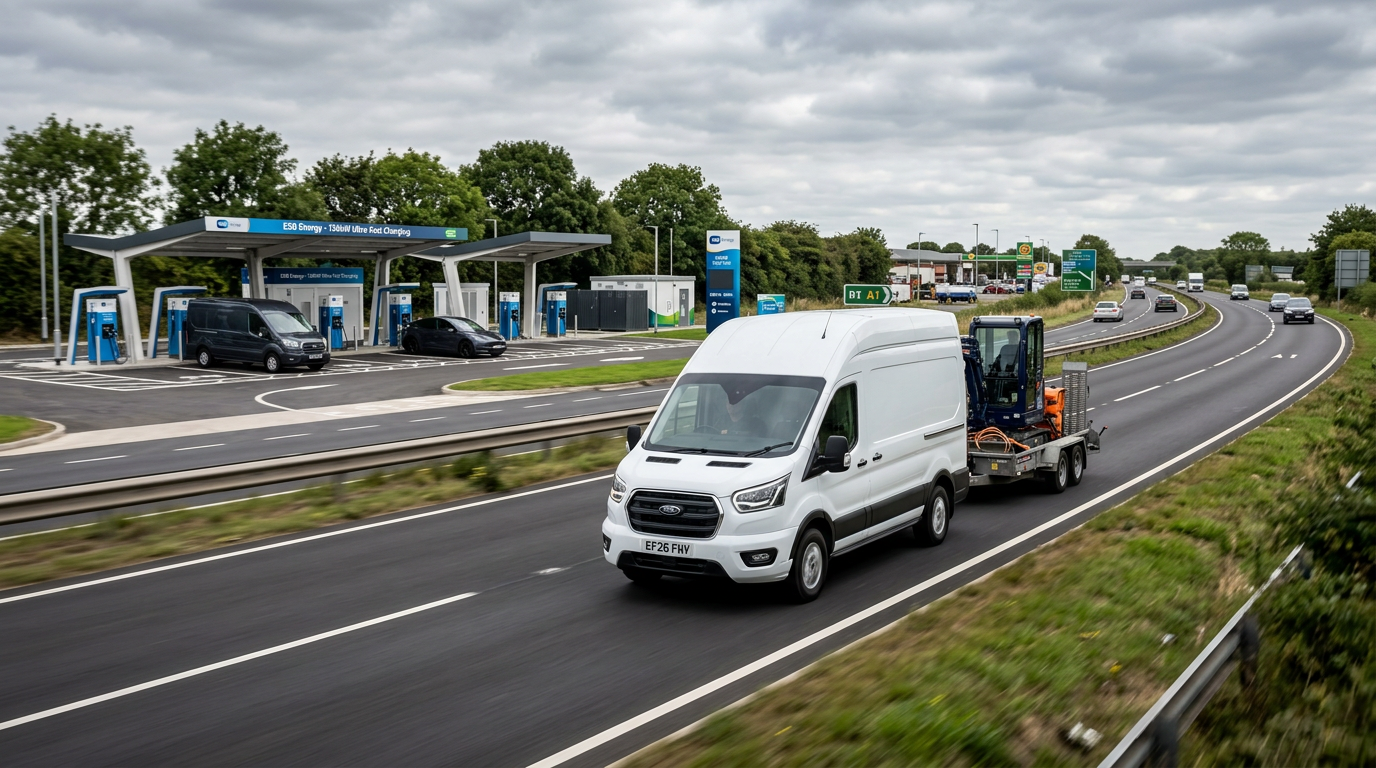
The Reality of Electric Towing in 2026
For years, the 'Achilles heel' of the electric van transition has been the physics of towing. While the instant torque of an electric motor is perfect for pulling heavy loads, the aerodynamic drag and additional weight of a trailer have historically decimated driving ranges.
However, as we move through 2026, the landscape has shifted. Battery energy density has improved, and manufacturers have moved away from 'converted' diesel platforms toward dedicated EV-first architectures. At CarsLink.ai, we’ve spent the last month putting the UK’s leading electric LCVs (Light Commercial Vehicles) through a rigorous real-world towing test to see if a 3.5-tonne electric van can truly replace its diesel counterpart for the modern tradesperson.
The 2026 Contenders: Specs and Capacities
We selected four of the most popular models currently dominating the UK market. All tested models are Euro 6e equivalent (Zero Emission) and compliant with every Clean Air Zone (CAZ) and the London ULEZ.
| Model | Battery Size (Net) | Unladen Range (WLTP) | Max Towing Capacity (Braked) | Platform Type |
|---|---|---|---|---|
| Ford E-Transit (2026 Refresh) | 89kWh | 249 miles | 2,000kg | Dedicated EV |
| Volkswagen ID. Buzz Cargo 4Motion | 79kWh | 262 miles | 1,200kg | MEB Platform |
| Maxus eDeliver 9 | 108kWh | 219 miles | 1,500kg | Purpose Built |
| Mercedes-Benz eSprinter (Long Range) | 113kWh | 273 miles | 2,000kg | Electric Architecture |
The Range Test: Real-World Results
Our test involved a 'tradie-standard' 1,000kg twin-axle trailer loaded with plant machinery, travelling a mixed loop of A-roads and motorways in typical British 12°C weather.
1. The Impact of the Trailer
On average, towing a 1,000kg trailer at 60mph reduced the real-world range by 35-42%. This is a significant improvement over 2023 models, which often saw a 50% drop. Improved thermal management systems in 2026 models mean the batteries don't overheat as easily when under the constant high-load demand of towing.
2. Best Electric Van for Towing: The Ford E-Transit
The Ford E-Transit remains the benchmark. With its 2,000kg braked towing capacity and independent rear suspension, it felt the most stable. In our test, the E-Transit returned a real-world towing range of 145 miles. For most local UK trades—landscapers, groundworkers, and builders—this covers a full day's work with a single overnight charge.
3. Efficiency Champion: Mercedes-Benz eSprinter
The 113kWh battery in the eSprinter is a beast. While the van itself is heavy (impacting payload), it covered 165 miles while towing. If you are a fleet operator looking at inter-city routes with a trailer, the eSprinter’s efficiency in 'Max Range' mode is unparalleled in 2026.
Payload vs. Towing: The 4.25-tonne Allowance
It is vital for van buyers to remember the 4.25-tonne derogation. Under current UK law, Category B (car) licence holders can drive an electric van up to 4,250kg GVW (rather than the standard 3,500kg) to account for the battery weight.
However, once you hitch a trailer, things get more complex. If your Gross Train Weight (GTW)—the combined weight of the van and trailer—exceeds certain thresholds, you may require a tachograph and an O-licence (Operator's Licence), even for an electric vehicle. Always check your V5C for the specific GTW of your van before purchasing a trailer.
The EV Van Charger Network in 2026: The 'Pull-Through' Revolution
The biggest hurdle in 2026 isn't the battery—it’s the infrastructure. Most UK motorway chargers were designed for cars (back-in or nose-in bays). If you’re towing a trailer, you often have to unhitch the trailer and park it elsewhere to reach the plug, which is a major pain for busy contractors.
However, 2026 has seen the rollout of dedicated 'pull-through' HGV and Van bays at Moto and Welcome Break services. Using CarsLink.ai to source vans with 150kW+ DC rapid charging capability is essential here; the E-Transit can now go from 10% to 80% charge in about 35 minutes—roughly the time it takes for a Greggs break and a phone call to a client.
Tips for Maximising Range While Towing
- Regenerative Braking: Use the maximum 'regen' setting. In a heavy van with a trailer, the motor can harvest a significant amount of energy when slowing down for roundabouts.
- Speed Management: Dropping from 70mph to 60mph on the motorway can extend your towing range by up to 15%.
- Tyre Pressures: Check the pressures on both the van and the trailer. Low pressure in a loaded trailer significantly increases rolling resistance.
- Pre-Conditioning: In winter, always pre-warm the van via the app while it's still plugged into the wallbox. This saves the battery from using energy to heat the cabin once you’re on the road.
Buying New vs. Used
If you are looking for a used van towing capacity UK shoppers can rely on, be wary of early 2021-2023 electric vans. Many had towing capacities limited to 750kg or were not rated for towing at all. The 2024-onward models are where towing became a priority for manufacturers.
Verdict: Is it time to switch?
For the long-distance heavy haulier moving 3.5 tonnes of gravel across the Highlands, diesel remains king in 2026. But for the 90% of UK tradespeople who operate within a 60-mile radius of their base, the 2026 crop of electric vans is more than capable. With lower SMR (Service, Maintenance, and Repair) costs and the exemption from the ever-expanding CAZ charges, the financial case for the electric tow-van is now undeniable.
Looking to upgrade your fleet? Whether you need a LWB panel van, a Tipper, or a crew cab, find the latest deals and expert advice at CarsLink.ai.
Ready to make the switch? Check out our latest listings of high-capacity electric vans today!