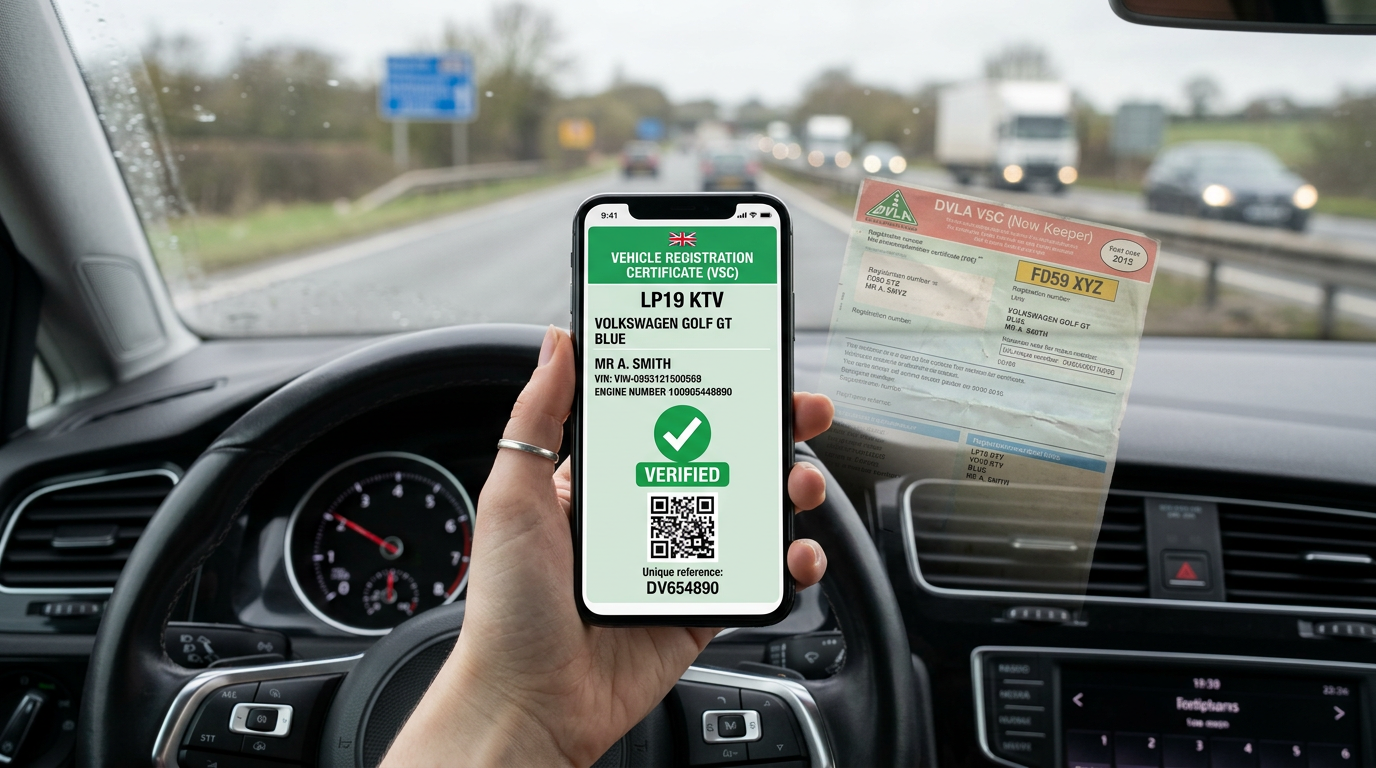
For decades, the ritual of buying or selling a car in the UK has been defined by a specific piece of multi-coloured paper: the V5C registration certificate, or 'logbook'. However, as we move through 2026, the Driver and Vehicle Licensing Agency (DVLA) has accelerated its 'Digital First' strategy, bringing the era of the paper logbook to its final stages.
The transition to a 2026 DVLA Digital V5C isn’t just about saving trees; it is a fundamental shift in how vehicle ownership is managed, verified, and transferred. For motorists, dealers, and private sellers, understanding this shift is crucial to staying compliant and avoiding delays when selling a car online in the UK.
The Shift to a Paperless Logbook: What’s Changed?
In 2026, the DVLA has moved the majority of its services to the Vehicle Management Service (VMS) portal. While paper V5C documents haven’t been' outlawed' per se, they have become an 'opt-in' secondary document rather than the primary source of truth.
The digital version of the logbook is now a real-time record stored on the DVLA’s secure blockchain-integrated servers. This means that if you check your vehicle status via the official GOV.UK portal, you are looking at your live V5C.
Why 2026 is the Turning Point
The push for a paperless logbook in the UK reached a tipping point this year due to several factors:
- Security: Physical logbooks are prone to theft and forgery. A digital record attached to a driver’s verified digital ID is significantly harder to clone.
- Speed: Instant ownership transfers mean no more waiting 3-5 working days for a new document to arrive in the post.
- Integration: The Digital V5C now links directly with ULEZ databases, MOT history, and road tax status, providing a 360-degree view of the vehicle's legal standing.
How the Digital V5C Works for Buyers and Sellers
If you are looking at selling a car online in the UK in 2026, the process is now almost entirely smartphone-based. Here is how the digital workflow compares to the old paper-based system:
| Feature | Old Paper V5C System | 2026 Digital V5C System |
|---|---|---|
| Transfer Process | Fill in Section 2 & post to DVLA | Instant transfer via GOV.UK / VMS App |
| Proof of Owner | Physical paper document | Verified Digital Token / PDF Summary |
| Address Changes | Write on form and mail | Updated instantly via Digital ID |
| Scrap/Export | Mail tear-off slip | Instant digital notification |
Selling Your Car in 2026
When selling, you no longer hand over a physical green 'New Keeper' slip. Instead, the seller generates a Transfer Code via their DVLA account. The buyer enters this code into their own account, pays the DVLA vehicle tax for 2026, and the ownership change is logged instantly.
For those using platforms like CarsLink.ai, this digital integration makes the valuation and sale process seamless. By connecting your digital logbook to the CarsLink.ai marketplace, you can prove ownership and service history instantaneously, building immediate trust with potential buyers.
Taxing Your Vehicle in the Digital Era
The DVLA vehicle tax 2026 regulations have also evolved. With the digital V5C, road tax is no longer 'transferred' (it hasn't been since 2014), but the process of re-taxing a newly purchased vehicle is now triggered automatically the moment the digital transfer code is accepted.
Key 2026 Tax Considerations:
- Direct Debit Integration: Your digital V5C can now be linked to a 'Set and Forget' direct debit that stays with the driver, making it easier to manage multiple vehicles.
- Electric Vehicle (EV) VED: Remember that as of 2025/2026, most EVs are now subject to Vehicle Excise Duty. The digital V5C will clearly display the new rates based on the vehicle’s weight and original list price.
What Happens to My Physical V5C?
If you still have a physical logbook in your glovebox, don't bin it just yet! While the digital record is the primary authority, the DVLA still allows for 'Legacy Paper Handling' for those who prefer it or for vehicles over 40 years old (Classics).
However, be aware that:
- Lost Documents: Replacing a paper V5C now carries a higher fee (£35) than the digital update (Free).
- Validity: If a digital transfer has occurred, any existing paper document for that vehicle is automatically voided and useless for legal purposes.
The Role of Digital Identity (GOV.UK One Login)
To access your V5C logbook in 2026, you must have a GOV.UK One Login. This service uses biometric data (usually via a smartphone scan of your face and passport/driving licence) to ensure that only the rightful owner can transfer a vehicle. This has drastically reduced 'car cloning' and 'logbook loans' fraud, which plagued the industry in the early 2020s.
Benefits for Used Car Buyers
Buying a used car used to involve squinting at watermarks on a V5C to ensure it wasn't a forgery. In 2026, a buyer can scan a QR code provided by the seller. This QR code pulls data directly from the DVLA, showing:
- The current registered keeper (initials and postcode).
- Any outstanding finance (integrated with HPI/Experian).
- The accurate MOT status and failure history.
- The ULEZ and Clean Air Zone compliance status.
Conclusion: Embracing the Digital Road
The end of the paper logbook is a milestone in the UK’s journey toward a more efficient automotive market. While it may feel strange to sell a high-value asset without handing over a physical document, the security and speed benefits are undeniable.
Whether you are buying a fresh EV or parting with your trusty petrol hatchback, the 2026 DVLA Digital V5C simplifies the administrative burden of car ownership. For the fastest way to navigate these changes and get the best value for your vehicle, CarsLink.ai is here to help you bridge the gap between digital compliance and a successful sale.
Ready to move on to your next vehicle? Visit CarsLink.ai today to see how our digital-first platform makes selling your car in 2026 easier than ever.